

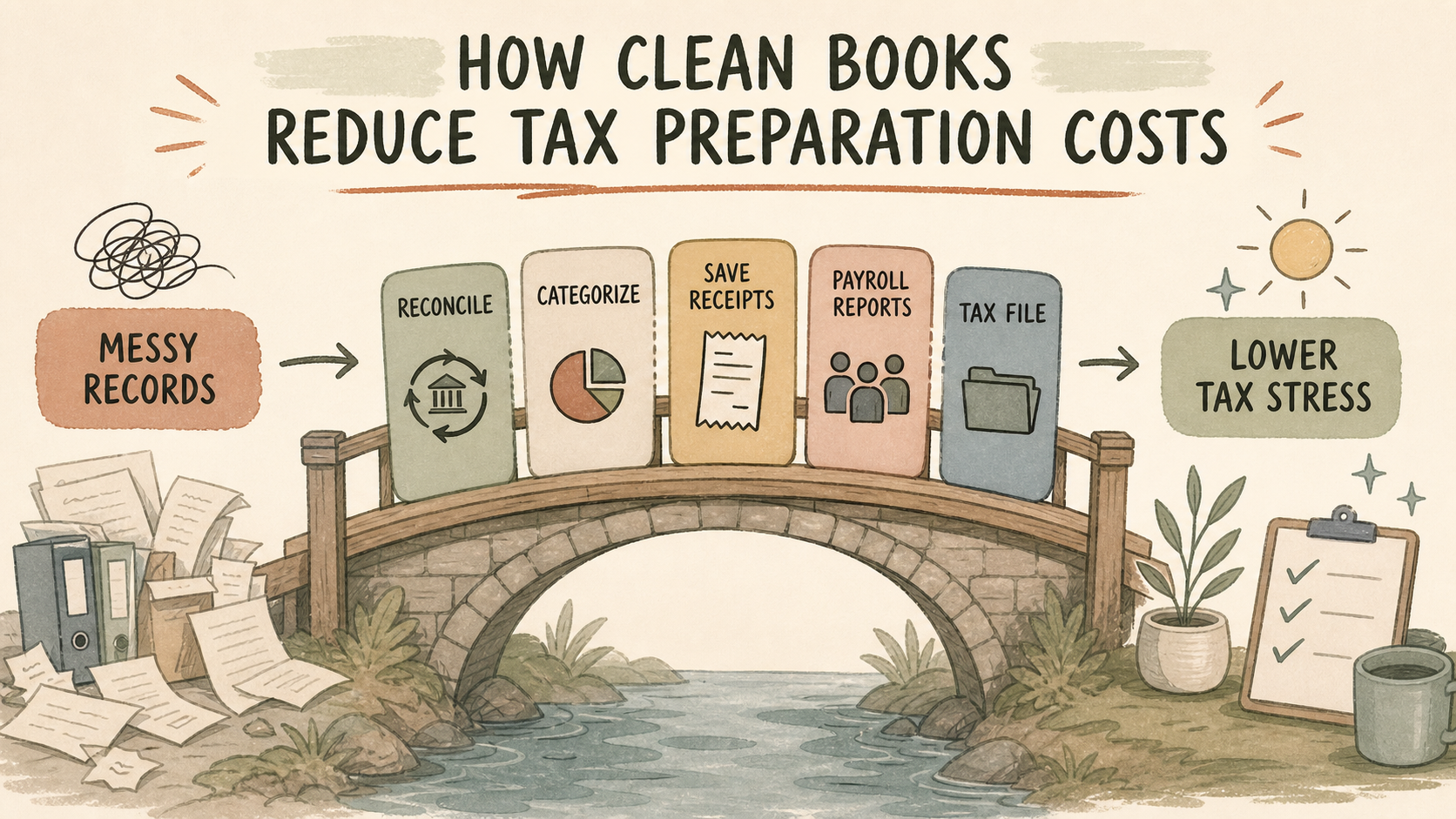

Tax preparation is easier when the books are clean. It is harder when the tax preparer has to fix records before filing.
Clean books do not just save time. They can also improve deductions, reduce questions, and support better planning.
If bank accounts are not reconciled, expenses are uncategorized, or personal items are mixed with business records, the preparer may need to clean the books first.
That cleanup is separate work. It can cost more than expected because it takes time to review transactions and ask questions.
Monthly accounting and bookkeeping services help avoid this year-end rush.
A deduction is easier to claim when the record is clear. Receipts, invoices, mileage logs, payroll reports, and loan statements all help.
If records are vague, the preparer may avoid taking a deduction or spend extra time confirming it.
Tax prep is not only the profit and loss statement. Loans, owner draws, payroll liabilities, fixed assets, and inventory may also matter.
If these accounts are wrong, the return can be harder to prepare. Clean books give the tax preparer a better starting point.
Clean books let you review profit before December. That can help with estimated payments, purchases, retirement contributions, and entity planning.
Our tax preparation and planning services can use clean records to plan earlier.
When the books are organized, the preparer can spend less time asking what each transaction means. That can make filing smoother and reduce delays.
It also helps the owner. Instead of searching through old records, the owner can review a clear tax file.
Bookkeeping and tax should not be separate worlds. The monthly records should support the annual return.
For more on pricing, see our guide on tax preparation costs and hidden fees.
A good tax file includes a reconciled profit and loss, balance sheet, payroll reports, contractor records, loan statements, fixed asset details, and notes on unusual items. When this is ready, the preparer can focus on review and planning instead of cleanup.
That usually makes the filing process calmer for the owner too.
Clean books are built through small monthly habits. Reconcile bank accounts, review open questions, save receipts, and check payroll reports. These steps are easier when done monthly than when rebuilt after the year ends.
The best tax file is usually the result of a steady bookkeeping process.
Changing categories every month makes review harder. Keep a simple chart of accounts and use it consistently. If a new expense type appears, add it carefully and document why.
Use this guide as a monthly review tool, not just a tax-season article. Assign one person to gather records, check open questions, and flag anything that may affect filing, cash flow, or compliance. A simple habit like this keeps small issues from becoming year-end cleanup work.
Clean books reduce tax preparation costs by reducing cleanup, supporting deductions, and making planning easier.
If tax season always starts with fixing records, contact Madras Accountancy to build a cleaner monthly process.
Section 4960's 21% excise tax now reaches far more nonprofit employees. See who is a covered employee in 2026 and what changed.

The Section 45S paid family leave credit is permanent for 2026 with new options. See who qualifies, the amounts, and how to claim it.

Opportunity zones become permanent in 2027 under the One Big Beautiful Bill. See the new deferral, rural bonus, and the 2026 handoff.



