

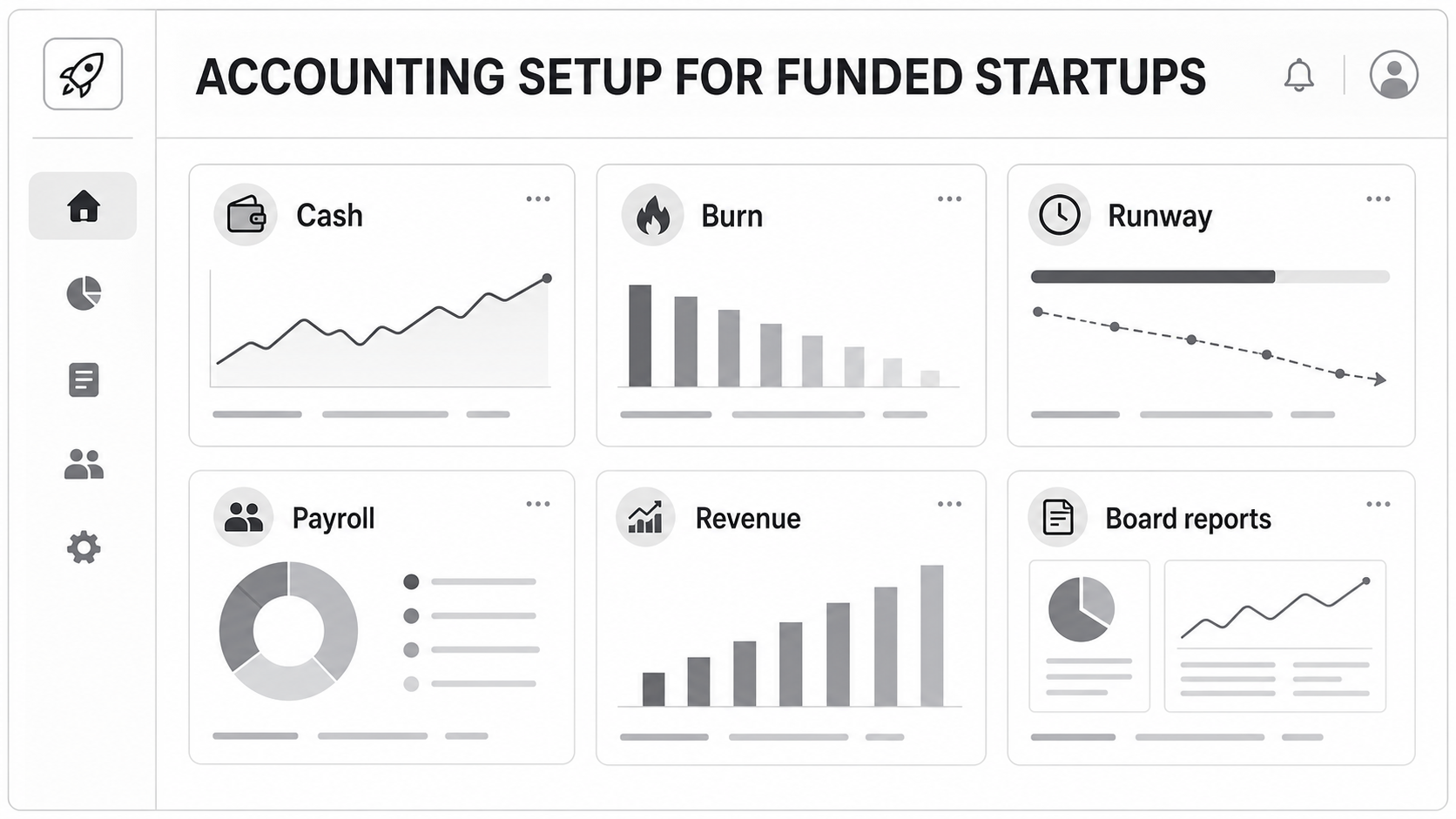

After funding, startup accounting needs more structure. The company may have investors, payroll, contractors, software spend, and board reporting needs.
The goal is to build a process that is clear without becoming too heavy.
Every funded startup should have reconciled accounts, clear categories, and monthly reports. The reports should show cash, revenue, expenses, payroll, and major vendors.
Our accounting and bookkeeping services can support the monthly close.
Founders and investors need to know how long cash will last. Burn rate and runway should be reviewed monthly.
These numbers should come from clean records, not rough guesses.
Funded startups may hire employees, pay founders, use contractors, and issue equity. Each item has tax and recordkeeping needs.
Payroll should be reconciled to the books. Contractor payments should be tracked for reporting.
Investor updates should be simple and consistent. Include cash, burn, revenue, key expenses, runway, and major changes.
If leadership needs finance help without hiring a full-time CFO, see our fractional CFO services.
Startups that sell SaaS, digital goods, or taxable services may need sales tax review. State registrations and franchise taxes may also matter.
For sales tax support, review our sales tax services.
Tax planning should not wait until filing season. Review payroll, contractors, state activity, R&D work, and major expenses before year end.
Our tax preparation and planning services can help connect accounting and tax.
Funded startups need useful reports, not just formal reports. Founders should be able to understand cash, burn, runway, payroll, revenue, and major expenses without digging through raw transactions.
Simple reports used every month are better than complex reports ignored by the team.
Funded startups should expect questions about cash, burn, runway, hiring plans, and major expenses. Good accounting makes those answers easier.
The finance process should help founders explain the business clearly, not just close the books.
If funding is meant for hiring, product, marketing, or operations, track spending against that plan. This helps founders explain whether cash is being used as expected.
It also supports better board updates.
Use this guide as a monthly review tool, not just a tax-season article. Assign one person to gather records, check open questions, and flag anything that may affect filing, cash flow, or compliance. A simple habit like this keeps small issues from becoming year-end cleanup work.
After reading this, make a short list of the records, deadlines, and open questions tied to this topic. Review that list with your accounting or tax team before the next filing cycle, not after a deadline is already close.
Funded startups need clean books, monthly reporting, payroll records, tax planning, and investor-ready numbers.
If your startup has raised capital and needs a stronger finance process, contact Madras Accountancy.

Section 4960's 21% excise tax now reaches far more nonprofit employees. See who is a covered employee in 2026 and what changed.

The Section 45S paid family leave credit is permanent for 2026 with new options. See who qualifies, the amounts, and how to claim it.

Opportunity zones become permanent in 2027 under the One Big Beautiful Bill. See the new deferral, rural bonus, and the 2026 handoff.