

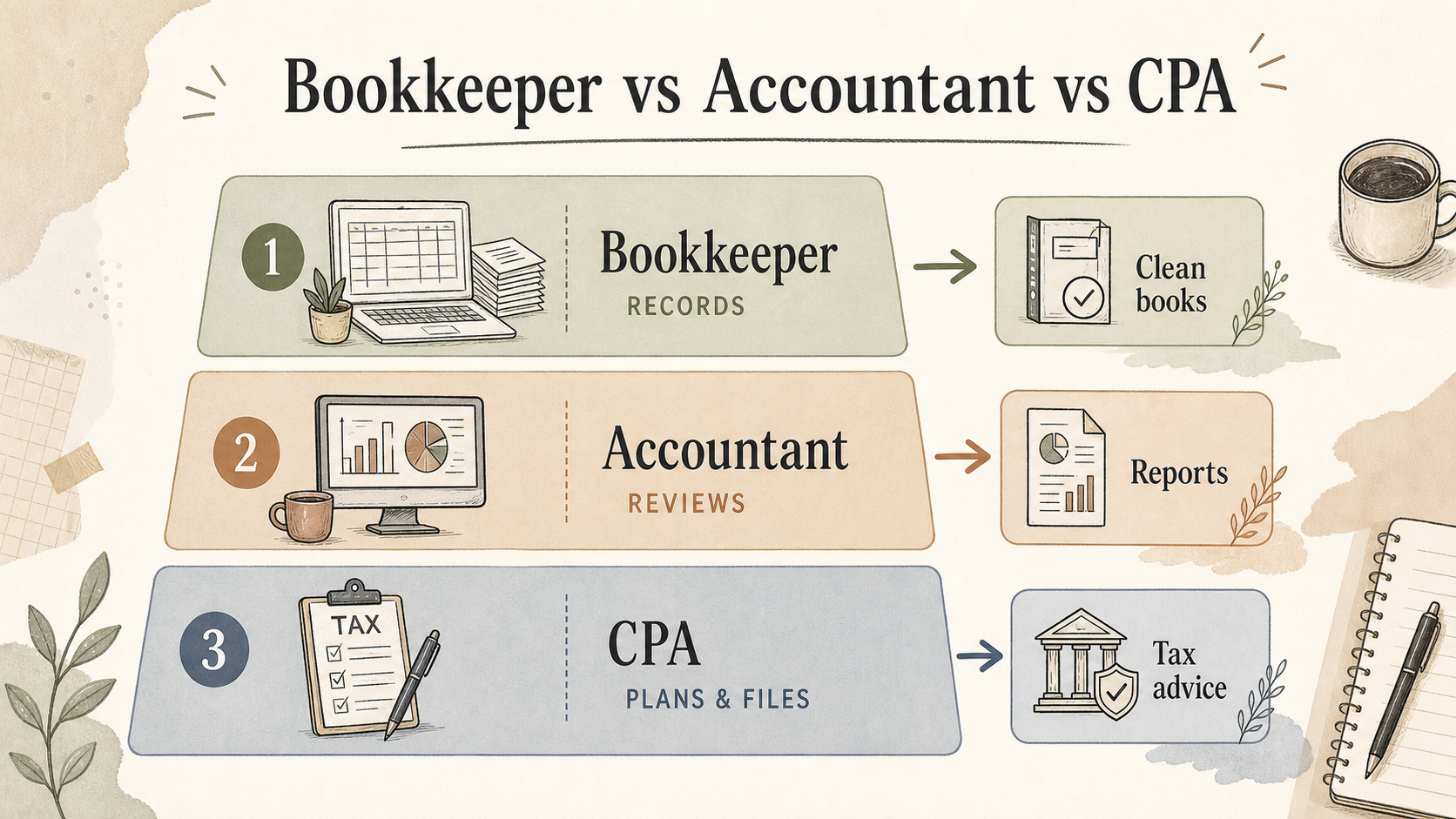

Small business owners often use the terms bookkeeper, accountant, and CPA in the same way. They are related, but they are not the same role.
Knowing the difference helps you get the right support and avoid paying for the wrong level of help.
A bookkeeper keeps the records organized. This includes coding transactions, reconciling bank accounts, tracking bills, recording customer payments, and preparing basic reports.
Bookkeepers help answer simple but important questions: Did we get paid? What did we spend? Are the books up to date?
If your records are behind, start with accounting and bookkeeping services.
An accountant usually works with the information from the books. They may review reports, adjust entries, help with budgets, analyze margins, and prepare financial statements.
Accountants can help owners understand what the numbers mean. For example, they can explain why profit is up but cash is low.
A CPA is a licensed accounting professional. CPAs may prepare tax returns, advise on tax planning, review financial statements, and help with more complex accounting issues.
Not every business needs a CPA every month. But many need CPA-level help during tax season, when choosing an entity, or when facing notices or complex transactions.
See our tax preparation and planning services if you need filing and planning support.
If your transactions are messy, you need bookkeeping first. If your books are clean but you do not understand your reports, you may need accounting support. If you need tax planning, filing, or technical advice, a CPA may be needed.
Many businesses need a mix. The bookkeeper keeps records clean. The accountant reviews and explains. The CPA handles tax and higher-level planning.
You cannot get good tax planning from bad books. If the numbers are wrong, the advice may be wrong too.
That is why monthly bookkeeping often comes before better tax work. Clean records lower stress, reduce rework, and make planning more useful.
Start with the problem you are trying to solve. If transactions are not recorded, hire bookkeeping help. If reports exist but you do not know what they mean, add accounting review. If you are making tax decisions, filing complex returns, or dealing with notices, bring in CPA-level support.
The need can change as the business grows. A new company may only need basic bookkeeping. Later, it may need accounting review, tax planning, payroll checks, or financial reporting. The right support should match the current stage, not just the company size.
Use this guide as a monthly review tool, not just a tax-season article. Assign one person to gather records, check open questions, and flag anything that may affect filing, cash flow, or compliance. A simple habit like this keeps small issues from becoming year-end cleanup work.
A bookkeeper records. An accountant reviews and explains. A CPA can advise, plan, and file in more complex situations.
If you are not sure what level of support you need, contact Madras Accountancy. We can help you decide whether to start with bookkeeping, tax planning, or both.
Section 4960's 21% excise tax now reaches far more nonprofit employees. See who is a covered employee in 2026 and what changed.

The Section 45S paid family leave credit is permanent for 2026 with new options. See who qualifies, the amounts, and how to claim it.
Opportunity zones become permanent in 2027 under the One Big Beautiful Bill. See the new deferral, rural bonus, and the 2026 handoff.