

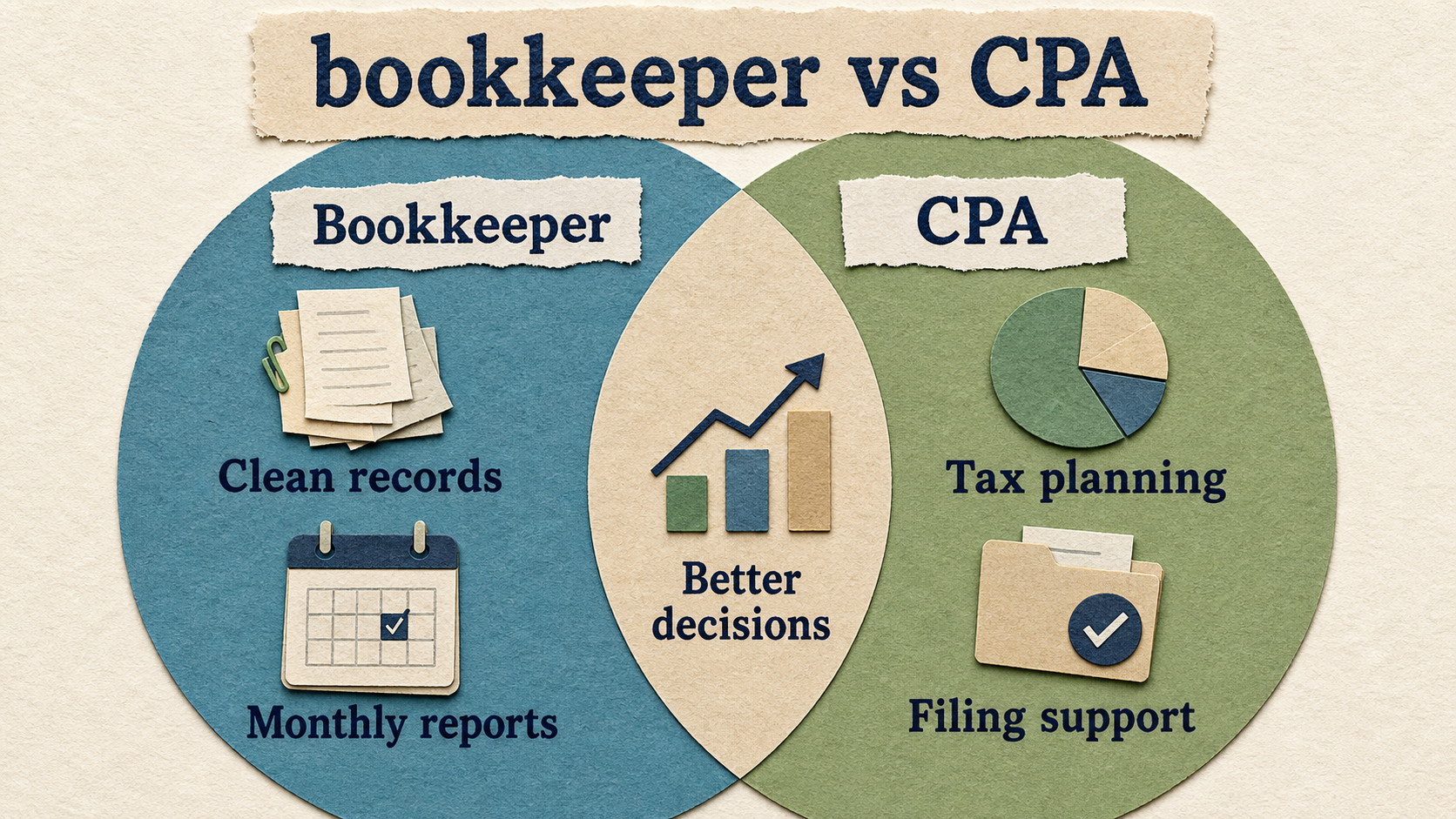

A bookkeeper and a CPA can both help a business, but they solve different problems. Choosing the right one depends on what is broken or missing.
Some businesses need both. The key is knowing when.
A bookkeeper records and organizes financial activity. This includes transaction coding, bank reconciliations, invoices, bills, payroll entries, and monthly reports.
If your books are behind, start with accounting and bookkeeping services.
A CPA may help with tax preparation, tax planning, entity questions, complex deductions, notices, and higher-level accounting issues.
If the issue is filing, estimates, or planning, see our tax preparation and planning services.
If transactions are not entered, hire bookkeeping help. If the records are clean but you need tax advice, bring in CPA support.
If you need reports, forecasting, budgets, or finance leadership, you may also need fractional CFO services.
A CPA can give better advice when the records are accurate. If the books are messy, the first step may be cleanup.
Clean books support deductions, estimates, payroll review, and year-end planning.
Many businesses need monthly bookkeeping and periodic CPA review. The bookkeeper keeps records current. The CPA uses those records for filing and planning.
This mix works well for business owners, landlords, contractors, and growing companies.
Do not wait until the return is due. Bookkeeping should happen monthly. CPA planning should happen before year end.
The best setup is often shared. The bookkeeper keeps the records current. The CPA reviews tax items and planning questions. The owner uses both to make better decisions during the year.
This reduces the scramble that often happens right before filing deadlines.
If the issue is missing records, start with a bookkeeper. If the issue is tax advice, filing, or planning, use a CPA. If the issue is cash planning, budgets, or forecasts, consider finance leadership support.
The right role depends on the question.
A CPA can help with tax and planning, but using CPA time for basic cleanup is often inefficient. Keep bookkeeping current so CPA time can be used for review, filing, and advice.
That is usually a better use of both roles.
Use this guide as a monthly review tool, not just a tax-season article. Assign one person to gather records, check open questions, and flag anything that may affect filing, cash flow, or compliance. A simple habit like this keeps small issues from becoming year-end cleanup work.
After reading this, make a short list of the records, deadlines, and open questions tied to this topic. Review that list with your accounting or tax team before the next filing cycle, not after a deadline is already close.
A bookkeeper keeps the records clean. A CPA helps with tax and planning decisions. The right support depends on your current problem.
If you are not sure where to start, contact Madras Accountancy.
Section 4960's 21% excise tax now reaches far more nonprofit employees. See who is a covered employee in 2026 and what changed.

The Section 45S paid family leave credit is permanent for 2026 with new options. See who qualifies, the amounts, and how to claim it.
Opportunity zones become permanent in 2027 under the One Big Beautiful Bill. See the new deferral, rural bonus, and the 2026 handoff.



