

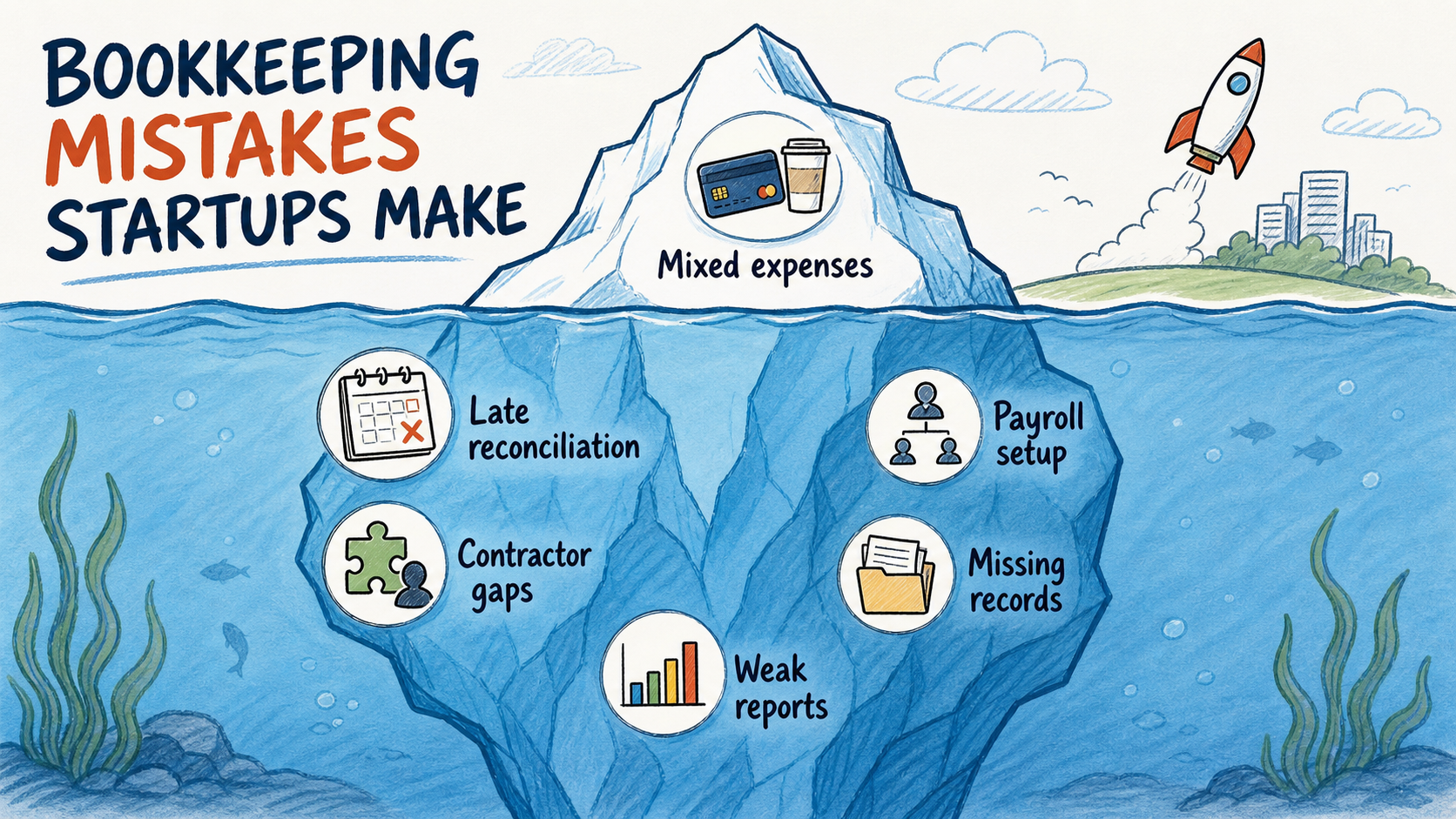

Startups often move fast. Bookkeeping may feel less urgent than customers, product, or funding. But early mistakes can create tax, reporting, and cash flow problems later.
The fix is not a complex system. It is a clean system that the team can maintain.
This is one of the most common mistakes. Founder payments, personal cards, and business expenses should not be mixed without clear records.
Open a business bank account and use it consistently. This makes tax filing and investor review easier.
If bank accounts are not reconciled monthly, small errors can become hard to trace. Late reconciliation also makes reports less useful.
Our accounting and bookkeeping services can help startups keep a monthly close process.
Startups often use contractors. Keep W-9 forms, invoices, contracts, and payment records. These may matter for 1099 filings.
If contractor records are missing, tax season becomes harder.
Founder pay and employee payroll need care. Payroll taxes, benefits, and state registrations should not be handled casually.
Payroll reports should also be reconciled to the books.
Formation documents, tax letters, receipts, invoices, payroll records, and investor agreements should be saved in one organized place.
This becomes important during tax filing, fundraising, or due diligence.
Even early startups should know cash, burn rate, runway, revenue, and major expenses.
If the company needs finance leadership beyond bookkeeping, review our fractional CFO services.
Startups may face income tax, payroll tax, sales tax, franchise tax, and contractor reporting. These should be reviewed before deadlines.
See our tax preparation and planning services for support.
If a startup plans to raise money, cleanup should happen before investor review. Clean records make it easier to explain spending, payroll, revenue, and runway.
This also gives founders more confidence when answering finance questions.
In the first 90 days, founders should separate accounts, choose software, save receipts, track contractors, and review cash monthly. These basics prevent most early accounting problems.
The process can stay simple, but it should be consistent.
A startup will change. The first bookkeeping setup should be simple enough to adjust as the company adds revenue, payroll, investors, or new products.
Overly complex systems often get ignored.
Use this guide as a monthly review tool, not just a tax-season article. Assign one person to gather records, check open questions, and flag anything that may affect filing, cash flow, or compliance. A simple habit like this keeps small issues from becoming year-end cleanup work.
After reading this, make a short list of the records, deadlines, and open questions tied to this topic. Review that list with your accounting or tax team before the next filing cycle, not after a deadline is already close.
Startup bookkeeping mistakes are easier to prevent than fix. Keep accounts separate, reconcile monthly, track contractors, and save records.
If your startup books need cleanup, contact Madras Accountancy.

Section 4960's 21% excise tax now reaches far more nonprofit employees. See who is a covered employee in 2026 and what changed.

The Section 45S paid family leave credit is permanent for 2026 with new options. See who qualifies, the amounts, and how to claim it.

Opportunity zones become permanent in 2027 under the One Big Beautiful Bill. See the new deferral, rural bonus, and the 2026 handoff.



