


A general contractor finishes a $2M project. The retainage sits for 90 days. Meanwhile, the next project requires materials upfront and subcontractors want payment within 30 days. The owner looks at the bank balance, talks to the controller, and makes a gut call about whether to bid on a third project.
This is how most construction companies operate. Not because the owners are unsophisticated. They are typically sharp operators who understand their trade deeply. But construction financial management is uniquely complex, and the standard accounting setup (a bookkeeper or controller running QuickBooks or Sage) does not provide the strategic financial intelligence these businesses need.
A fractional CFO changes this. Not by replacing your controller or bookkeeper, but by adding the financial strategy layer that construction companies need to grow without running into cash walls. For a broader look at how fractional CFO services work, see our complete guide.
Construction is not like other industries from a finance perspective. The challenges are specific, interconnected, and punishing when they are not managed well.
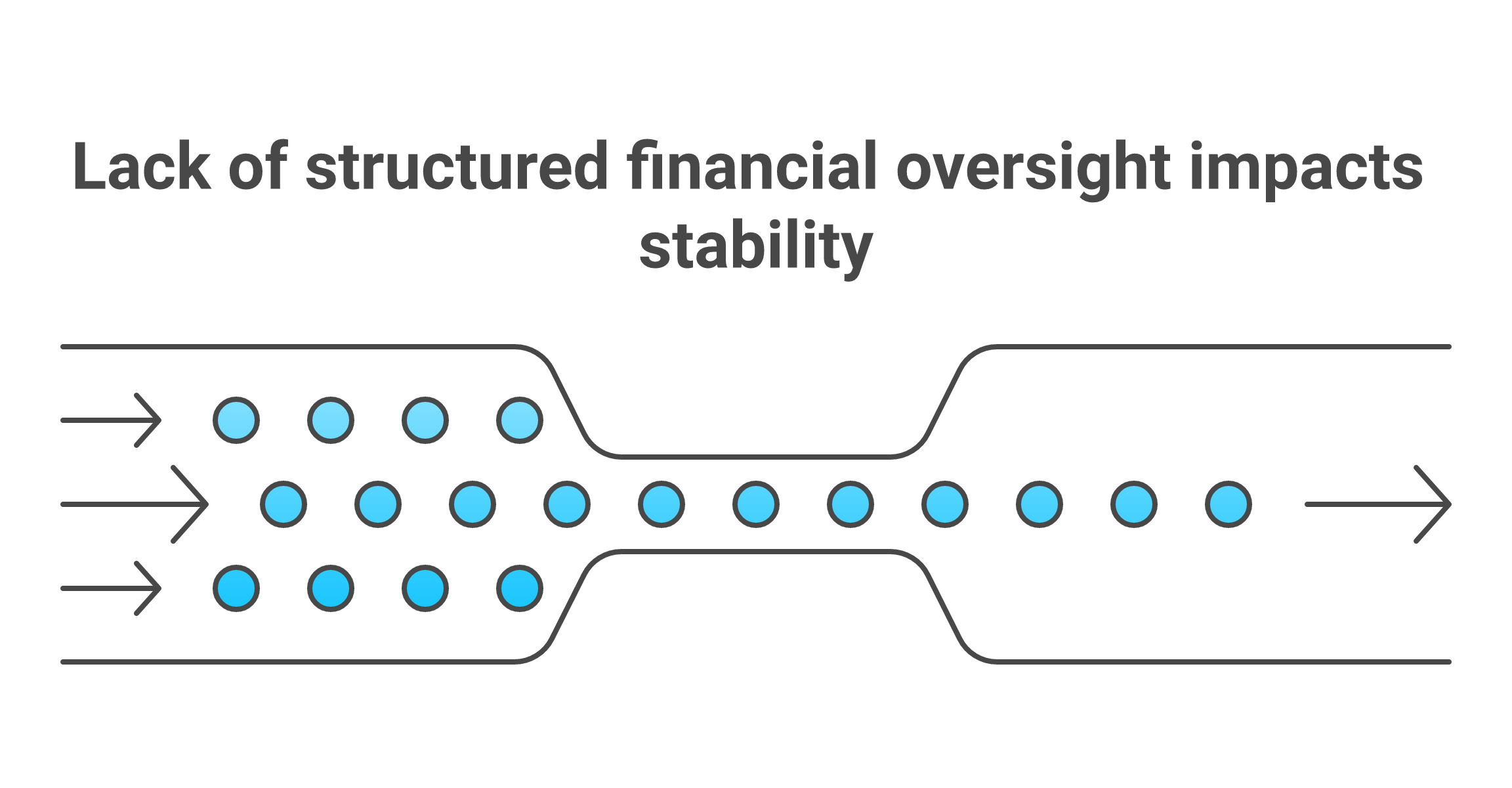
Long payment cycles and cash flow gaps. Construction payment timelines are brutal. Progress billings get submitted, reviewed, approved (sometimes disputed), and paid on 30-60 day cycles. Retainage holds back 5-10% of every payment until project completion and beyond. Meanwhile, materials need to be purchased, equipment needs to be rented or financed, subcontractors need to be paid, and payroll goes out every week or two regardless.
A fractional CFO builds project-level cash flow models that forecast when money will come in and go out for every active project simultaneously. This is not your controller producing a monthly financial statement. This is a rolling, real-time view of cash position that shows you exactly when a gap is coming so you can line up financing, adjust billing schedules, or delay procurement before it becomes a crisis.
Bonding capacity constraints. For contractors who bid on bonded work, bonding capacity is the ceiling on growth. Your surety company determines your single-project limit and aggregate limit based on your financial statements, work-in-progress, and banking relationships. Every dollar of bonding capacity matters.
A fractional CFO manages the financial presentation to your surety. This includes cleaning up the balance sheet, improving working capital ratios, managing the backlog-to-equity ratio, and timing project completions strategically. The difference between a well-presented financial package and a raw set of financial statements can be $2M-$5M in additional bonding capacity. That is not theoretical. We have seen it happen.
WIP (Work-in-Progress) reporting. Lenders, sureties, and sometimes project owners want WIP reports. A WIP schedule shows the status of every active job: contract amount, costs to date, estimated costs to complete, billings to date, and the resulting over/under billing position. Getting this wrong is not just an accounting issue. Under-billing means you are financing the project with your own cash. Over-billing creates a liability that can blow up your balance sheet.
A fractional CFO ensures WIP reporting is accurate, timely, and presented in a format that bankers and sureties want to see. They also use WIP data to identify jobs that are slipping, estimate-to-complete problems, and change order exposure before these become profit-eating surprises.
Job costing accuracy. Many construction companies track costs at the job level, but the data is messy. Labor hours are allocated roughly. Materials purchased for one job end up on another. Equipment costs are spread by rules of thumb rather than actual usage. A fractional CFO tightens job costing processes so you know the true profitability of every project. This data informs future bidding, tells you which types of work to pursue and which to avoid, and identifies foremen or project managers who consistently deliver better financial results.
Equipment financing decisions. Buy, lease, or rent? The answer depends on utilization rates, tax implications (Section 179, bonus depreciation), cash flow impact, and balance sheet effects. A fractional CFO models each option with real numbers specific to your situation, not the equipment dealer's financing pitch.
Let us get specific about the deliverables. Here is what a construction-focused fractional CFO engagement with Madras typically produces.
13-week and 12-month rolling cash flow forecasts. Updated weekly, project-aware, and stress-tested for delayed payments and change order disputes. Your controller tracks what happened. Your CFO models what is coming.
Monthly financial review meetings. Not just reviewing financial statements, but analyzing gross profit by job, overhead absorption, equipment utilization, and labor productivity. These meetings should change how you run the business. If they do not, the CFO is not doing the job.
Bonding strategy and surety relationship management. Annual financial presentations to your surety, ongoing capacity monitoring, and proactive communication with your bonding agent. A fractional CFO who understands construction bonding can often negotiate improved capacity without a change in your underlying financials, simply by presenting the same data more effectively.
Banking and credit line management. Construction companies need credit facilities, and banks that lend to contractors want specific financial reporting. A fractional CFO prepares banking packages, manages covenant compliance, and handles the financial side of banking relationships.
Bid/no-bid financial analysis. Before you bid on a $5M project, someone should model what it does to your cash flow, bonding capacity, and resource utilization. A fractional CFO runs this analysis so your bidding decisions are financially informed, not just based on whether the estimator thinks the margins look good.
Change order and claim support. Financial documentation for change orders and claims requires organized cost data, supporting calculations, and sometimes expert presentation. A fractional CFO ensures the financial case is built properly and the numbers are defensible.
Equipment fleet analysis. Which pieces of equipment are generating return and which are sitting in the yard costing money? Utilization analysis, cost-per-hour calculations, and replacement cycle planning are all fractional CFO deliverables.
Most construction companies with $5M+ revenue already have a controller or office manager handling the accounting. Owners sometimes wonder whether a fractional CFO duplicates that role.
It does not. The roles are complementary. Your controller handles transaction processing, accounts payable and receivable, payroll, monthly close, and financial statement preparation. Your fractional CFO takes the data your controller produces and turns it into strategic intelligence. We explain this distinction in detail in our article on controller vs. fractional CFO roles.
In practice, a fractional CFO makes your controller more valuable. They provide direction on what reports to prepare, what data to track, and how to organize financial information for strategic use. Controllers who work with a fractional CFO typically improve significantly in their own performance because they finally have a financial leader guiding their work.
Our model pairs a senior fractional CFO (who understands construction finance) with a production team in India. The production team handles the time-intensive work: building and updating cash flow models, preparing WIP schedules, maintaining job-level profitability reports, and producing banking and surety packages. Your CFO focuses on interpreting the data, making strategic recommendations, and representing your company in financial meetings.
This structure means you get more output than a solo fractional CFO can deliver. A solo practitioner doing everything themselves, from spreadsheet building to strategy sessions, simply cannot produce the volume and quality of financial intelligence that a supported CFO can.
For construction companies specifically, the production workload is heavy. WIP schedules alone require continuous updating as costs come in, change orders are processed, and estimates to complete are revised. Having a dedicated team managing this production work means your CFO comes to meetings prepared with current, accurate data rather than scrambling to update spreadsheets.
Fractional CFO pricing for construction companies depends on the number of active projects, annual revenue, and complexity of the financial structure.
Emerging contractor ($3,000-$5,000/month). For companies at $2M-$10M in revenue with 5-15 active projects. Monthly financial reviews, basic cash flow forecasting, WIP reporting support, and financial guidance on equipment and growth decisions.
Growth contractor ($5,000-$8,000/month). For companies at $10M-$30M. Weekly cash flow updates, surety relationship management, detailed job profitability analysis, banking support, and bid/no-bid financial analysis.
Established contractor ($8,000-$10,000+/month). For companies at $30M+ or those with complex multi-entity structures, bonded work across multiple states, or acquisition activity. Full financial leadership including bonding strategy, equipment fleet analysis, M&A support, and CFO-level representation in banking and surety meetings.
For comparison, a full-time CFO with construction industry experience commands $200K-$350K in salary, plus benefits, bonuses, and potentially a vehicle allowance. Total cost: $250K-$450K annually. A fractional CFO at $6,000/month costs $72K per year. Our pricing guide covers how these models break down.
Construction companies that add a fractional CFO typically see several concrete improvements within the first six months.
Fewer cash surprises. With rolling cash flow forecasts tied to project schedules, the owner knows weeks in advance when cash will be tight, not when the bank account is already empty.
Better bonding terms. A well-prepared financial presentation to the surety often results in improved capacity and rates. We have seen contractors increase bonding capacity by 30-50% without changing their underlying financial performance, simply through better financial presentation and proactive surety communication.
Higher job margins. Accurate job costing reveals which project types, sizes, and customer segments are most profitable. This data sharpens bidding strategy and resource allocation.
Stronger banking relationships. Banks want to lend to contractors who demonstrate financial sophistication. A fractional CFO provides the reporting and communication that builds banker confidence.
Informed growth decisions. Should you add a second crew? Open a new geographic market? Take on larger projects? These decisions get modeled with real numbers instead of guesswork. The article on signs your business needs a fractional CFO describes the exact inflection points where this becomes critical.
Construction is too cash-intensive and financially complex to manage without dedicated financial leadership. If your company is generating $2M+ in revenue and you do not have a CFO driving financial strategy, you are leaving money on the table and taking on risk you do not need to.
Visit madrasaccountancy.com to schedule a call. We will review your current financial setup, look at your WIP, cash flow position, and bonding situation, and show you exactly what a fractional CFO engagement would deliver for your company.
Do your fractional CFOs have construction industry experience? Yes. We match construction companies with CFOs who understand percentage-of-completion accounting, WIP reporting, bonding, job costing, and the specific financial dynamics of the industry. Construction finance is different enough from general business finance that industry experience is not optional. It is required.
Will a fractional CFO help with my surety relationship? Absolutely. Bonding capacity optimization is one of the highest-value activities a fractional CFO performs for construction companies. This includes preparing annual financial presentations to your surety, monitoring capacity throughout the year, improving the balance sheet metrics that sureties evaluate, and proactively communicating with your bonding agent.
How does the fractional CFO work with my controller or bookkeeper? Your controller continues handling day-to-day accounting: AP/AR, payroll, monthly close, and transaction processing. The fractional CFO provides strategic direction, builds financial models, manages banking and surety relationships, and leads financial review meetings. The CFO also guides your controller on what to track and how to organize data for strategic use.
Can you help with acquisition analysis? We are looking at buying a smaller contractor. Yes. M&A analysis is a core fractional CFO capability. We evaluate acquisition targets, model the financial impact of combining operations, assess bonding implications, structure deal terms, and support the due diligence process. For construction companies, the bonding impact of an acquisition is often the most important financial consideration, and it is frequently overlooked.
What software do you work with? We work with whatever your company uses. For construction, that typically means Sage 300 CRE, Procore, Foundation, Vista, Buildertrend, or QuickBooks with job costing. Our production team adapts to your systems. We do not force you onto a new platform.

Section 4960's 21% excise tax now reaches far more nonprofit employees. See who is a covered employee in 2026 and what changed.

The Section 45S paid family leave credit is permanent for 2026 with new options. See who qualifies, the amounts, and how to claim it.

Opportunity zones become permanent in 2027 under the One Big Beautiful Bill. See the new deferral, rural bonus, and the 2026 handoff.



