

%2075-100%20(3).png)

Losing money in a business year is stressful on its own. Then someone mentions you might be able to send that loss back to a profitable year and pull a refund out of taxes you already paid. It sounds great, and for a long time it was a real option. The rules changed, though, and most people asking about a net operating loss carryback in 2026 are working from advice that expired years ago.
So let us clear it up in plain terms. This guide covers who can still carry a loss back, why the door closed for almost everyone else, and what your loss can still do for you if it cannot go backward.
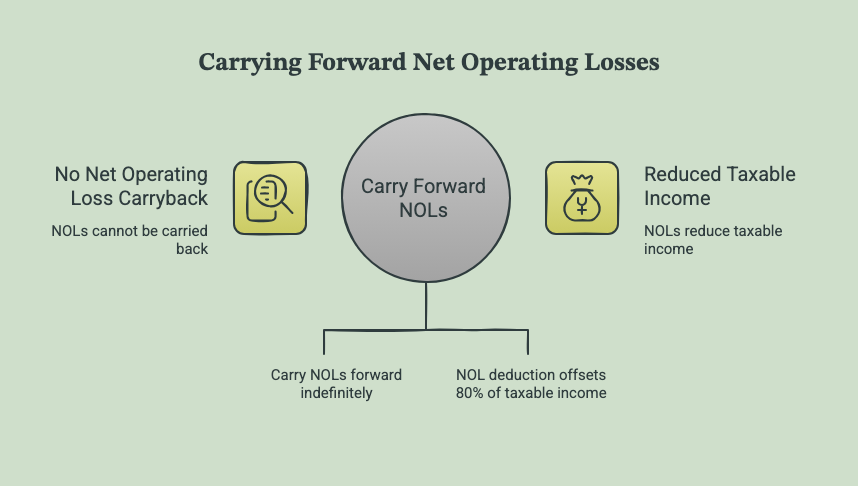
For most businesses, the honest answer is no. Under the Tax Cuts and Jobs Act, any NOL arising in a tax year beginning after 2017 cannot be carried back to a prior year. Instead, it gets carried forward, and it can be carried forward indefinitely until you use it up.
There is a second string attached. When you finally apply a post-2017 loss, the NOL deduction can offset only up to 80% of your taxable income for that year. So even a large carryover will not wipe your bill to zero. You still pay tax on the last slice of income.
A couple of narrow doors are still open, and they matter if you fall through one.
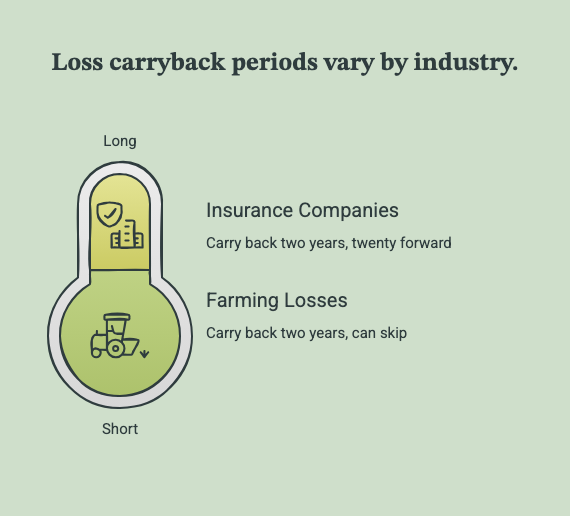
Farming losses keep a two-year carryback. If part of your NOL is a qualifying farming loss, you can carry that piece back two years to the earliest year first, then forward if any is left. You can also skip it. Farmers may elect to waive the carryback period and simply carry the loss forward instead, which can be the smarter move when the prior years were low-income anyway. That election, once made, is locked in for that loss year.
The other exception is for insurance companies other than life insurers. Under Section 172, a non-life insurance company still gets the older treatment, a two-year carryback and a twenty-year carryforward.
If you are not a farmer or a property and casualty insurer, neither of these helps you, and the loss goes forward.
Plenty of business owners remember a five-year carryback and assume it still exists. It did, briefly. The CARES Act let taxpayers carry NOLs from 2018, 2019, and 2020 back five years, and it also lifted the 80% limit for those earlier years. For a stretch during the pandemic, that turned recent losses into fast refunds.
That window is closed. It applied only to losses from those three years, and it did not renew.
The next question is usually about the 2025 tax law. The One Big Beautiful Bill Act, signed in July 2025, made real changes to how business losses work, but restoring carrybacks was not one of them. What it did do was make the excess business loss limitation permanent, which pushes more pass-through owners toward carryforwards, not backward refunds. More on that below.
Say you do have a farming loss or a non-life insurance loss. Here is the path.
First you figure the loss. Individuals, estates, and trusts now compute the NOL on Form 172. This form is new for the 2024 tax year, and it replaced the worksheets that used to live in Publication 536, which the IRS will no longer update.
Then you claim the refund. Individuals, estates, and trusts file Form 1045 for a quick tentative refund. Corporations use Form 1139 for the same fast track. The IRS generally processes these within about 90 days, which is the whole appeal of the quick route.
Watch the clock. Form 1045 and Form 1139 have to be filed within one year after the end of the loss year, and you cannot file before the loss-year return itself is in. Miss that one-year window and the fast refund is gone, but not the money. You can still claim it on an amended return, generally within three years, it just takes longer to land.
Two things to flag for the earlier year. Carrying a loss back can create an alternative minimum tax bill in a year that never had one, so refigure it. And if the carryback year had a Section 965 inclusion, you cannot use Form 1045 for it and have to amend instead.
A loss that cannot go backward is not wasted. It becomes a carryover that follows you into future profitable years, with no expiration date for post-2017 losses, subject to that 80% cap when you use it. We walk through the mechanics in the NOL carryforward guide, so we will not repeat all of it here.
There is one trap worth naming for pass-through owners. If your business loss is large relative to your other income, the excess business loss limitation can cap what you deduct this year, and the disallowed piece converts into an NOL carryover for next year. Since that carryover is a post-2017 NOL, it can only go forward. No refund from a prior year, even if the raw number looks big enough to earn one.
Federal treatment is only half the answer. States do not have to follow the federal carryback ban, and several do not. A handful still permit a state-level carryback even though the federal one is gone. Others move in the opposite direction. California suspended the NOL deduction for larger taxpayers for 2024 through 2026, Connecticut stretched its carryforward window to thirty years for newer losses, and Minnesota caps the deduction at 70% rather than the federal 80%.
The safe habit is to treat your state calculation as its own project. A loss that does nothing for your federal bill this year might still help at the state level, or the reverse.
Can I still carry back a net operating loss in 2026?
For most businesses, no. Losses arising in tax years beginning after 2017 have to be carried forward. The main exceptions are qualifying farming losses and losses of non-life insurance companies, which still get a two-year carryback.
How many years can a farming loss be carried back?
Two years. To the extent your NOL is a farming loss, you carry it to the second preceding year first, then the first preceding year, then forward if anything remains. You can also elect to waive the carryback and carry the whole loss forward.
What form do I use to claim an NOL carryback refund?
You compute the loss on Form 172, then file Form 1045 if you are an individual, estate, or trust, or Form 1139 if you are a corporation. Both are quick refund applications the IRS aims to process in about 90 days.
Does the CARES Act five-year carryback still apply?
No. It only ever covered NOLs from 2018, 2019, and 2020, and it was not extended. If your loss is from a later year, that provision does not apply to you.
Can a C corporation carry back a net operating loss?
Not under the general rule. A regular C corporation loss from a year beginning after 2017 carries forward only. Corporations still use Form 1139 for the narrow carrybacks that remain available, such as certain non-life insurance losses.
What is the deadline to file for a carryback refund?
Form 1045 and Form 1139 must be filed within one year after the end of the loss year, and after that year's return is filed. If you miss it, you can still amend the prior return, generally within three years, though you lose the fast track.
Can I choose to carry a loss forward instead of back?
Yes, where a carryback is even allowed. Farmers can elect to waive the two-year carryback and carry the loss forward instead. The election is irrevocable once made for that year, so run the numbers before choosing.
Why did my NOL only offset part of my taxable income?
Because of the 80% limitation. For losses arising after 2017, the NOL deduction can offset no more than 80% of taxable income in a given year, figured before the deduction. The unused portion carries forward.
The 2026 1099 reporting threshold changed: 1099-NEC and 1099-MISC now start at $2,000, and 1099-K is back to $20,000. Here is what you must file.
A plain guide to how a 2026 sales tax holiday works, which items are exempt, and the rules on price caps, refunds, and rain checks.
Form 7004 buys a 6-month extension of time to file business returns like 1065, 1120-S and 1120. Deadlines, e-file steps and the payment trap.