

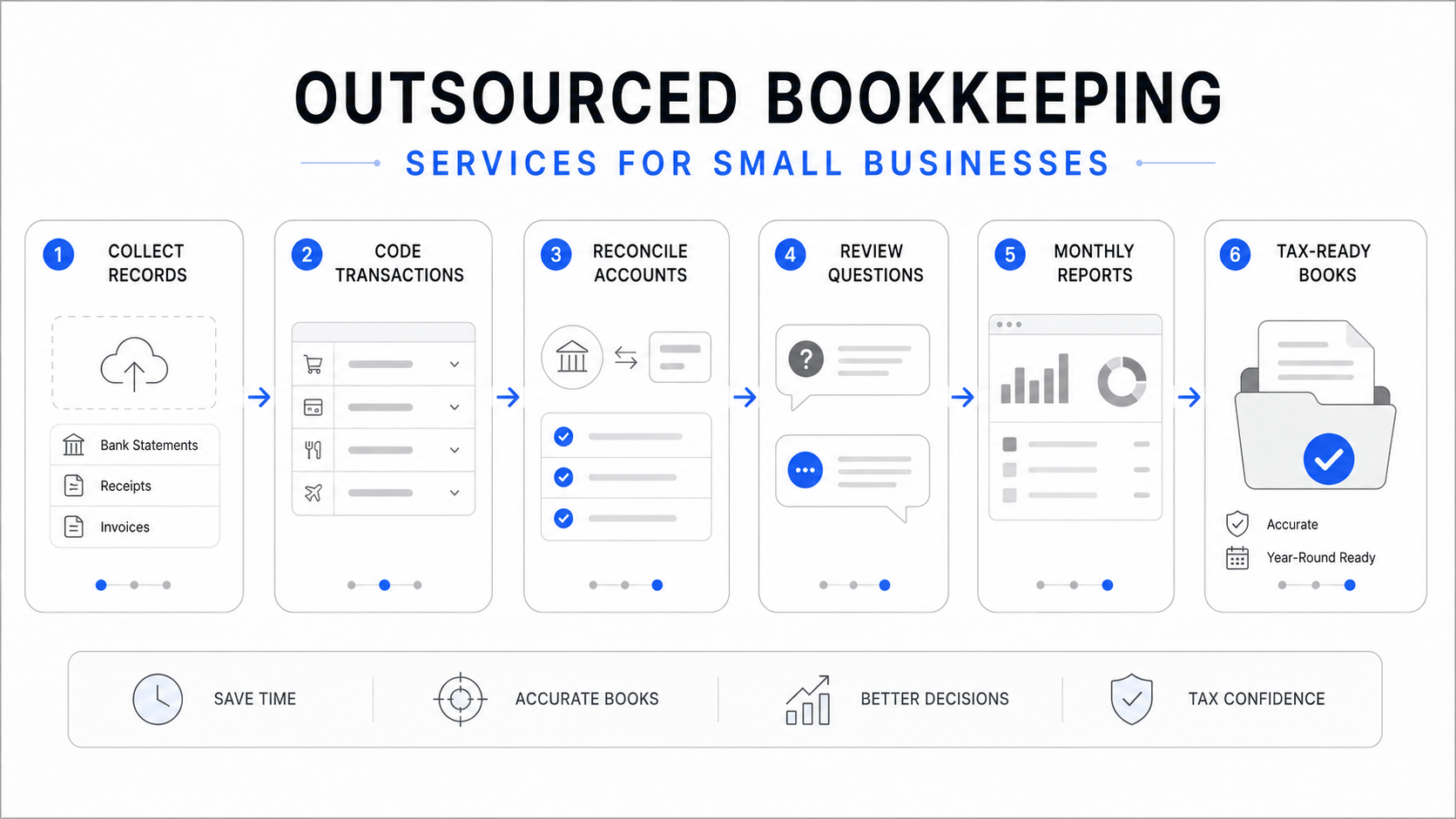

Bookkeeping is easy to delay. Sales, customers, payroll, and daily work feel more urgent. But when books fall behind, decisions get harder and tax season becomes more expensive.
Outsourced bookkeeping gives a small business regular financial support without hiring a full-time accounting employee.
The exact scope depends on the business, but core bookkeeping often includes bank reconciliation, transaction coding, accounts payable, accounts receivable, financial reports, and monthly close support.
For many owners, the most useful part is rhythm. The books are reviewed every month, not once a year.
Our accounting and bookkeeping services are designed to help businesses keep records clean and tax-ready.
Outsourcing may make sense when:
If your CPA asks many questions every tax season, that is a sign your books need better monthly care.
Clean books make tax filing easier. They help confirm income, expenses, deductions, loan balances, payroll, and owner draws.
They also help with planning. If you wait until year end, there may be fewer options. With monthly numbers, you can plan estimates, purchases, cash flow, and tax strategy earlier.
For tax support, see our tax preparation and planning services.
At a minimum, most businesses should review a profit and loss statement and balance sheet. Some also need cash flow reports, accounts receivable aging, budget comparisons, or sales tax reports.
The report should be simple enough to use. A long report that no one reads does not help.
Outsourcing is not only about saving money. It is about getting reliable work, clear records, and fewer surprises. A good bookkeeping process can reduce cleanup fees, improve tax prep, and help owners make better choices.
For a cost-focused view, see our article on outsourcing accounting services.
Outsourced bookkeeping works best when the owner sends records on time. This may include bank statements, receipts, invoices, payroll reports, loan statements, and sales reports. A simple monthly checklist keeps the process from turning into a year-end cleanup project.
Outsourcing does not mean ignoring the books. The owner should still review reports, ask questions, and understand the main numbers. The best bookkeeping relationship gives the business owner more control, not less.
At the end of each month, the business should have reconciled bank accounts, categorized transactions, a profit and loss statement, a balance sheet, and a list of open questions.
Some businesses also need accounts receivable aging, accounts payable aging, sales tax reports, cash flow summaries, or job-level reporting. The reports should match how the owner actually runs the business.
Good bookkeeping helps with more than tax filing. It can show whether margins are changing, whether expenses are rising, whether customers are paying late, and whether cash is tight.
For a small business, these details matter. A profitable month on paper may still create cash pressure if invoices are unpaid or loan payments are high.
You may need outsourced support if bank accounts are not reconciled, reports are always late, tax season requires cleanup, or the owner cannot explain profit and cash flow.
Another sign is decision delay. If you avoid pricing, hiring, or tax planning because the numbers are unclear, bookkeeping is no longer a back-office task. It is affecting management.
The main link should point to accounting and bookkeeping services. Where the article discusses tax-ready books, link to tax preparation and planning services. If the reader needs broader finance leadership, point to fractional CFO services.
Outsourced bookkeeping helps small businesses stay organized, file taxes more smoothly, and understand their numbers during the year.
If your books are behind or you need monthly support, contact Madras Accountancy to review your current process.
Section 4960's 21% excise tax now reaches far more nonprofit employees. See who is a covered employee in 2026 and what changed.

The Section 45S paid family leave credit is permanent for 2026 with new options. See who qualifies, the amounts, and how to claim it.
Opportunity zones become permanent in 2027 under the One Big Beautiful Bill. See the new deferral, rural bonus, and the 2026 handoff.