

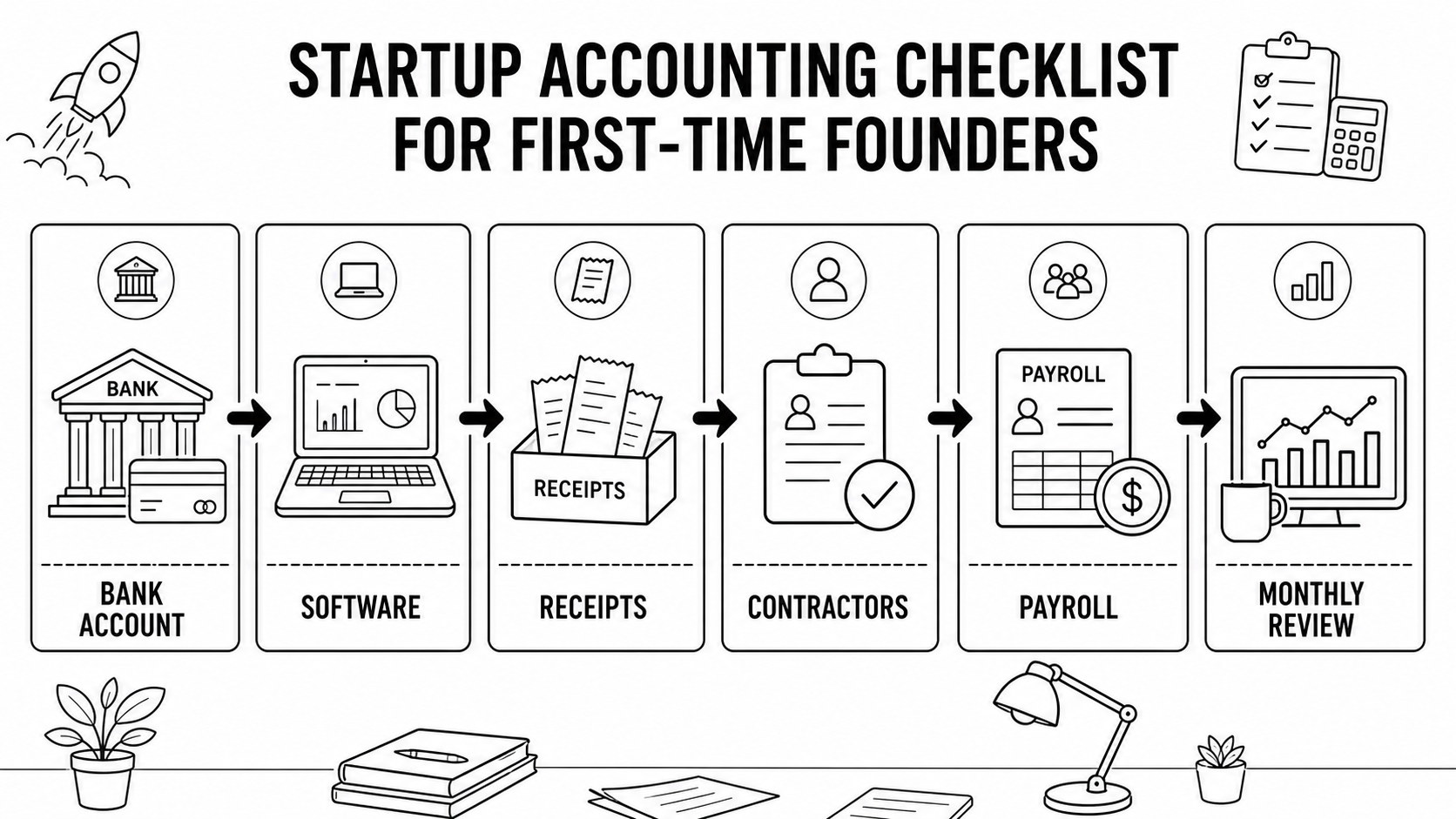

First-time founders do not need a complex accounting system on day one. They need a clean setup that can grow with the company.
This checklist focuses on the basics that prevent bigger problems later.
Use a business bank account and business card. Keep personal spending separate.
This simple step makes bookkeeping, tax filing, and investor review much easier.
Pick accounting software and set up basic categories for revenue, payroll, contractors, software, legal, marketing, travel, and office costs.
Do not overbuild the system. It should be simple enough to use every month.
Save receipts, invoices, formation documents, tax letters, payroll reports, and investor agreements. A clean document folder saves time later.
If you pay contractors, collect tax forms and keep invoices. If you hire employees, use a payroll system and reconcile reports.
Payroll mistakes can create penalties and extra cleanup.
Startups may deal with income tax, payroll tax, franchise tax, sales tax, and 1099 filings.
For tax support, see our tax preparation and planning services.
Each month, check cash, expenses, unpaid bills, customer invoices, payroll, and tax deadlines.
Our accounting and bookkeeping services can help founders keep this process steady.
If the company raises money or needs forecasts, budgets, and investor reporting, it may need more than bookkeeping.
Review our fractional CFO services if the company needs finance leadership.
A founder may manage the basics at first, but the system should be easy to hand off later. Use clear folders, consistent categories, and a monthly checklist.
That way, outside bookkeeping or finance help can step in without rebuilding everything.
If the accounting process depends only on what the founder remembers, it will break as the company gets busier. Use written checklists, folders, and recurring monthly reviews.
Simple structure protects the founder's time.
A founder dashboard can show cash, monthly spend, revenue, unpaid bills, and runway. It does not need to be fancy. It just needs to be updated regularly.
This helps founders notice problems sooner.
Use this guide as a monthly review tool, not just a tax-season article. Assign one person to gather records, check open questions, and flag anything that may affect filing, cash flow, or compliance. A simple habit like this keeps small issues from becoming year-end cleanup work.
After reading this, make a short list of the records, deadlines, and open questions tied to this topic. Review that list with your accounting or tax team before the next filing cycle, not after a deadline is already close.
First-time founders should keep accounting simple, clean, and consistent. Separate accounts, track records, review monthly, and plan taxes early.
If you want help setting up your startup accounting process, contact Madras Accountancy.

Section 4960's 21% excise tax now reaches far more nonprofit employees. See who is a covered employee in 2026 and what changed.

The Section 45S paid family leave credit is permanent for 2026 with new options. See who qualifies, the amounts, and how to claim it.

Opportunity zones become permanent in 2027 under the One Big Beautiful Bill. See the new deferral, rural bonus, and the 2026 handoff.



