
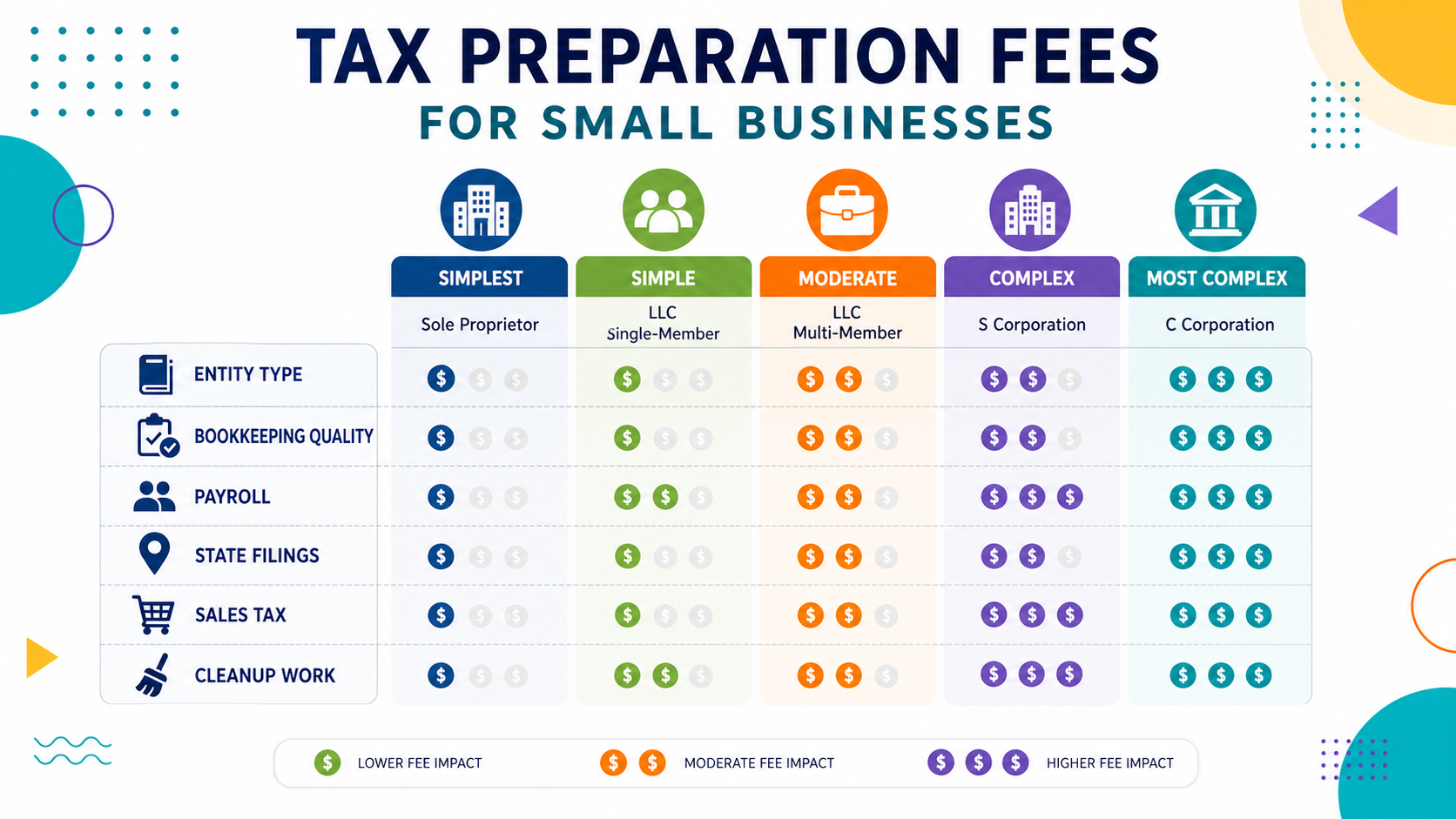

Small business tax preparation is not one flat task. A business return may include bookkeeping review, owner compensation, payroll forms, sales tax questions, contractor payments, depreciation, and state filings.
That is why fees can vary so much. Two businesses with the same revenue can have very different tax prep costs if one has clean books and the other has months of uncategorized transactions.
A sole proprietor usually files business income on a personal return. An S corporation, partnership, or C corporation has a separate business return. That separate return often takes more time.
Entity type also affects the records needed. An S corporation may need payroll review. A partnership may need partner allocations. A C corporation may need a closer look at retained earnings and balance sheet items.
If you are not sure whether your current setup still fits your business, start with our broader tax preparation and planning services.
Clean books make filing smoother. Messy books create extra work. A tax preparer may need to ask questions about deposits, split expenses, reconcile accounts, or fix categories.
Common cleanup issues include:
If your books are not ready, monthly accounting and bookkeeping support can reduce tax-season stress.
If you have employees, payroll must match the return. If you paid contractors, 1099 records may need to be checked. Mistakes here can lead to notices or extra filing work.
This is also where planning matters. A business owner may need help deciding how much to pay themselves, how much to set aside for taxes, and how to avoid underpayment penalties.
Sales tax is separate from income tax, but it often creates tax-season questions. If your business sells products or taxable services, the preparer may need to understand where sales happened and whether tax was collected correctly.
For businesses with sales tax exposure, our sales tax services can support registration, filing, and compliance.
Start early. Reconcile accounts each month. Keep receipts for large expenses. Review contractor payments before year end. Make sure payroll forms match your books.
A good tax file should include profit and loss, balance sheet, payroll reports, loan statements, fixed asset details, and prior-year returns.
Small business owners should know what they are paying for. A clear tax prep quote should explain the return type, expected records, add-on work, and what happens if cleanup is needed. This makes the process easier for both sides.
A Schedule C business filed with an individual return is usually different from a partnership, S corporation, or C corporation return. A separate entity return often needs more work because the preparer must review business records, balance sheet items, owner activity, and supporting forms.
The fee may also change if the business has more than one state, payroll, contractors, inventory, loans, or fixed assets. These items do not always make the return difficult, but they do add review steps.
Many owners focus only on the tax return fee. The bigger cost may be cleanup. If the books are not reconciled, the tax preparer may need to fix categories, separate personal expenses, review deposits, or correct loan and payroll entries.
That work is useful, but it is not the same as tax preparation. It should be scoped separately so the owner understands what is being fixed.
This is where year-round accounting and bookkeeping services can help. Clean monthly books usually make filing easier.
Small business tax preparation may include extra fees for state returns, 1099 filing, amended returns, sales tax review, payroll reconciliation, late filings, or tax notices.
Ask about these items before work starts. A clear scope prevents surprise bills and helps the owner prepare the right documents.
Tax filing reports what already happened. Tax planning looks for choices before the year closes. That may include estimated payments, entity structure, retirement contributions, equipment purchases, owner pay, and timing of income or expenses.
If the owner wants planning, it should be part of the engagement or added as a separate service. See tax preparation and planning services for the main service page.
Small business tax preparation fees depend on entity type, record quality, payroll, states, and tax planning needs. The best way to control cost is to keep clean books all year.
If your business needs both filing and year-round support, contact Madras Accountancy to review the right setup.
Section 4960's 21% excise tax now reaches far more nonprofit employees. See who is a covered employee in 2026 and what changed.

The Section 45S paid family leave credit is permanent for 2026 with new options. See who qualifies, the amounts, and how to claim it.
Opportunity zones become permanent in 2027 under the One Big Beautiful Bill. See the new deferral, rural bonus, and the 2026 handoff.