

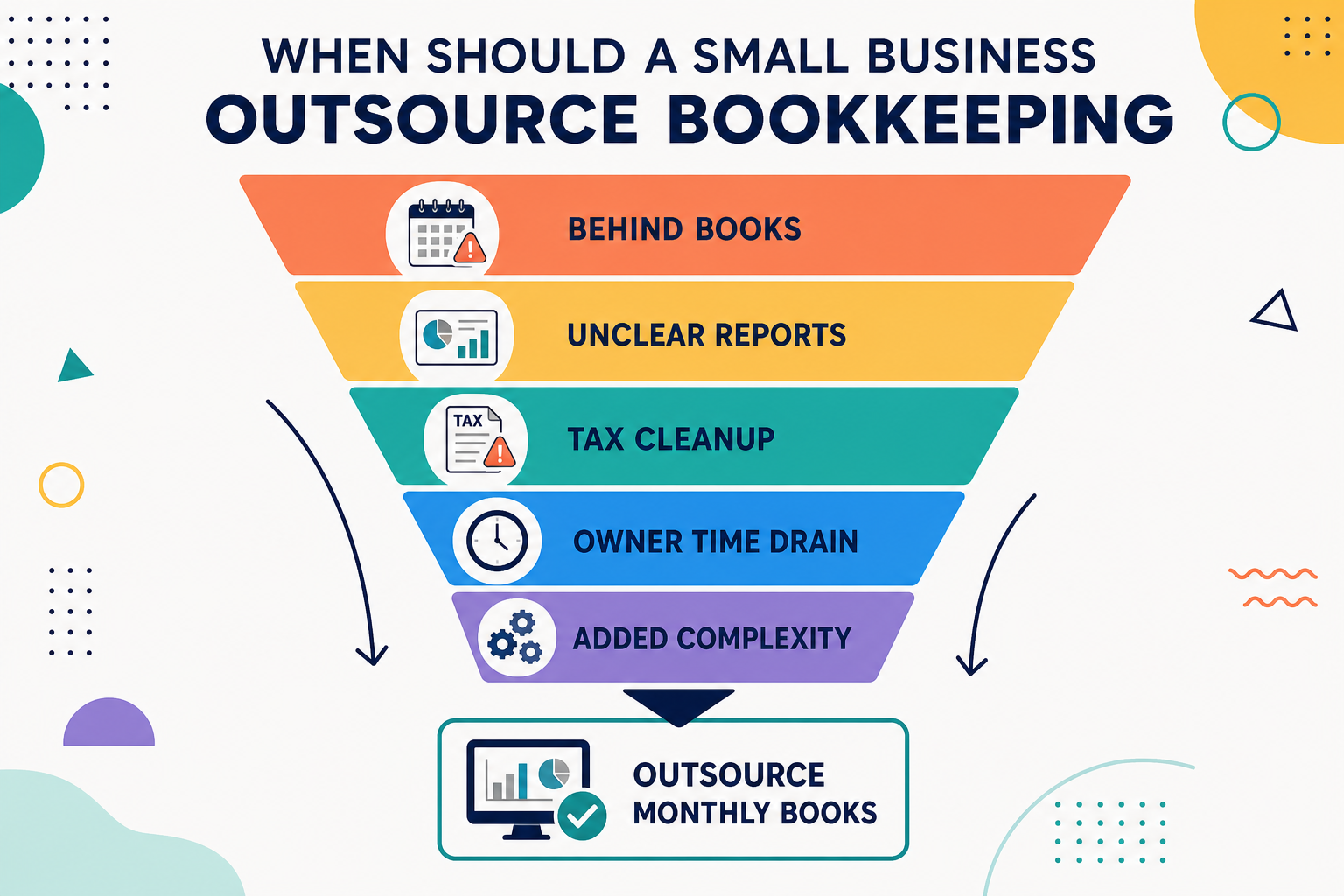

Many small businesses start with the owner doing the books. That can work for a while. But as the business grows, bookkeeping can become a drag on time and decision-making.
Outsourcing may make sense when the books are no longer simple or reliable.
If reports are months late, they are not helping you run the business. You may still file taxes, but you are missing useful information during the year.
Monthly accounting and bookkeeping services can help create a steady rhythm.
If every tax season starts with cleanup, bookkeeping is the problem. The tax preparer may need to fix categories, reconcile accounts, review deposits, or ask many questions.
Clean books reduce tax prep stress. They can also help with planning before year end. See our tax preparation and planning services for the filing side.
If the profit and loss does not feel right, the balance sheet looks strange, or cash does not match profit, the records may need review.
Good bookkeeping should help answer basic questions. Are we profitable? Who owes us money? What bills are due? Can we cover payroll?
Owner time is expensive. If the owner is coding transactions late at night or fixing reports before a lender meeting, outsourcing may be a better use of resources.
The owner should still review reports, but they should not need to do every bookkeeping task.
Hiring employees, adding locations, selling online, taking loans, or collecting sales tax can all make bookkeeping more complex.
If sales tax is part of the issue, review our sales tax services.
Start with bank reconciliations, transaction coding, monthly reports, and a question list. Then add payroll review, accounts payable, accounts receivable, or sales tax reports if needed.
After outsourcing, the owner should receive clearer reports and fewer year-end surprises. The bookkeeper should also send a regular list of open questions so issues do not sit unresolved for months.
The goal is not to remove the owner from the numbers. The goal is to give the owner better numbers with less manual work.
Outsourcing works best when reports are reviewed on a set day each month. Look at profit, cash, receivables, payables, payroll, and unusual expenses.
This meeting can be short. The value is in creating a habit where the owner sees the numbers before decisions are made.
The first handoff does not need to include every finance task. Start with monthly reconciliation and reports. Once that works, add bill pay, invoicing, payroll review, or sales tax support.
A small business should outsource bookkeeping when the books are late, unclear, or taking too much owner time.
If your reports are not helping you make decisions, contact Madras Accountancy to review the current process.

Section 4960's 21% excise tax now reaches far more nonprofit employees. See who is a covered employee in 2026 and what changed.

The Section 45S paid family leave credit is permanent for 2026 with new options. See who qualifies, the amounts, and how to claim it.

Opportunity zones become permanent in 2027 under the One Big Beautiful Bill. See the new deferral, rural bonus, and the 2026 handoff.



