

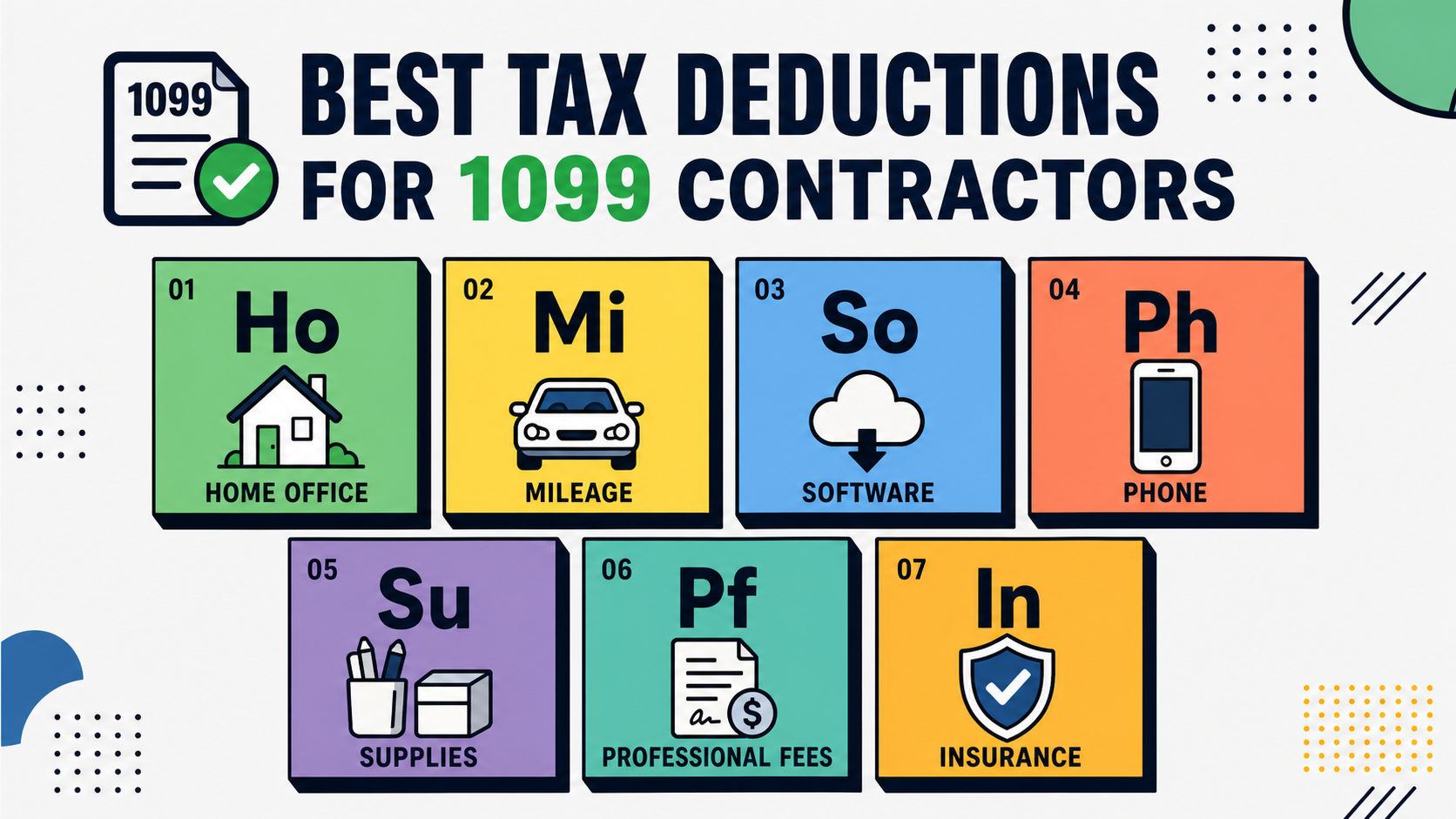

1099 contractors can often deduct ordinary business expenses. The hard part is knowing what to track and keeping records that support the deduction.
This guide covers common deductions. The exact treatment depends on your work, records, and tax situation.
If you use part of your home regularly and only for business, you may be able to claim a home office deduction. The space should be specific and used for work, not as a mixed personal area.
Keep notes on the space, rent or mortgage details, utilities, and other home costs. A CPA can help decide which method fits your return.
If you drive for business, track business miles during the year. Do not try to recreate a mileage log at tax time. Record the date, purpose, and miles.
Some contractors use the standard mileage rate. Others may use actual vehicle expenses. The better choice depends on the facts.
Software subscriptions, work tools, office supplies, equipment, and professional apps may be deductible if they are used for your business.
Save receipts and invoices. If something is used for both personal and business purposes, track the business portion carefully.
Many contractors use phone and internet for work. You may be able to deduct the business portion. The key is being reasonable and consistent.
Do not deduct the full cost if the service is also used personally. Keep a simple method for estimating business use.
Accounting, legal, tax preparation, business insurance, and professional dues may also be deductible. These costs can support the business and reduce filing problems.
For tax filing help, see our tax preparation and planning services.
Some 1099 workers may have retirement plan options or health insurance deductions. These areas can be valuable, but they need careful review.
If you are also trying to estimate tax payments, read our guide on setting aside taxes for 1099 income.
Deductions are easier when records are clean. Use a separate business bank account. Keep receipts. Review transactions monthly.
Our accounting and bookkeeping services can help contractors keep records tax-ready.
Do not wait until the return is due. Keep a folder for receipts, mileage, invoices, bank statements, and notes about mixed-use expenses. Review it monthly so missing records can be fixed while the details are still fresh.
This habit makes tax filing easier and helps your preparer ask better questions.
Year-end review gives you time to fix records, find missing receipts, and plan larger purchases if they make business sense. It also helps you estimate taxes before the return is due.
Use this guide as a monthly review tool, not just a tax-season article. Assign one person to gather records, check open questions, and flag anything that may affect filing, cash flow, or compliance. A simple habit like this keeps small issues from becoming year-end cleanup work.
The best 1099 deductions are the ones you can support with clear records. Track expenses during the year and review them before filing.
If you want help reviewing deductions and quarterly payments, contact Madras Accountancy.
Section 4960's 21% excise tax now reaches far more nonprofit employees. See who is a covered employee in 2026 and what changed.

The Section 45S paid family leave credit is permanent for 2026 with new options. See who qualifies, the amounts, and how to claim it.

Opportunity zones become permanent in 2027 under the One Big Beautiful Bill. See the new deferral, rural bonus, and the 2026 handoff.