

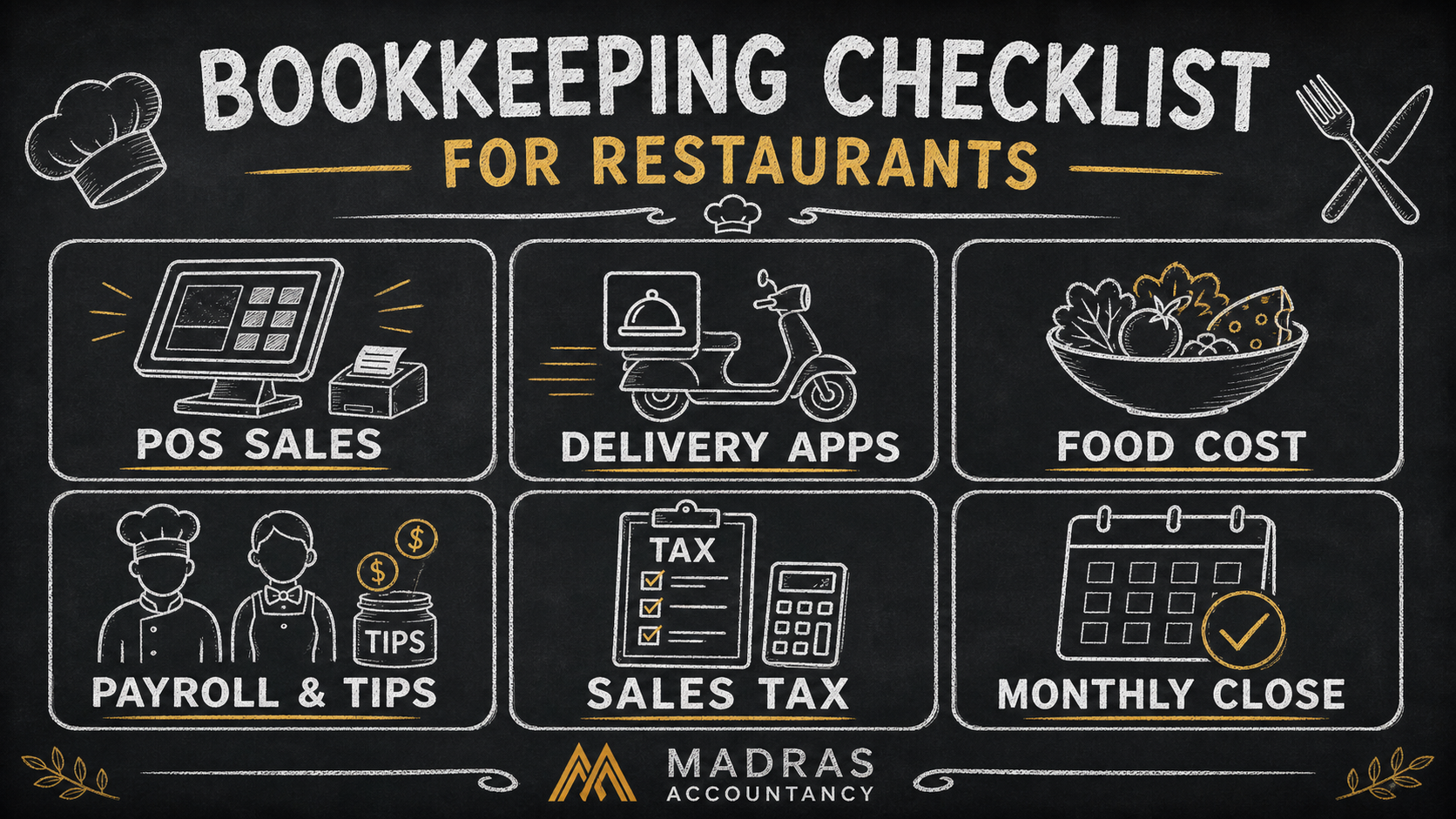

Restaurant bookkeeping needs a steady routine. Sales move daily. Payroll, tips, vendors, delivery apps, and sales tax all need attention.
A simple checklist can keep the books useful and reduce tax-season cleanup.
Compare POS sales to bank deposits. Review cash, card sales, gift cards, refunds, and delivery app payouts.
Small differences can grow if they are ignored. Daily or weekly review keeps problems easier to fix.
Delivery platforms may withhold fees, tips, refunds, and commissions before deposits reach the bank.
Do not record only the net deposit without understanding the activity behind it. This can distort revenue and expenses.
Food and labor are major restaurant costs. Track vendor bills, payroll, overtime, and staffing patterns.
Our guide on restaurant revenue and profit margin explains why these numbers matter.
Tips and payroll records need to match payroll reports and tax filings. Mistakes can create compliance issues.
Keep payroll reports, tip records, and employee details organized each pay period.
Sales tax collected should be separated from revenue and filed on time. Restaurant owners should know what was collected and what was remitted.
If sales tax is difficult to manage, review our sales tax services.
At month end, reconcile bank accounts, review vendor balances, check payroll entries, and prepare a profit and loss report.
Our accounting and bookkeeping services can support this monthly process.
Restaurant owners should review prime cost, which usually combines food cost and labor cost. This number gives a quick view of operating pressure.
If prime cost rises, the owner can look at menu pricing, staffing, waste, vendor costs, and scheduling before the issue becomes larger.
Late vendor bills can make profit look better than it is. Enter bills on time and review unpaid balances each month.
This helps owners see true food cost, plan cash, and avoid surprises when several vendor payments come due at once.
Restaurant books should reflect how the restaurant runs. Separate food, beverage, labor, delivery fees, rent, repairs, and supplies. This helps owners see what is changing.
If categories are too broad, the reports may be easy to prepare but hard to use.
Use this guide as a monthly review tool, not just a tax-season article. Assign one person to gather records, check open questions, and flag anything that may affect filing, cash flow, or compliance. A simple habit like this keeps small issues from becoming year-end cleanup work.
After reading this, make a short list of the records, deadlines, and open questions tied to this topic. Review that list with your accounting or tax team before the next filing cycle, not after a deadline is already close.
Restaurant bookkeeping should track sales, costs, payroll, tips, vendor bills, and sales tax. Clean records help owners protect margins and file taxes with less stress.
If your restaurant books are behind, contact Madras Accountancy for help.
Section 4960's 21% excise tax now reaches far more nonprofit employees. See who is a covered employee in 2026 and what changed.

The Section 45S paid family leave credit is permanent for 2026 with new options. See who qualifies, the amounts, and how to claim it.

Opportunity zones become permanent in 2027 under the One Big Beautiful Bill. See the new deferral, rural bonus, and the 2026 handoff.