

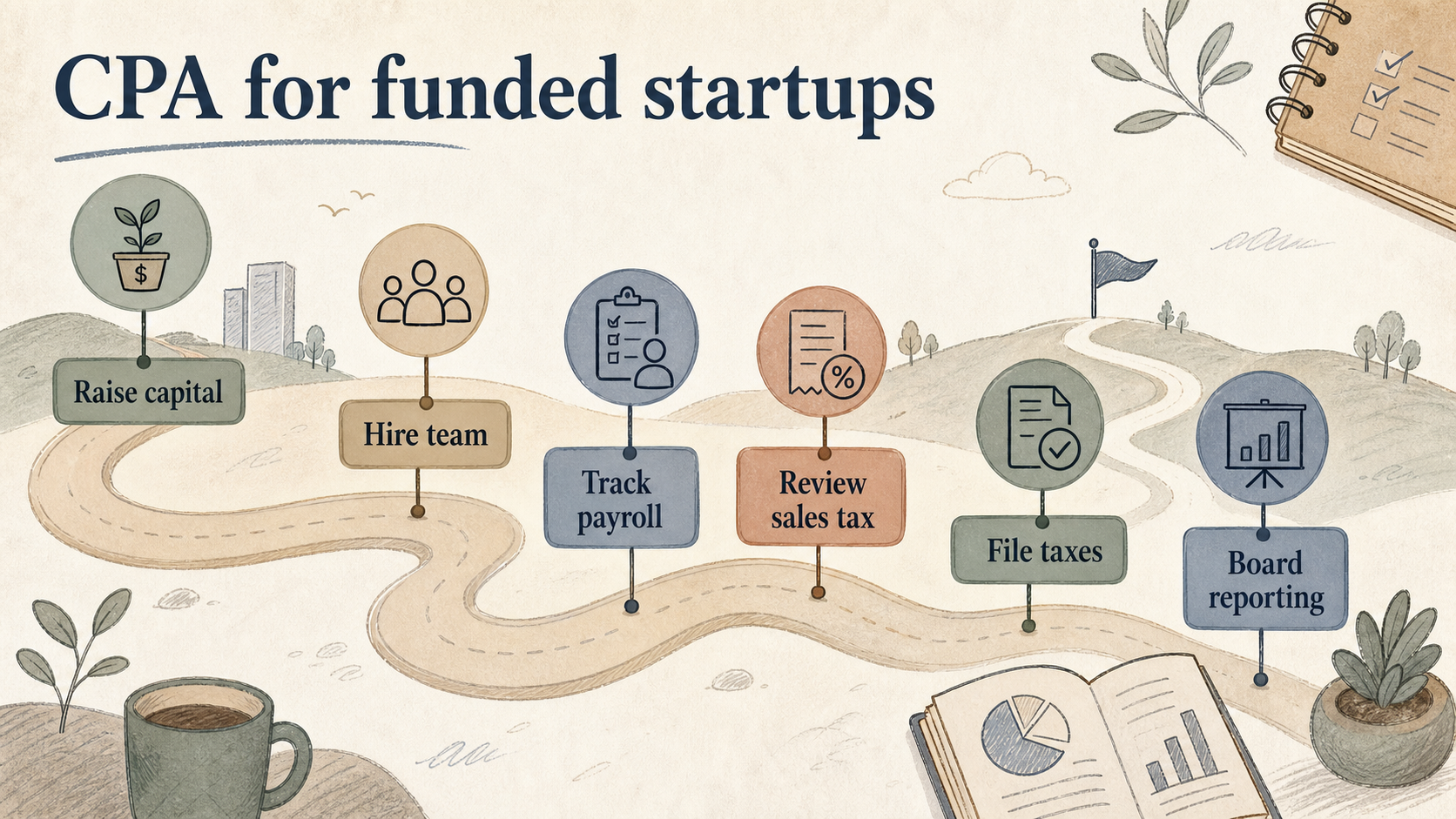

This article is a deeper angle on CPA support for startups. A new startup may need basic bookkeeping and tax filing. A funded startup often needs more structure.
Investors, payroll, state filings, and reporting needs can change the accounting picture.
Once a startup raises capital, the books should clearly show cash, spending, payroll, revenue, and major contracts.
Weak records can slow investor updates and create tax issues. Our existing guide on CPA support for startups gives a broader overview.
Funded startups often hire quickly. Employee payroll, founder pay, and contractor payments should be set up correctly.
Contractor records matter for 1099 filings. Payroll reports should match the books.
Startups may need income tax filings, payroll tax filings, franchise tax review, sales tax review, and state compliance.
Our tax preparation and planning services can help organize the tax side.
SaaS, digital goods, and online sales can raise sales tax questions. The rules depend on states, products, and customers.
If this applies, review our sales tax services.
A funded startup should not wait until year end to understand cash. Monthly reports should show burn rate, runway, revenue, and expenses.
Our accounting and bookkeeping services can support this process.
Some funded startups need budgets, forecasts, board reporting, and cash planning. They may not need a full-time CFO yet.
In that case, fractional CFO services may be the right next step.
An early funded startup may need bookkeeping, tax filing, and payroll review. A later-stage company may need forecasts, board reports, state compliance, and more formal controls.
The support should grow with the company instead of being overbuilt too early.
Before adding new entities, states, payroll setups, or sales channels, ask how the change affects tax and accounting. A CPA can help spot issues before the company commits to a structure.
This is easier than fixing the setup after months of activity.
CPA support works best before a filing or investor request is urgent. Early review gives time to clean records, confirm state duties, and plan tax positions.
Late review often becomes cleanup.
Use this guide as a monthly review tool, not just a tax-season article. Assign one person to gather records, check open questions, and flag anything that may affect filing, cash flow, or compliance. A simple habit like this keeps small issues from becoming year-end cleanup work.
After reading this, make a short list of the records, deadlines, and open questions tied to this topic. Review that list with your accounting or tax team before the next filing cycle, not after a deadline is already close.
Funded startups should consider CPA help when reporting, payroll, taxes, and investor expectations become more serious.
If your startup has raised money or is preparing to, contact Madras Accountancy.

Section 4960's 21% excise tax now reaches far more nonprofit employees. See who is a covered employee in 2026 and what changed.

The Section 45S paid family leave credit is permanent for 2026 with new options. See who qualifies, the amounts, and how to claim it.
Opportunity zones become permanent in 2027 under the One Big Beautiful Bill. See the new deferral, rural bonus, and the 2026 handoff.