

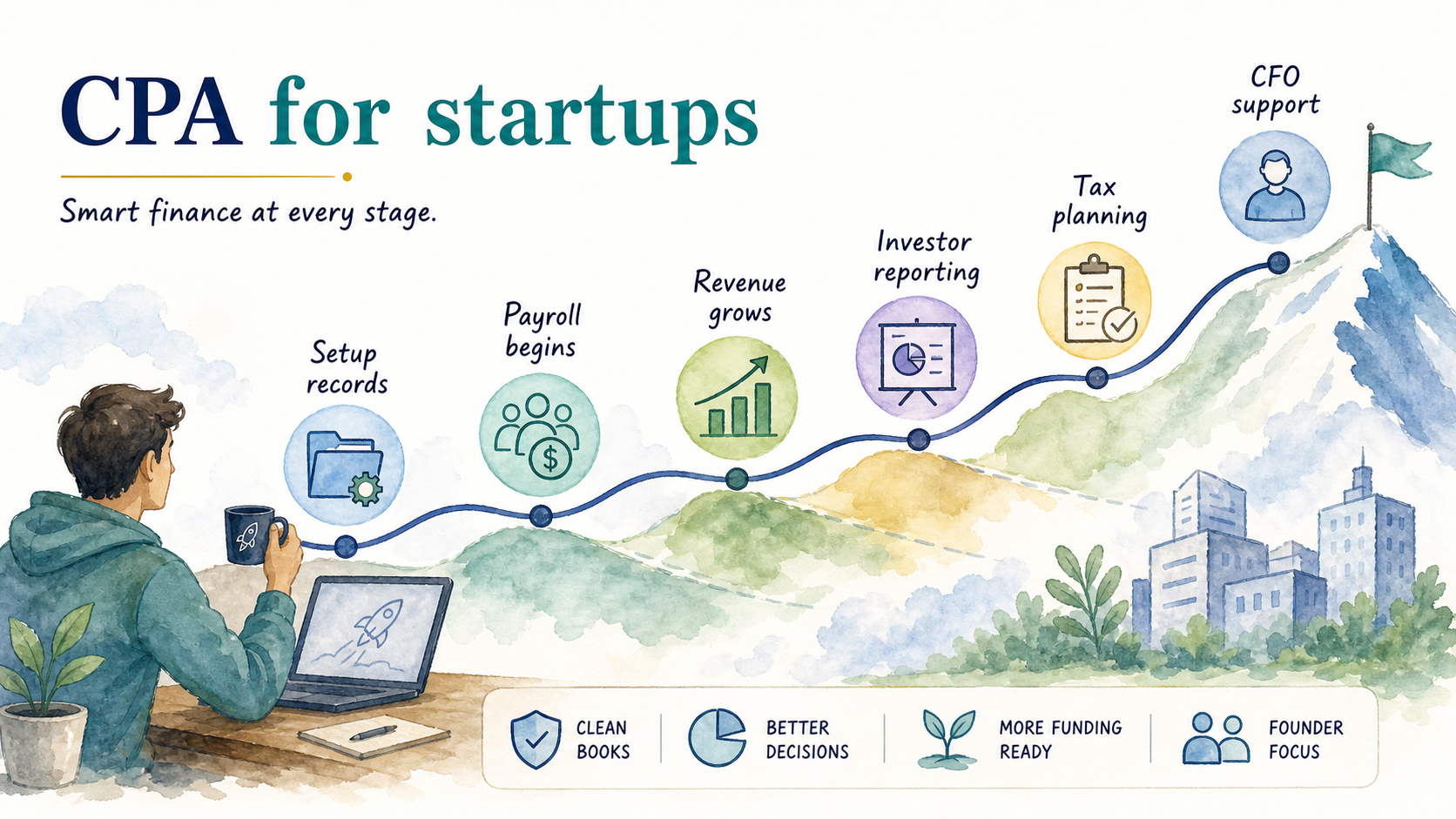

Startups often move quickly. Founders focus on product, sales, hiring, and funding. Accounting can feel like a task to fix later.
That delay can create problems. Clean records, tax planning, and basic financial controls are useful long before a company is large.
A startup should separate business and personal spending, choose accounting software, set up categories, and keep bank records clean.
Early mistakes can follow the company for years. Messy books can slow tax filing, investor review, or a future due diligence process.
Our accounting and bookkeeping services can help set up a clean monthly process.
Startups often use a mix of employees, founders, contractors, and advisors. Each has different tax and reporting needs.
If contractor payments are not tracked, 1099 filing can become difficult. If payroll is not handled correctly, the company may face penalties.
Startups may need income tax filings, franchise tax filings, payroll tax filings, sales tax review, and state registrations.
If the startup sells taxable products or services, sales tax should be reviewed early. See our sales tax services for support.
Even simple investor updates need accurate cash, burn rate, runway, and expenses. A founder should know how much cash is left and what costs are changing.
If your company needs finance leadership but not a full-time CFO, review our fractional CFO services.
A startup should consider CPA help when it raises money, hires employees, issues equity, expands states, adds revenue, or prepares for tax filing.
For more background, see our existing guide on CPA support for startups.
Investors, lenders, and buyers may ask for clean financial records. If the books are built only when someone asks, the process can be slow and stressful. It is easier to keep records clean from the start.
Startup accounting should not sit apart from tax planning. Payroll, contractors, state registrations, sales tax, and R&D work can all affect filings. A CPA can help founders avoid treating these as separate last-minute tasks.
A startup does not need a complex finance package at the beginning. It needs accurate cash, spending, revenue, payroll, and runway. Once those basics are reliable, the company can add budgets, forecasts, and board-level reporting.
Simple reports are easier to maintain and easier for founders to use.
Use this guide as a monthly review tool, not just a tax-season article. Assign one person to gather records, check open questions, and flag anything that may affect filing, cash flow, or compliance. A simple habit like this keeps small issues from becoming year-end cleanup work.
A CPA can help a startup build clean records, avoid tax surprises, and prepare for growth. The earlier the process is set up, the easier it is to maintain.
If your startup needs tax, bookkeeping, or finance support, contact Madras Accountancy.

Section 4960's 21% excise tax now reaches far more nonprofit employees. See who is a covered employee in 2026 and what changed.

The Section 45S paid family leave credit is permanent for 2026 with new options. See who qualifies, the amounts, and how to claim it.
Opportunity zones become permanent in 2027 under the One Big Beautiful Bill. See the new deferral, rural bonus, and the 2026 handoff.