

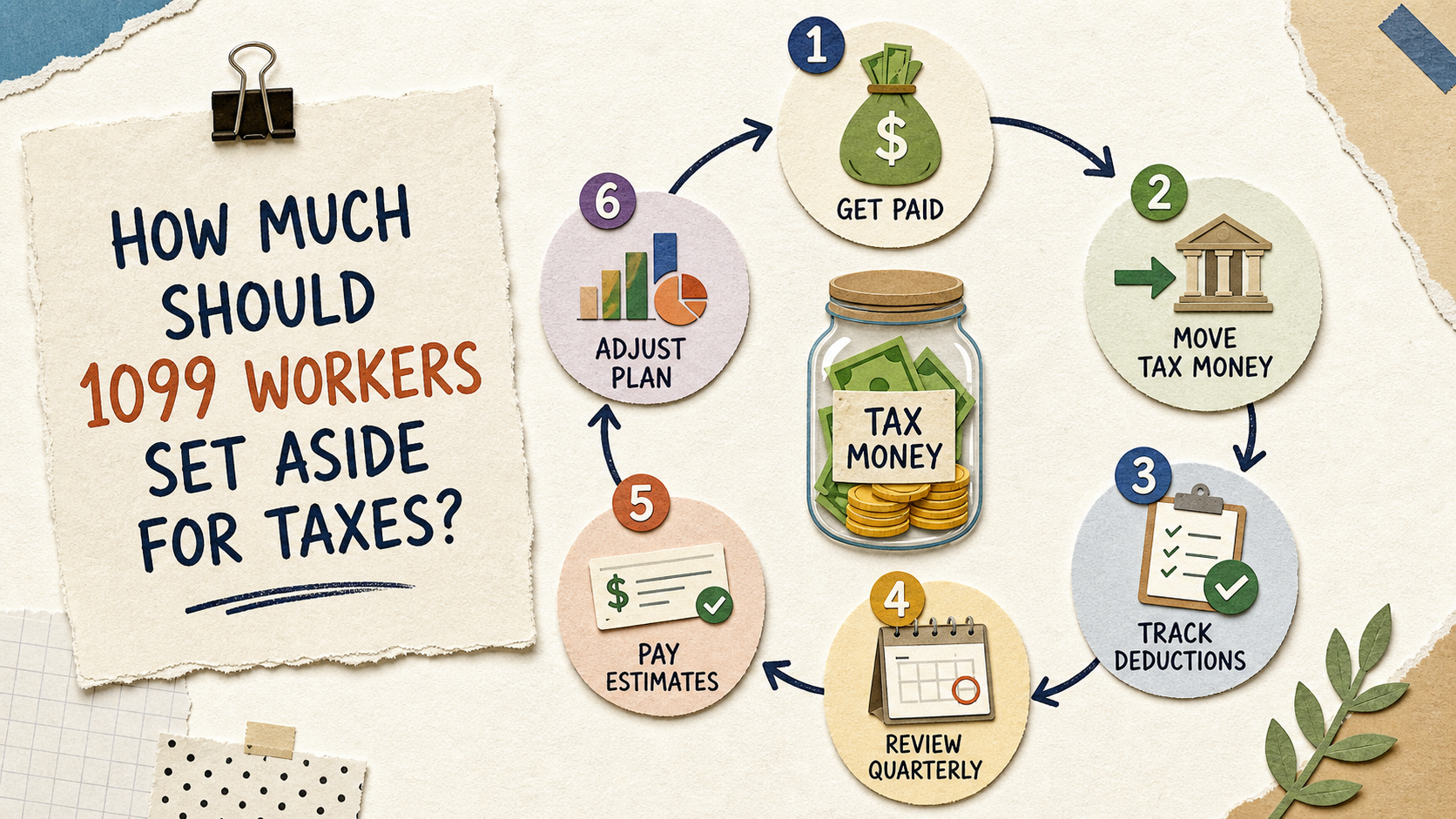

If you earn 1099 income, taxes are not taken out of each payment. That means you need a system. Waiting until tax season can lead to a large bill and stress.
There is no single percentage that works for everyone. Your income, state, deductions, filing status, and other income all matter. Still, the goal is simple: save as you earn.
Employees usually have taxes withheld from paychecks. Contractors do not. A 1099 worker may need to pay income tax and self-employment tax. State taxes may also apply.
That is why a large payment from a client is not all take-home pay. Part of it should be set aside before you spend the rest.
A separate account makes tax money harder to spend by accident. Each time you get paid, move a set percentage into that account.
The right percentage depends on your facts. If your income is rising or you have few deductions, you may need to save more. If you have strong deductions or another job with withholding, the amount may be different.
Our detailed guide on how much to set aside for 1099 income goes deeper into this topic.
Deductions can lower taxable income, but only if you track them. Do not wait until tax season to remember what you spent.
Common expenses may include:
Keep receipts and notes. Clean records help your tax preparer move faster.
Many contractors make estimated tax payments during the year. These payments help avoid a large balance due at filing time.
If you miss estimates, you may owe penalties. If your income changes during the year, your estimates may need to change too.
For support, see our tax preparation and planning services.
Use a separate business bank account. Categorize expenses each month. Save invoices and payment records. If you use accounting software, review it often.
If you need help staying organized, our accounting and bookkeeping services can keep the records ready.
Your tax savings rate should not stay fixed if your income changes. A slow month, a large project, or a new deduction can change the estimate. Review your income and expenses at least quarterly so the amount you set aside still makes sense.
Use this guide as a monthly review tool, not just a tax-season article. Assign one person to gather records, check open questions, and flag anything that may affect filing, cash flow, or compliance. A simple habit like this keeps small issues from becoming year-end cleanup work.
1099 workers should set aside tax money as soon as they get paid. Do not rely on memory or a last-minute estimate.
If you want help building a tax savings plan, contact Madras Accountancy before the next quarterly payment deadline.

Section 4960's 21% excise tax now reaches far more nonprofit employees. See who is a covered employee in 2026 and what changed.

The Section 45S paid family leave credit is permanent for 2026 with new options. See who qualifies, the amounts, and how to claim it.

Opportunity zones become permanent in 2027 under the One Big Beautiful Bill. See the new deferral, rural bonus, and the 2026 handoff.



