

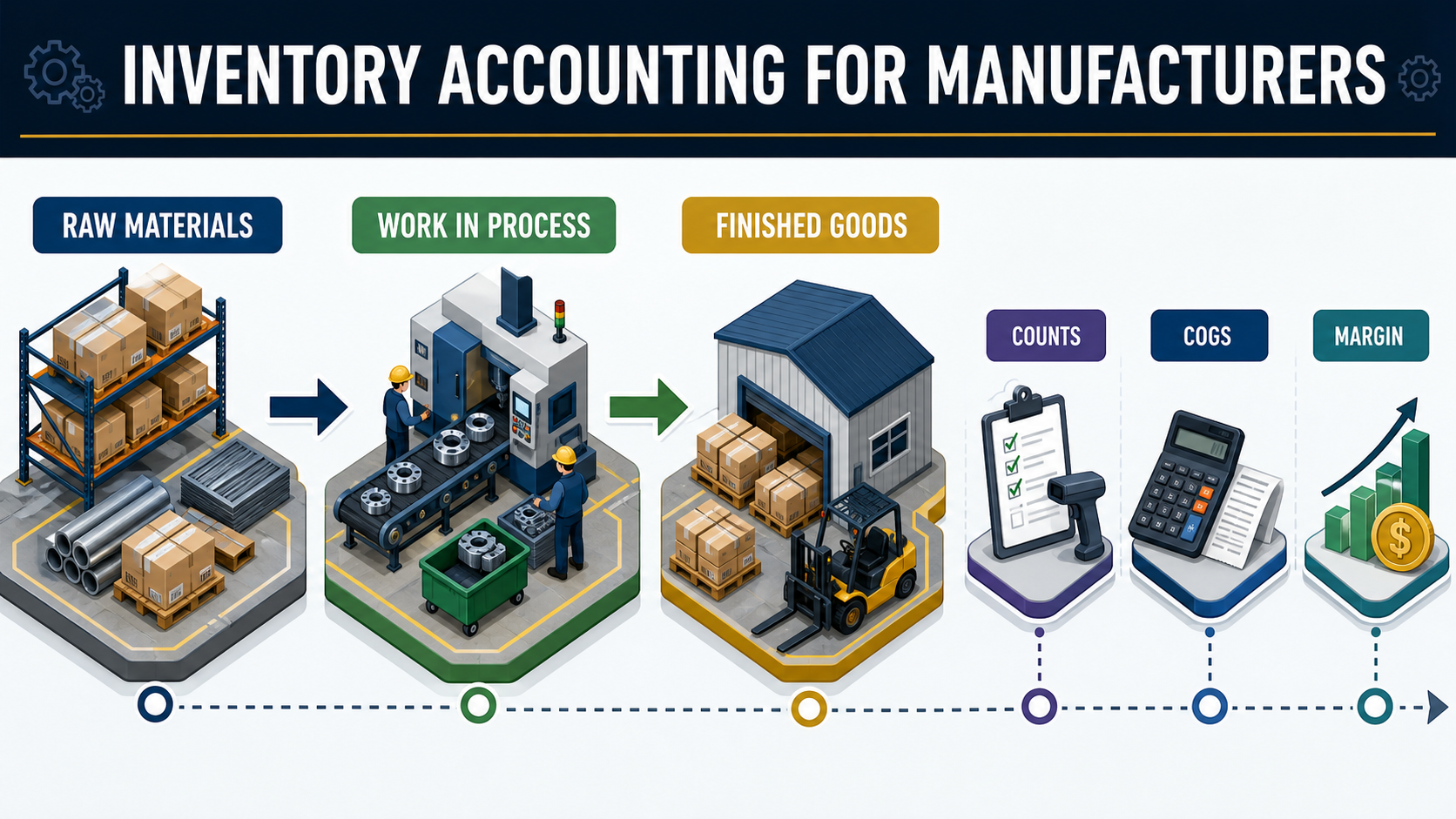

Inventory accounting is a core part of manufacturing finance. It helps show what materials are on hand, what is in production, and what finished goods are ready to sell.
When inventory records are weak, profit can be misstated.
Manufacturers often track raw materials, work in process, and finished goods. Each stage tells a different story.
Raw materials are items waiting for production. Work in process is partly finished production. Finished goods are ready to sell.
Inventory affects cost of goods sold. If inventory is not counted or valued correctly, gross margin may be wrong.
That can lead to poor pricing decisions and tax problems.
Regular counts help catch errors, waste, theft, and process issues. A year-end count is useful, but it should not be the only control.
The goal is to keep records close to reality throughout the year.
Some manufacturers need to include labor and overhead in product cost. This depends on the accounting method and business needs.
Our guide on manufacturing overhead allocation supports this topic.
Inventory accounting depends on clean purchase records, production records, payroll, and sales reports.
Our accounting and bookkeeping services can help organize the records that feed inventory reporting.
Inventory ties up cash. It can also affect taxable income. Owners should review slow-moving stock, write-downs, and year-end inventory before filing.
For filing support, see our tax preparation and planning services.
Slow-moving inventory ties up cash and can hide margin problems. Review aging inventory, obsolete materials, and stock that does not match current production plans.
These reviews help both operations and tax planning.
Inventory records should support purchasing decisions. If the system shows too much stock, the owner can slow orders. If materials are short, the owner can plan purchases before production is delayed.
Good inventory accounting helps both finance and operations.
Accounting records should be checked against real counts. If the system says materials exist but the floor says otherwise, the difference should be reviewed.
Counts help catch waste, entry errors, and timing issues.
Use this guide as a monthly review tool, not just a tax-season article. Assign one person to gather records, check open questions, and flag anything that may affect filing, cash flow, or compliance. A simple habit like this keeps small issues from becoming year-end cleanup work.
After reading this, make a short list of the records, deadlines, and open questions tied to this topic. Review that list with your accounting or tax team before the next filing cycle, not after a deadline is already close.
Inventory accounting helps manufacturers understand profit, cash, and product cost. Track materials, WIP, finished goods, counts, and COGS carefully.
If your inventory numbers do not match operations, contact Madras Accountancy.
Section 4960's 21% excise tax now reaches far more nonprofit employees. See who is a covered employee in 2026 and what changed.

The Section 45S paid family leave credit is permanent for 2026 with new options. See who qualifies, the amounts, and how to claim it.

Opportunity zones become permanent in 2027 under the One Big Beautiful Bill. See the new deferral, rural bonus, and the 2026 handoff.