

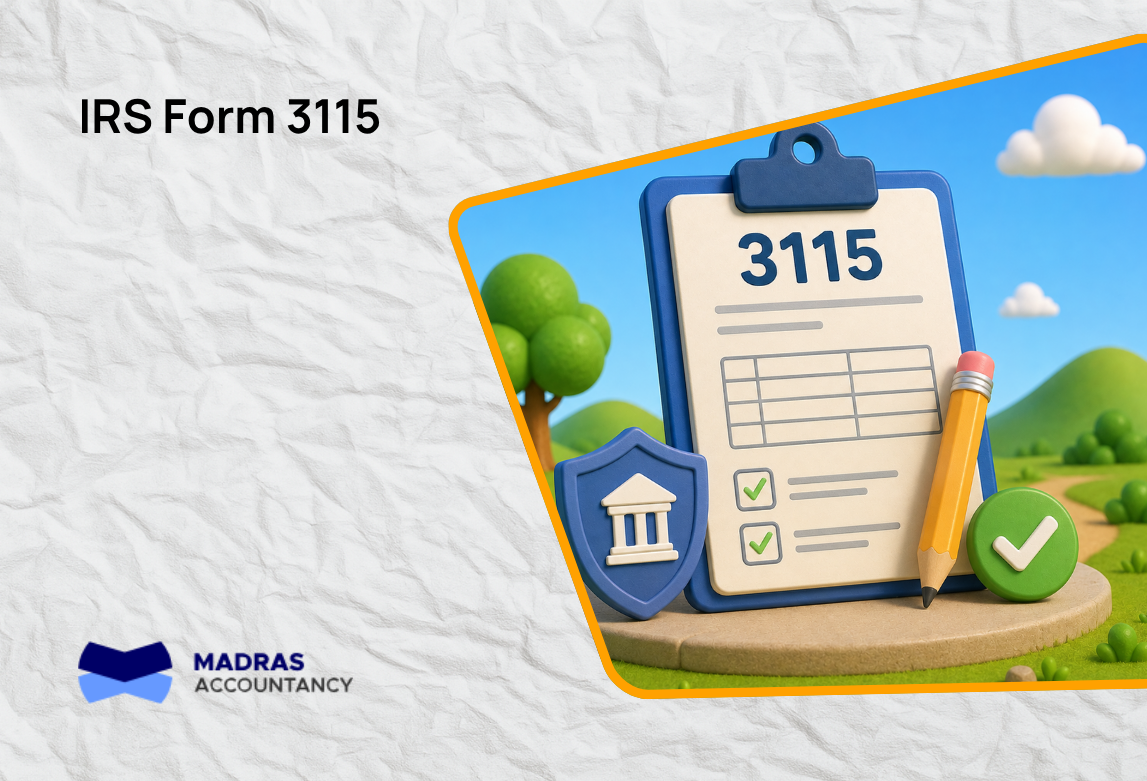

Pick how your business recognizes income or expenses once, use it for a couple of years, and the IRS treats that choice as locked in. You cannot simply start doing it differently, and you cannot fix it on an old return. To switch, you file Form 3115, and this guide walks through when you need it, how the automatic and advance-consent tracks work, and the one calculation that trips most people up.
Form 3115 is the Application for Change in Accounting Method. It is the document a taxpayer files to ask the agency to move from one method of accounting to another, whether that is an overall system like cash or accrual or the treatment of a single specific item like depreciation.
The reason it exists is simple. Once you use a method for two or more years, it becomes your established method in the eyes of the IRS, even if that method was wrong. From that point an accounting method change is the only clean way to switch, and this form is how you request it. Filing Form 3115 puts the change on the record and sets up the math that keeps your prior year numbers from being double counted or skipped. The IRS's own change procedures decide how the whole thing runs.
You file the form any time you want to change how an item is treated for tax, not simply how much you report. Switching your whole system, say moving off the cash basis, where you record income when you receive it and expenses when you pay them, to the accrual method as your business grows, is a classic trigger. So is the decision to change your accounting method for a single item, like changing a depreciation method, adopting or dropping LIFO, or fixing errors that have run for years.
Here is the part that catches business owners. You cannot amend a prior return to make the change. A method that has been used on two or more filed returns is locked, so correcting depreciation from three years ago is not an amendment job, it is a job for this form. Missed depreciation is one of the most common reasons a change gets filed, and it can only be fixed this way. If you are unsure whether your situation is a method change or a simple error, that is worth help determining whether a filing is even required before you start. In some cases you are required to file Form 3115; in others a simple correction in the current year is enough.
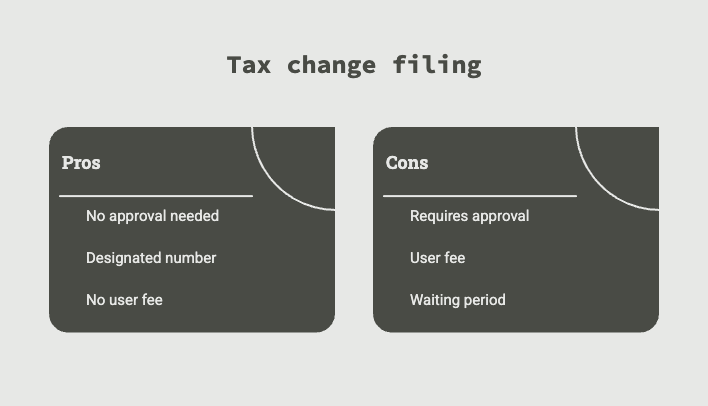
Every change runs down one of two tracks, and knowing which one you are on decides everything else. The agency keeps a list of automatic changes, and if your change is on it, you do not need to request approval from the IRS in advance. You get a designated change number, attach the form to your return, and the change takes effect. In effect you file Form 3115 with the IRS and move on.
The current list lives in Revenue Procedure 2025-23, which took effect for filings made on or after June 9, 2025. Common automatic ones include switching from cash to accrual, correcting a depreciation method, and many inventory adjustments. There is no user fee on this track.
An advance-consent filing is the other track. These are changes the IRS has not pre-approved, so you must request approval from the IRS National Office during the tax year of the change, pay a user fee of roughly 12,600 dollars, and wait for a consent agreement before the change is final. Figuring out whether you are automatic or non-automatic is the first real decision, because the two paths have different deadlines and different filing addresses.
Now the calculation everyone worries about. When you change a method, you would either count some income twice or skip it entirely unless you true up the past. The Section 481(a) adjustment is that true-up. It is the cumulative difference between your old method and your new method across every prior year, rolled into one number.
That number cuts one of two ways. A positive adjustment increases your taxable income, and the IRS lets you spread it over four years to soften the hit. A negative adjustment lowers your income, and you take the whole thing in the year of change, which is why a negative one is good news. There is no statute of limitations on the lookback, so the adjustment can reach back to the beginning of the method. Getting this figure right is the heart of the filing, because it flows straight into your taxable income.
On the automatic track, filing Form 3115 means filing it twice. You attach the original Form 3115 to your federal income tax return for the year of change, filed on time with extensions included, and you send one copy as a signed paper copy of Form 3115 directly to the IRS in Utah. The duplicate goes to IRS Ogden no later than the day you file. The original does not need a signature; the copy does.
Timing on that duplicate is specific. You mail it there no earlier than the first day of the year of change and no later than the day you file your return. For an advance-consent change, you instead send Form 3115 to the IRS, care of the National Office, before year-end, and you wait for consent before the IRS treats the change as having taken effect. Whichever track you are on, the form must be attached to the right return, and the Form 3115 filing instructions spell out the addresses so you can copy them exactly. When you file an advance-consent request, the IRS requires the consent agreement before the beginning of the tax year benefit applies.
Most method-change filings cluster around a handful of situations. Correcting depreciation is the big one. If prior returns used the wrong life, the wrong method, or skipped it altogether, the form catches it up in a single negative adjustment, which is exactly how a cost segregation study delivers its tax savings and how 179D energy deductions get claimed on older buildings.
The second cluster is a switch in overall method. Many small businesses that outgrow the cash basis switch accounting methods and use the accrual method under accrual accounting, where they report income and expenses as earned rather than when cash moves, tracking accounts receivable and accounts payable instead of just the bank balance. If you want the plain version of that tradeoff, our guide on cash vs accrual lays it out. Inventory and UNICAP changes make up the third cluster, including adopting or leaving LIFO, each with its own designated change number.
A few errors show up again and again. The first is trying to file amended returns instead of the form; the agency will not accept a method change made that way. The second is using the wrong designated change number, which sends the filing into review and slows everything down. The third is a missing or late duplicate copy, since the IRS needs both the original and the duplicate to accurately process the change.
The last common trap is assuming a change is still automatic when it is not. The list gets updated every year, and some UNICAP sub-methods have moved off automatic treatment into non-automatic changes, so a filing that would have sailed through last year can now require advance consent. Confirming your change against the current list before you start saves a rejected filing.
The form rewards precision and punishes guesswork, which is why so many firms and tax professionals hand the mechanics to a partner who runs them all day. Madras Accountancy supports U.S. CPA firms on exactly this: identifying the right change number, building the Section 481(a) schedule that ties to prior returns, and preparing the form so it clears without a follow-up letter. If you have a change to file, you can reach out here.
This is general information, not tax advice, so confirm the treatment for any client with their preparer, and you can review the official IRS Form 3115 page for the current form and instructions.
1. What is Form 3115 used for? Form 3115 is the application for a change in accounting method. You file it to switch how income or expenses are treated for tax, such as moving from cash to accrual or fixing depreciation that has run for years.
2. When do I need to file Form 3115? You file the form whenever you change an established method, meaning one used on two or more prior returns. Common cases include switching methods, adopting a new inventory method, or fixing depreciation errors.
3. What is the difference between an automatic and non-automatic change? An automatic change is on the pre-approved list, needs no user fee, and takes effect when you file. A non-automatic filing requires advance IRS approval, a user fee of about 12,600 dollars, and a consent agreement before it is final.
4. Can I change an accounting method by amending my tax return? No. You cannot amend a prior year return to change a method. Once a method has been used for two or more years, the only way to switch is by filing the form with a timely filed tax return for the year of change.
5. What is a Section 481(a) adjustment? It is the cumulative difference between your old method and your new method across all prior years. A positive adjustment is spread over four years, while a negative adjustment is taken fully in the year of change.
6. Where do I file Form 3115? For an automatic filing, you attach the original to your tax return and mail a signed copy to that Utah office. For an advance-consent filing, you attach the original to a timely filed return and file it with the National Office during the year of the change.
7. Is there a fee to file Form 3115? Automatic filings carry no user fee. Advance-consent filings require a user fee of roughly 12,600 dollars, paid when you request approval from the National Office.
8. Can Form 3115 fix missed depreciation? Yes. Missed or incorrect depreciation on two or more returns becomes a method, so the form is the tool that corrects it and catches up the deduction, usually as a single negative Section 481(a) adjustment.
The 2026 1099 reporting threshold changed: 1099-NEC and 1099-MISC now start at $2,000, and 1099-K is back to $20,000. Here is what you must file.
A plain guide to how a 2026 sales tax holiday works, which items are exempt, and the rules on price caps, refunds, and rain checks.
Form 7004 buys a 6-month extension of time to file business returns like 1065, 1120-S and 1120. Deadlines, e-file steps and the payment trap.