

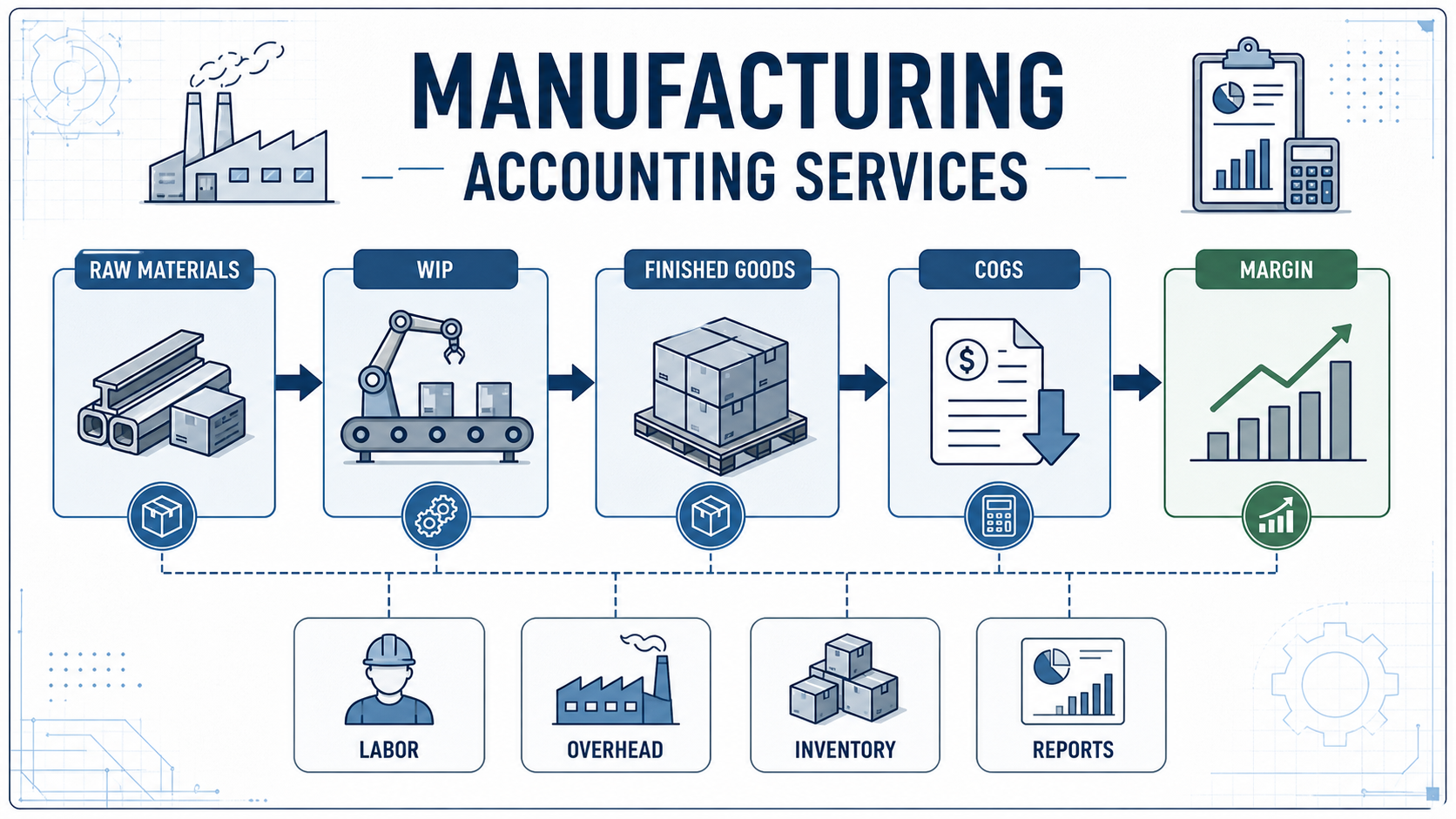

Manufacturing accounting is different from basic bookkeeping. A manufacturer must understand materials, labor, inventory, work in process, finished goods, overhead, and margins.
If these numbers are not tracked well, pricing and profit decisions can be wrong.
Manufacturers need to know what materials are on hand, what is in production, and what finished goods are ready to sell.
Poor inventory records can distort profit. They can also lead to cash being tied up in stock that is not moving.
Cost of goods sold includes more than materials. It may include direct labor and manufacturing overhead. The exact setup depends on the business.
If costs are not recorded correctly, product margins may look better or worse than they really are.
Overhead includes indirect costs that support production. Examples may include factory rent, utilities, supervision, depreciation, and maintenance.
Our guide on manufacturing overhead allocation explains the basics.
A manufacturer needs reports that show sales, COGS, gross margin, inventory, labor cost, overhead, and cash flow.
The owner should be able to see which products or jobs are profitable. If reports only show total revenue and expenses, they may not be enough.
The daily records must support the higher-level costing. If bills, payroll, and inventory entries are not clean, the cost reports will be weak.
Our accounting and bookkeeping services can help keep the base records in order.
Manufacturers may have equipment purchases, depreciation, inventory adjustments, and financing needs. These should be reviewed before year end.
For tax support, see our tax preparation and planning services.
If you make products or run custom jobs, job costing can show which work is profitable. It can also show where labor, scrap, rework, or material waste is hurting margins.
Manufacturers often pay for materials and labor before customers pay invoices. That timing can strain cash. Accounting reports should help owners see inventory levels, receivables, payables, and upcoming cash needs.
Manufacturers may need loans for equipment, inventory, or expansion. Clean financial statements make lender conversations easier and help explain how the business earns money.
Manufacturers can lose money when pricing is based only on material cost. Labor, overhead, scrap, freight, and rework also matter. Better accounting gives owners a clearer view of true cost before they quote new work or renew customer pricing.
That makes accounting a pricing tool, not just a compliance task.
Use this guide as a monthly review tool, not just a tax-season article. Assign one person to gather records, check open questions, and flag anything that may affect filing, cash flow, or compliance. A simple habit like this keeps small issues from becoming year-end cleanup work.
Manufacturing accounting should help owners understand cost, inventory, margins, and cash. It should support pricing and tax planning.
If your manufacturing reports are not clear enough, contact Madras Accountancy to review your accounting process.

Section 4960's 21% excise tax now reaches far more nonprofit employees. See who is a covered employee in 2026 and what changed.

The Section 45S paid family leave credit is permanent for 2026 with new options. See who qualifies, the amounts, and how to claim it.

Opportunity zones become permanent in 2027 under the One Big Beautiful Bill. See the new deferral, rural bonus, and the 2026 handoff.