

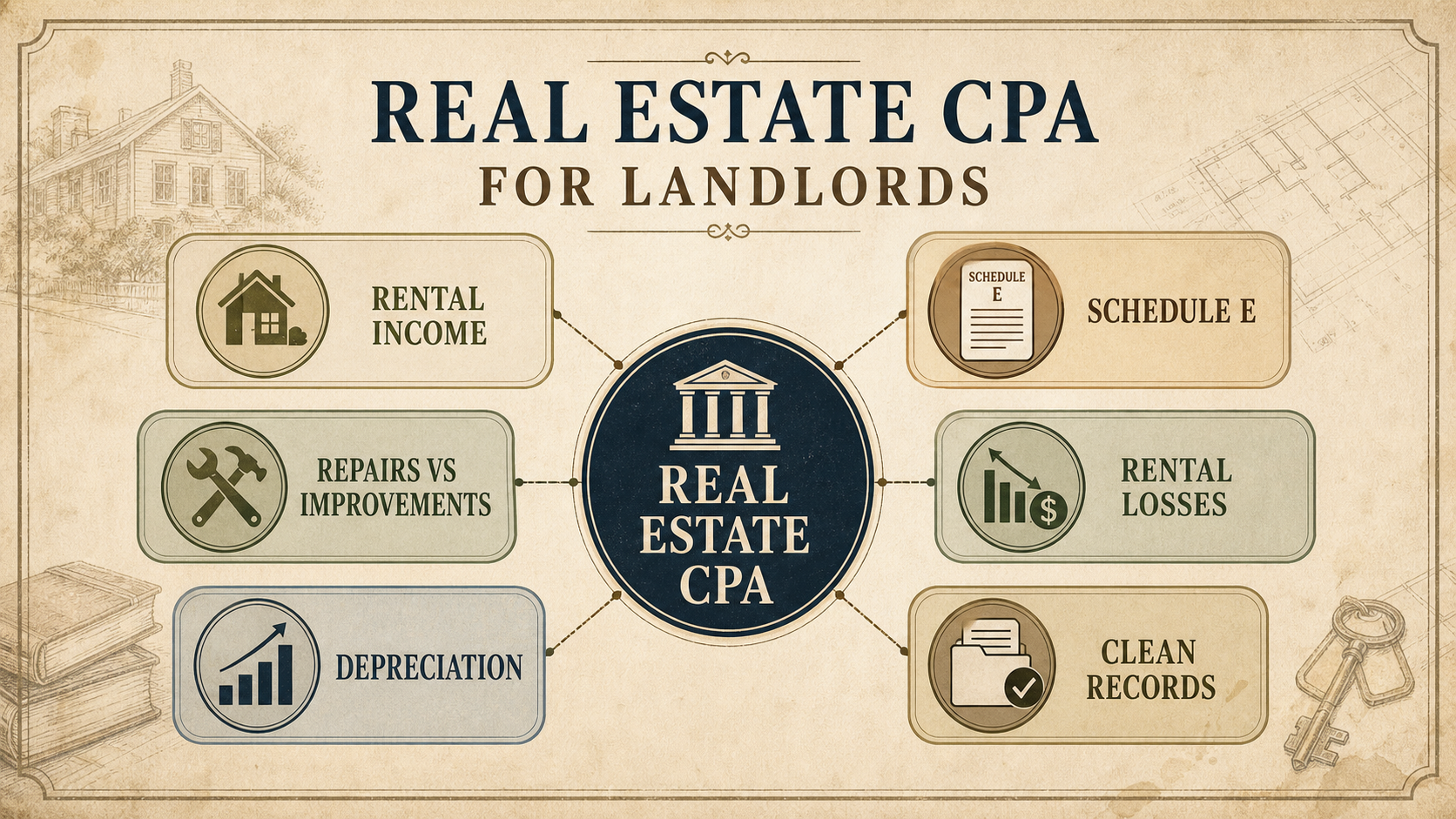

Rental property taxes can look simple at first. You collect rent and pay expenses. But the details can get complicated quickly.
A landlord may need to track repairs, improvements, depreciation, mortgage interest, passive losses, and state rules. A real estate CPA can help connect the tax return to the full property picture.
Rent, fees, reimbursements, and deposits should be tracked clearly. Expenses should be separated by property when possible.
If you own more than one property, clean bookkeeping becomes even more important. It helps you see which property is profitable and which one needs attention.
Our accounting and bookkeeping services can support rental property recordkeeping.
A repair may be treated differently from an improvement. An improvement may need to be capitalized and depreciated over time.
This is one of the most common landlord tax issues. For more context, see our guide on capital improvements vs repairs.
Depreciation can reduce taxable rental income, but it needs to be tracked correctly. When a property is sold, prior depreciation can also affect the tax result.
A CPA can help review fixed assets, prior depreciation, and whether your records are complete.
Most individual landlords report rental income and expenses on Schedule E. That form may look simple, but the numbers behind it need to be right.
If you are dealing with rental losses, see our article on Schedule E rental income and loss.
Consider CPA support if you:
Landlords should also get advice before selling or refinancing. A sale may involve depreciation recapture, capital gains, suspended losses, or state tax issues. Planning ahead gives you more time to review records and estimate the tax result.
Your books should support the return, not fight it. Keep closing statements, loan documents, repair invoices, improvement invoices, and property management reports in one place. If the records are clear, tax preparation is smoother.
One rental can often be handled with a simple system. Several rentals need more structure. As the portfolio grows, landlords may need property-level reporting, better cash flow tracking, and clearer records for loans, repairs, and tax planning.
Better reporting also helps owners compare properties and decide where to repair, refinance, or sell.
Use this guide as a monthly review tool, not just a tax-season article. Assign one person to gather records, check open questions, and flag anything that may affect filing, cash flow, or compliance. A simple habit like this keeps small issues from becoming year-end cleanup work.
A real estate CPA can help landlords file correctly, plan ahead, and avoid common mistakes with repairs, depreciation, and rental losses.
If you need help with property tax records or filing, contact Madras Accountancy to review your situation.

Section 4960's 21% excise tax now reaches far more nonprofit employees. See who is a covered employee in 2026 and what changed.

The Section 45S paid family leave credit is permanent for 2026 with new options. See who qualifies, the amounts, and how to claim it.

Opportunity zones become permanent in 2027 under the One Big Beautiful Bill. See the new deferral, rural bonus, and the 2026 handoff.