


Landlords often spend money on repairs, upgrades, and maintenance. For tax purposes, the details matter. A repair may be treated differently from a capital improvement.
The goal is to keep records clear so the tax return can be prepared correctly.
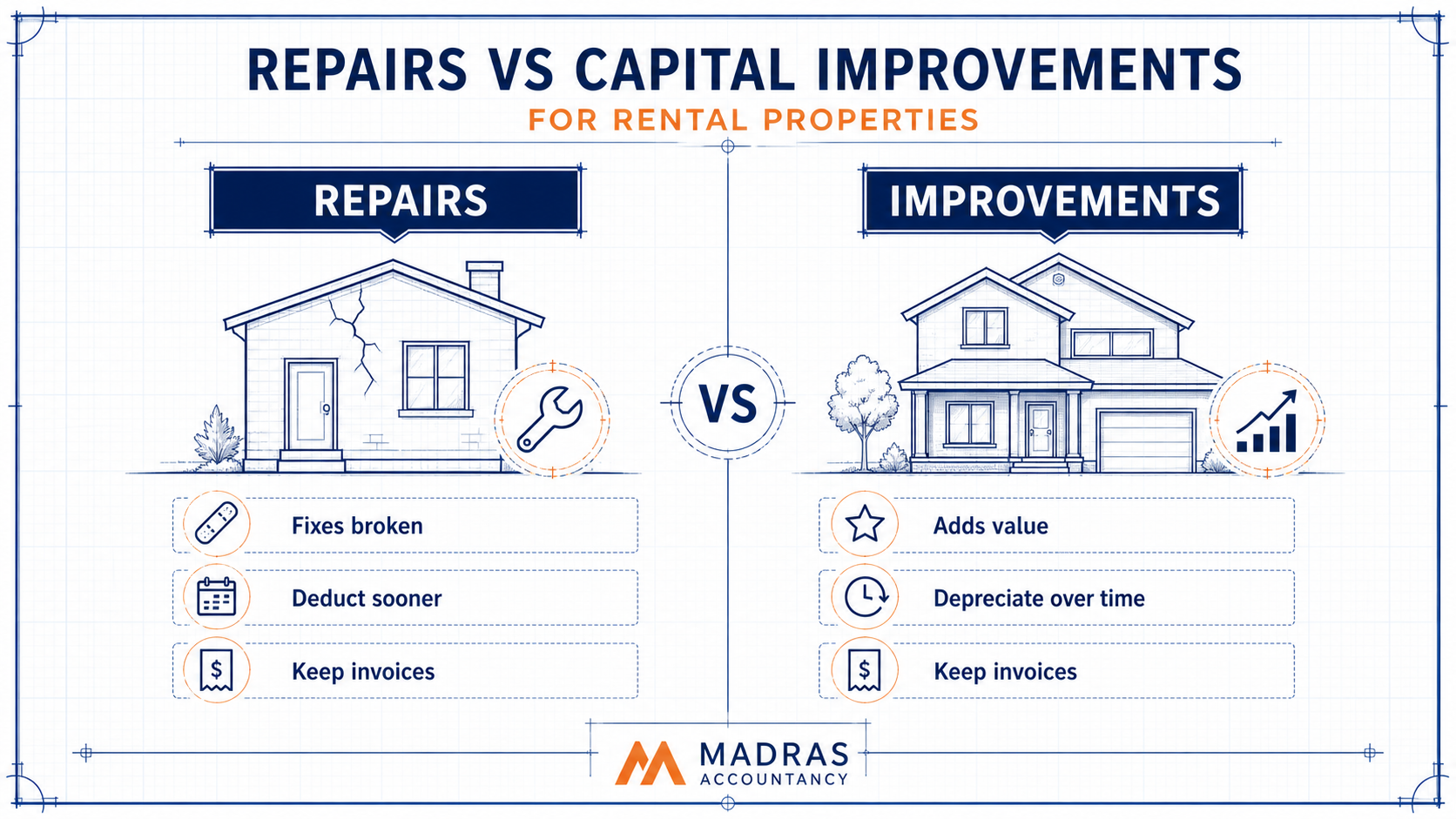
A repair usually keeps the property in normal working condition. It fixes something that is broken or worn.
Examples may include fixing a leak, replacing a broken lock, patching a small area, or repairing an appliance. The facts matter, so keep invoices detailed.
A capital improvement usually adds value, extends the life of the property, or adapts it to a new use. These costs may need to be capitalized and depreciated over time.
Examples may include a major remodel, new roof, full HVAC replacement, or large structural work.
For a deeper technical guide, see our existing article on capital improvements vs repairs.
The timing of the deduction can change. Repairs may be deducted sooner. Improvements may be recovered over time through depreciation.
This affects taxable income, cash flow planning, and records for future sale.
Vague invoices create problems. Ask vendors to describe the work clearly. Was it a repair, replacement, upgrade, or remodel?
Photos and notes can also help. If you own several properties, tag each cost to the right address.
Rental property income and expenses often flow to Schedule E. If repairs and improvements are mixed together, tax preparation becomes harder.
Our guide on Schedule E rental income and loss explains how rental activity is reported.
Rental property bookkeeping should separate repairs, improvements, mortgage interest, insurance, taxes, management fees, and utilities.
If your property records need cleanup, review our accounting and bookkeeping services.
Landlords should keep separate categories for repairs, capital improvements, supplies, and maintenance. This does not decide the tax treatment by itself, but it makes review much easier.
When the preparer can see the detail, there is less guessing at filing time.
Large projects should be reviewed before the return is prepared. A roof replacement, remodel, major appliance package, or structural change may need different treatment from a small repair.
Set these invoices aside during the year so they are not buried in normal expenses.
If a project is large, ask about records before the work starts or soon after it ends. Waiting until filing season can make it harder to explain what was done and why.
Use this guide as a monthly review tool, not just a tax-season article. Assign one person to gather records, check open questions, and flag anything that may affect filing, cash flow, or compliance. A simple habit like this keeps small issues from becoming year-end cleanup work.
Repairs and improvements are not the same for tax purposes. Good records help your preparer make the right call.
If you made major rental property upgrades, contact Madras Accountancy before filing.

Section 4960's 21% excise tax now reaches far more nonprofit employees. See who is a covered employee in 2026 and what changed.

The Section 45S paid family leave credit is permanent for 2026 with new options. See who qualifies, the amounts, and how to claim it.

Opportunity zones become permanent in 2027 under the One Big Beautiful Bill. See the new deferral, rural bonus, and the 2026 handoff.