
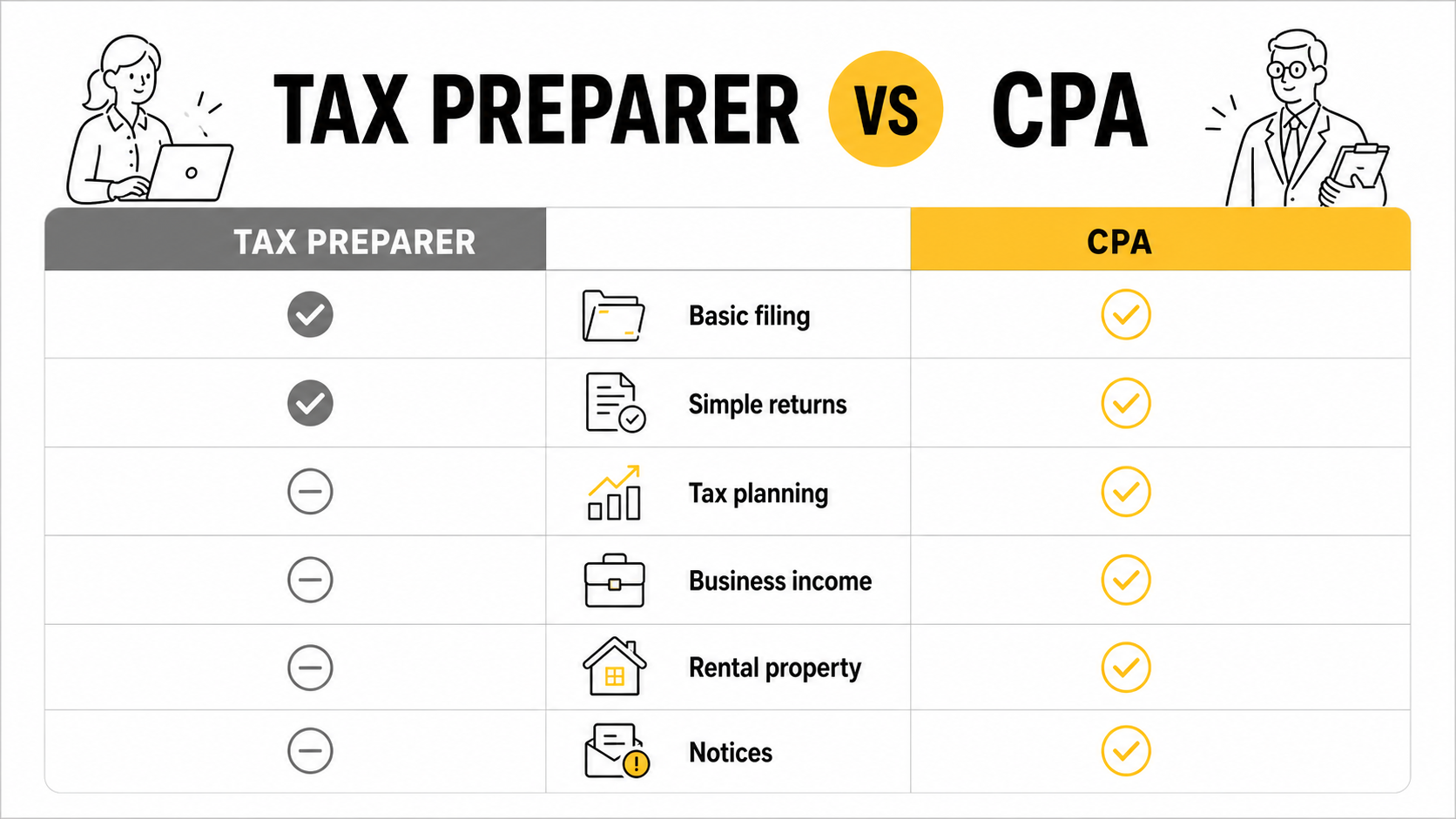

Many people use the words tax preparer and CPA as if they mean the same thing. They do not. Both may prepare tax returns, but their training, scope, and advice can be different.
The right choice depends on your tax situation. A simple return may not need a full planning relationship. A business owner, landlord, or 1099 worker may need more than basic filing.
A tax preparer helps complete and file tax returns. Some preparers focus on simple individual returns. Others work with small businesses or specific tax forms.
The quality can vary. Some preparers are very experienced. Others may only handle basic filings during tax season. Before hiring one, ask what types of returns they handle and whether they offer support after filing.
A CPA is a licensed accounting professional. A CPA can prepare tax returns, but may also help with planning, accounting, financial statements, business structure, and tax notices.
For a business owner, that wider view can matter. Taxes are tied to bookkeeping, payroll, owner pay, deductions, and cash flow. If those pieces are not aligned, filing the return is only one part of the problem.
A basic preparer may work if your return is simple. For example, you have one job, a standard deduction, no business income, and no rental activity.
Even then, you should check credentials, pricing, and support. Ask who signs the return and what happens if a notice arrives.
A CPA may be a better fit if you have:
If you are self-employed, our guide on how much to set aside for 1099 taxes is a useful starting point.
Tax filing looks backward. Tax planning looks forward. A CPA can help you plan estimated payments, review deductions, improve bookkeeping, and avoid surprises.
This is useful for business owners who need steady support, not just a once-a-year filing session. Our tax preparation and planning service is built around that idea.
Do not choose only by price. Ask what is included, how they handle questions, and whether they understand your type of income. The best choice is the one that reduces risk and gives you clear next steps.
If you need accounting help during the year, pair tax support with accounting and bookkeeping services.
Use this guide as a monthly review tool, not just a tax-season article. Assign one person to gather records, check open questions, and flag anything that may affect filing, cash flow, or compliance. A simple habit like this keeps small issues from becoming year-end cleanup work.
A tax preparer may be enough for a simple return. A CPA is often better when your tax life is tied to business, property, or planning decisions.
If you are unsure which level of help you need, contact Madras Accountancy and start with a practical review.
Section 4960's 21% excise tax now reaches far more nonprofit employees. See who is a covered employee in 2026 and what changed.

The Section 45S paid family leave credit is permanent for 2026 with new options. See who qualifies, the amounts, and how to claim it.
Opportunity zones become permanent in 2027 under the One Big Beautiful Bill. See the new deferral, rural bonus, and the 2026 handoff.