

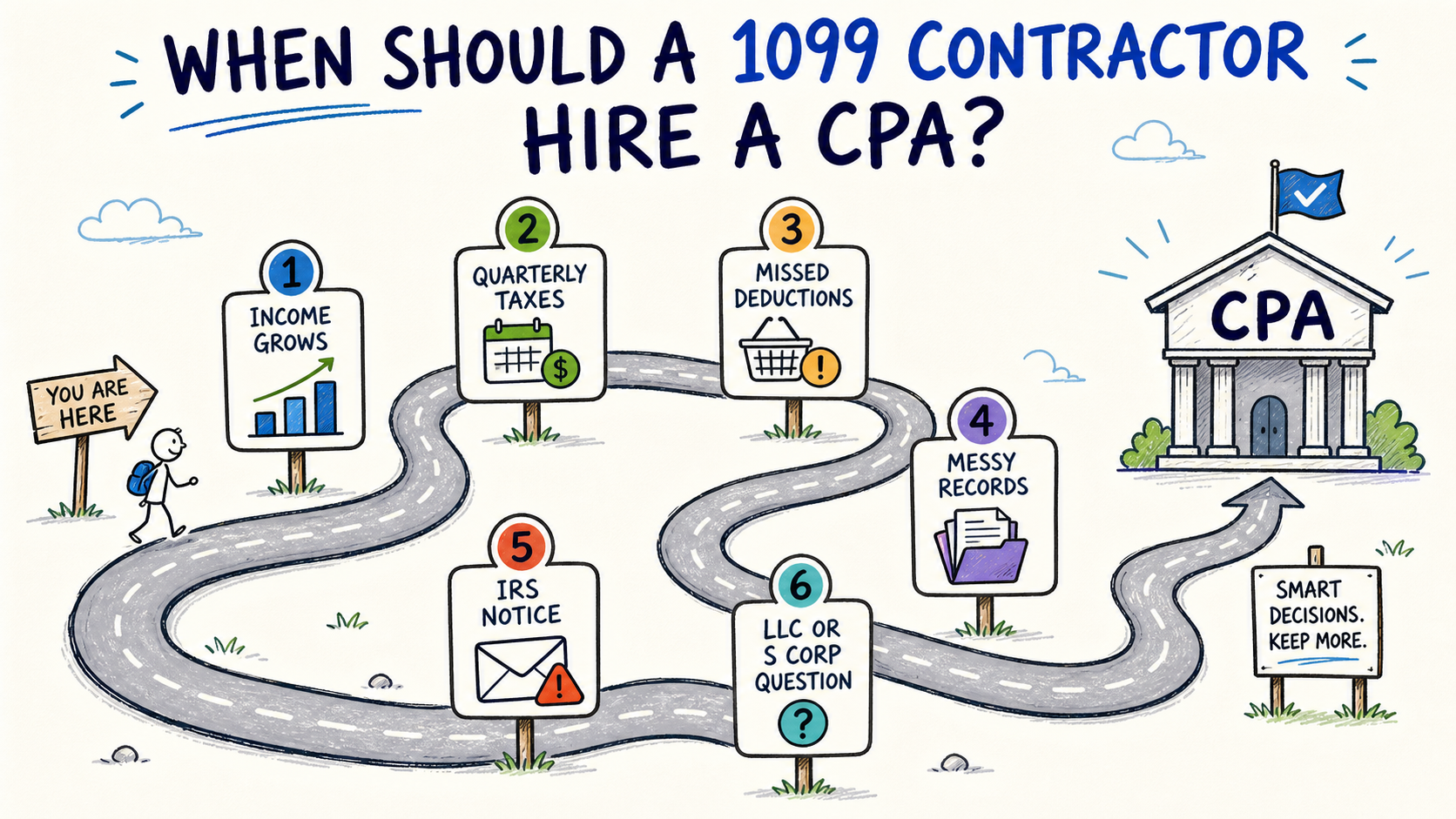

1099 income gives you more control, but it also gives you more tax responsibility. No employer is withholding taxes for you. You may need to track income, save for taxes, pay estimates, and claim deductions correctly.
A CPA is not required for every contractor. But there are clear signs that it may be time to get help.
When freelance or contract income becomes steady, taxes become harder to manage by guessing. You may owe income tax and self-employment tax. You may also need quarterly estimated payments.
If you are not sure how much to save, read our guide on setting aside taxes for 1099 income.
Many contractors miss deductions because they do not track expenses during the year. Common deductions may include software, supplies, mileage, home office costs, phone, internet, insurance, and professional fees.
The key is documentation. A CPA can help you understand what is reasonable, what records to keep, and where the risk areas are.
If your bank account is full of mixed personal and business activity, tax season gets messy. A CPA may need clean records before filing.
This is where bookkeeping helps. Monthly accounting and bookkeeping services can make tax filing easier and give you a clearer view of profit.
A 1099 form may not always match your records. You may also receive notices about missing income, penalties, or payment issues. Do not ignore them.
If you need to understand 1099 reporting, our article on reporting income without a 1099 explains the basics.
Contractors often ask whether they should form an LLC or elect S corporation status. The right answer depends on income, payroll, state rules, admin costs, and risk.
This is a planning question, not just a filing question. A CPA can help compare the tax savings against the extra work.
The best time to hire a CPA is before the year ends. That gives you time to adjust estimated payments, organize deductions, and plan retirement contributions or business purchases.
Before speaking with a CPA, gather your income records, expense list, bank statements, prior tax return, and any IRS or state notices. If you use accounting software, check whether the accounts are reconciled. A clean starting point helps the CPA give better advice.
Many 1099 workers wait until filing season and then find out they should have made estimated payments. A CPA can help estimate what you owe during the year and adjust the plan if income changes.
Quarterly planning is especially useful when your income is uneven. A contractor may have a slow month and then a large project. The tax plan should reflect that instead of using a guess from January all year.
A CPA can help identify deductions, but the contractor still needs records. Mileage logs, receipts, invoices, software bills, home office details, and bank records matter.
Good records also help separate real deductions from risky ones. For example, a business meal, a personal trip, and a mixed-use phone bill may all need different treatment.
Many contractors ask whether they should form an LLC or elect S corporation status. The answer depends on income level, state rules, payroll costs, admin work, and legal needs.
An S corporation may save tax in some cases, but it also adds payroll and filing requirements. It should not be done only because someone online said it saves money.
1099 income may affect retirement planning, health insurance deductions, qualified business income deductions, and state tax payments. It may also affect how much tax should be withheld from a spouse's paycheck if filing jointly.
That is why 1099 tax planning should connect to the whole return. Link readers to tax preparation and planning services, accounting and bookkeeping services, and the existing 1099 income set-aside guide.
A 1099 contractor should consider hiring a CPA when income is growing, deductions are unclear, records are messy, or tax payments feel uncertain.
If you want help with both filing and planning, review our tax preparation and planning services or contact Madras Accountancy.

Section 4960's 21% excise tax now reaches far more nonprofit employees. See who is a covered employee in 2026 and what changed.

The Section 45S paid family leave credit is permanent for 2026 with new options. See who qualifies, the amounts, and how to claim it.

Opportunity zones become permanent in 2027 under the One Big Beautiful Bill. See the new deferral, rural bonus, and the 2026 handoff.