

You swapped one token for another on a decentralized exchange, picked up some staking rewards, and parked a little crypto in a liquidity pool. Now it is tax time, you open your inbox, and there is no form waiting for you. That is not a glitch, and it definitely does not mean your DeFi activity is tax free. It just means the reporting is on you.
Here is the part most people miss in 2026. Centralized exchanges now send a tax form for your trades, but decentralized finance does not. That gap is exactly where DeFi users get into trouble. This DeFi tax guide walks through why no form shows up, which DeFi transactions are taxable, and how to report your DeFi taxes without losing your weekend.
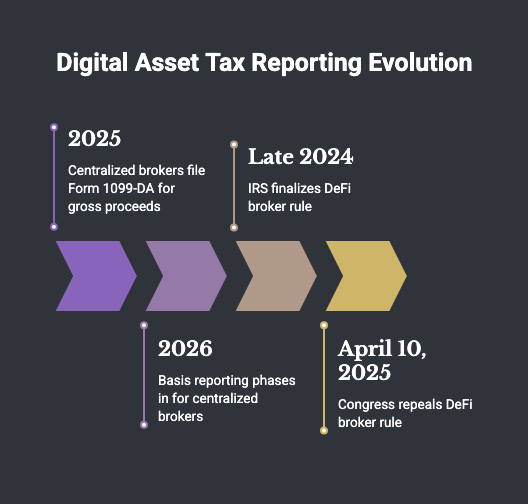
Let us clear up the biggest source of confusion first. Starting with 2025 transactions, centralized brokers must file Form 1099-DA, the new digital asset reporting form. For 2025 they report gross proceeds only, and basis reporting phases in for 2026 transactions. So if you trade on a custodial platform like Coinbase or Kraken, expect a form.
DeFi is a different story. The IRS finalized a defi broker rule in late 2024 that would have forced DeFi front-ends to do the same broker reporting. Congress repealed it, and the repeal was signed on April 10, 2025. The result is simple. Decentralized exchanges, DeFi protocols and self-custodial wallets are not brokers for 1099 reporting, so there is no information reporting coming from them at all. You are responsible for tracking and reporting every taxable event yourself. And since the IRS now receives 1099-DA data from centralized platforms, the numbers on your digital asset return need to line up.
Once you know the two categories, DeFi taxes get a lot less scary. For federal tax purposes the IRS treats crypto as property, and how crypto tax works really comes down to two buckets.
The first is a disposal. Any time you sell, swap, or otherwise get rid of an asset, you have a capital gain or loss, figured as the difference between what you paid and what it was worth when you let it go. That is subject to capital gains tax, and you report it on Form 8949 and Schedule D.
The second is income. When you receive new crypto as a reward, that is ordinary income tax territory, valued at fair market value on the day you can use it. Staking rewards, airdrops, and interest all sit here. Almost every crypto transaction in DeFi is some mix of these two, so the tax treatment depends on which bucket a given move lands in.
Now the practical part. Here is how the most common DeFi transactions are taxed.
Token swaps. Trading one crypto for another on a DeFi protocol is a taxable disposal, even though no dollars changed hands. Capital gains tax applies to the coin you gave up.
DeFi staking. A staking reward is ordinary income at its value when it hits your wallet. When you later sell that coin, you have a second, separate capital gain or loss on top of the income you already reported.
Airdrops. DeFi airdrops are income at the fair market value of the tokens the moment you control them, then they follow the disposal rules whenever you sell.
Liquidity pools. Depositing into a pool and getting LP tokens back can count as a swap, the rewards you earn are income, and pulling your liquidity out is another disposal. These complex DeFi positions stack up fast.
DeFi loans. This one surprises people. Depositing crypto as collateral to borrow against generally is not a taxable event, because you still own the asset. But interest you earn is income, and if your collateral gets liquidated, that liquidation is a taxable disposal. So DeFi loans are taxed lightly at the start and can bite at the end.
Reporting your DeFi transactions uses the same tax forms as the rest of your crypto. Capital gains and losses go on Form 8949 and carry over to Schedule D. Crypto income, like staking rewards and airdrops, goes on Schedule 1 as other income, or on Schedule C if you run it as a business.
Do not skip the digital asset question at the top of Form 1040. If you sold, swapped, or earned any crypto during the tax year, you check yes. Checking no when you had DeFi activity is a real red flag, especially now that the IRS can match centralized 1099-DA data against your return. Treat every digital asset transaction as something you may need to show.
If the rules feel manageable, the record keeping is where DeFi actually gets hard. You are the only one holding your full history, so accurate records carry the whole US crypto tax picture.
A few things help. As of 2025 you track basis on a wallet-by-wallet basis rather than lumping everything together, so keep each wallet clean. Crypto tax software like the major on-chain tools can pull your history and produce ready-to-file tax reports, but always reconcile the output against your own records, because DeFi protocols confuse these tools more than plain exchange trades do. One bright spot for planning: as of 2026 crypto is still exempt from the wash sale rule, so you can sell a losing position and rebuy it right away, which stocks do not allow. And for business crypto, the DeFi reporting rules and tracking bar climb even higher.
Do I owe taxes on DeFi if I never cashed out to dollars?
Yes. You do not need to convert to dollars to trigger tax. Swapping one crypto for another, earning staking rewards, or collecting an airdrop are all taxable in DeFi, even if you never touched a bank account. The dollars are just how you measure the gain.
Does a DeFi platform send me a 1099-DA?
No. The defi broker rule was repealed in 2025, so decentralized exchanges, DeFi protocols and self-custodial wallets do not issue Form 1099-DA. Only centralized custodial brokers do, which means your DeFi reporting is entirely your responsibility.
Is swapping one crypto for another taxable?
Yes. Trading one crypto for another is a disposal, so you have a capital gain or loss on the coin you gave up, even though no cash was involved. It gets reported on Form 8949 and Schedule D like any other sale.
How are DeFi staking rewards taxed?
A staking reward is ordinary income at its fair market value when you gain control of it. If you sell it later, you also have a capital gain or loss based on how the price moved after you received it.
Are DeFi airdrops taxable?
Yes. DeFi airdrops are ordinary income at the value of the tokens when you can access them. Selling them later is a separate taxable disposal under the capital gains rules.
Do I pay tax when I deposit crypto as collateral for a loan?
Usually no. Depositing crypto as collateral to take out a DeFi loan generally is not taxable because you still own the asset. But interest income is taxable, and a liquidation of your collateral counts as a taxable disposal.
What forms do I use to report DeFi transactions?
Capital gains and losses go on Form 8949 and Schedule D. Crypto income goes on Schedule 1, or Schedule C for a business. You also answer the digital asset question on Form 1040 for the tax year.
Can crypto tax software handle DeFi?
Mostly, but not perfectly. Crypto tax software can import wallet activity and produce tax reports, though complex DeFi positions often need manual review. Always reconcile the software output before you file.
DeFi tax reporting rewards good records and punishes guesswork, and with the IRS now matching centralized 1099-DA data to returns, clean numbers matter more than ever. That is the work Madras Accountancy does for US CPA firms, reconciling messy crypto and DeFi portfolios into accurate, defensible tax reports, backed by full-cycle accounting and bookkeeping support. You can reach out here.
This is general information, not tax advice, so confirm the specifics for any client with their preparer.

The 45L tax credit rewards builders of energy-efficient homes. See who is eligible, how much it is worth, and if you can still claim it.

A donor-advised fund is the fastest-growing charitable giving vehicle in the US. Here is how DAFs work, their tax benefits, and the 2026 rules.