

When a CPA firm in New York hires an offshore team in Chennai, there is a 10.5-hour time difference. Most firms see that number and worry about communication delays. The firms that have been doing this for a while see it differently: when their team goes home at 6 PM Eastern, the Chennai team is just starting their day. Work gets done overnight. Financial statements are ready for review at 8 AM the next morning.
The time zone advantage is real, but only if you structure communication to exploit it instead of fighting it. The firms that try to force synchronous communication (everyone online at the same time, daily video calls, real-time chat for every question) end up frustrated. The firms that build async-first communication protocols get 24-hour productivity from a team that works 8-hour days.
We have been running hybrid onshore-offshore teams at Madras Accountancy since our founding. Here is the communication structure that actually works.
Default to written, asynchronous communication. A question asked in Slack at 4 PM Eastern gets answered by 8 AM the next morning. That 16-hour response time sounds slow until you realize the answer arrives before anyone in the US office has their first coffee. The work based on that answer is done before lunch.
The async-first approach requires three things.
Detailed task descriptions. When your offshore team cannot tap you on the shoulder for clarification, the task assignment needs to be complete. "Reconcile the Chase account for Johnson Manufacturing" is not enough. "Reconcile the Chase business checking account (ending 4821) for Johnson Manufacturing for February 2026. The expected balance per QBO should match the bank statement. Flag any deposits over $5,000 that do not have a corresponding sales invoice. Post any bank fees. Leave notes on any unreconciled items." That level of detail takes 2 extra minutes to write and saves a day of back-and-forth.
In our experience, the single biggest predictor of offshore team success is the quality of task descriptions from the onshore team. Firms that invest in writing clear, detailed task assignments see fewer errors, less back-and-forth, and faster turnaround. Firms that write vague instructions and expect the offshore team to fill in the gaps end up frustrated and blaming the team for issues that are really communication failures.
A central task management system. Slack messages disappear into a stream. Emails get buried. Use a practice management tool (Karbon, Canopy) or a project management tool (Asana, Monday) where every task has an owner, a deadline, and a status. The offshore team updates status as they work. Your onshore team sees progress without asking.
The task management system also creates accountability and visibility. When every task is tracked, you can measure turnaround times, identify bottlenecks, and spot patterns. If the same client's reconciliation is consistently late, the task history will show whether the delay is on the offshore team's end (slow processing) or the onshore team's end (late task assignment or slow review).
Loom videos for complex instructions. When a text description would take 20 minutes to write and still be confusing, record a 3-minute Loom video walking through the process. Screen share the QBO file, point at the transactions in question, explain what you want done. The offshore team watches it at the start of their shift. Loom videos are also reusable. Record the process once, and every new team member watches the same video. Our best practices for offshore teams covers more on documentation methods.
One of the most valuable byproducts of async communication is the knowledge base it creates. Every detailed task description, every Loom video, every process document becomes part of your firm's institutional knowledge.
We recommend that CPA firms create a shared document library organized by client and by process type. Client-specific instructions go in the client folder. General process SOPs (how to reconcile a bank account, how to post payroll entries, how to prepare a 1099 batch) go in the process folder. When a new offshore team member is added, they have everything they need to get productive without requiring hours of one-on-one training.
At Madras, we maintain this knowledge base for every CPA firm we work with. After 12 months, the typical firm has 50 to 100 documented processes and client-specific instruction sets. This documentation has value beyond the offshore relationship. It makes your firm more resilient, more scalable, and more valuable if you ever consider a sale or merger.
Not zero meetings. Not daily meetings. The right cadence depends on where you are in the engagement.
During onboarding (first 30 days): Daily 15-minute standup. Schedule it at a time that works for both zones (typically 8 to 9 AM Eastern, which is 6:30 to 7:30 PM India time). The standup covers: what the team completed yesterday, what they are working on today, and what questions or blockers they have. This daily touchpoint accelerates the learning curve dramatically.
During stabilization (days 31 to 90): Three standups per week (Monday, Wednesday, Friday). Same 15-minute format. The reduced frequency signals trust and gives the team more autonomous work time.
Steady state (day 91 onward): One weekly meeting (30 minutes, typically Monday). Cover the week's priorities, any client-specific updates, and performance metrics. Supplement with ad-hoc Slack messages for urgent items. Our first 90 days guide covers the full transition from daily to weekly cadence.
The meetings themselves need structure to be effective in a cross-cultural, cross-time-zone setting. Here are the practices that work in our experience.
Send an agenda in advance. Even for a 15-minute standup, a brief agenda in Slack or Karbon helps the offshore team prepare. "Today we will cover: Johnson Manufacturing reconciliation status, the new client onboarding timeline, and the month-end close checklist for ABC Corp."
Use screen sharing for every meeting. Verbal-only meetings across time zones and accents are prone to miscommunication. Screen sharing the task list, the QBO file, or the deliverable under discussion keeps everyone anchored in the same visual context.
Summarize action items in writing immediately after. "Next steps: Team will complete Johnson recon by Thursday. Priya will send the ABC Corp trial balance for review. Sarah will provide access to the new client's QBO file." Post this in Slack or Karbon within 5 minutes of the meeting ending. This eliminates the "I thought you said" problem that plagues verbal-only communication.
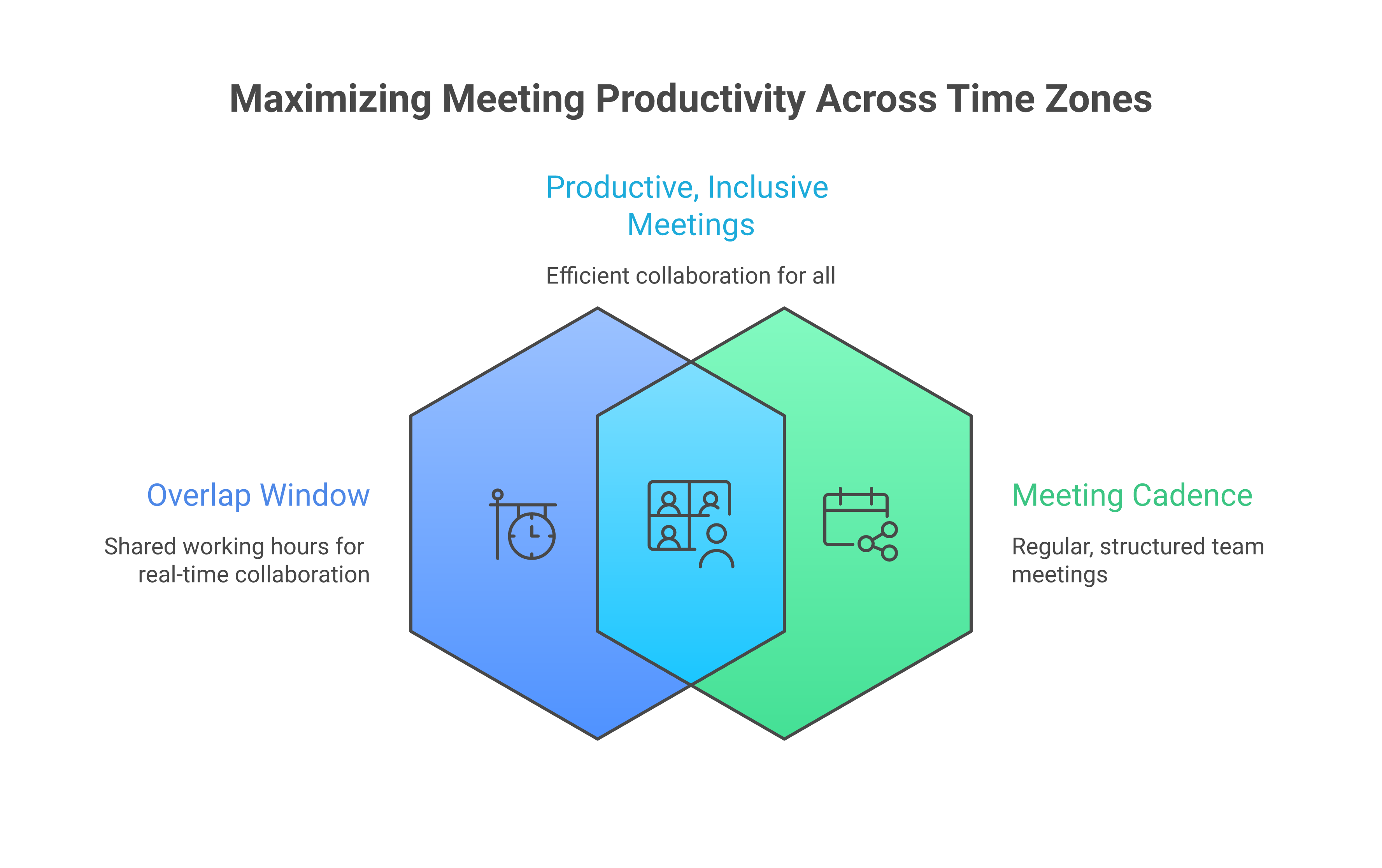
Most India-based teams work a shifted schedule that creates 3 to 5 hours of real-time overlap with US business hours. At Madras, our standard shift is 6:30 PM to 3:30 AM India time, which corresponds to 8 AM to 5 PM Eastern.
Use the overlap window for meetings, urgent questions, and real-time collaboration. Do not use it for routine work that can be assigned async. The overlap window is your most valuable communication time. Treat it as a scarce resource.
Some firms try to maximize overlap by asking the offshore team to work US hours entirely (8 AM to 5 PM Eastern, which is 6:30 PM to 3:30 AM India time). This works for a while but leads to burnout and turnover because the team members are working through the night. A moderate shift (starting in India's late afternoon) is sustainable long-term. Extreme shifts are not.
Sometimes you need an answer now. The client is on the phone. The partner needs a number for a meeting in 20 minutes. The IRS notice has a deadline today.
For truly urgent items during the overlap window: Slack direct message with a clear "URGENT" tag. The team should respond within 15 minutes during overlap hours.
For urgent items outside the overlap window: have a designated escalation contact on the offshore team who can be reached by phone or WhatsApp. At Madras, every CPA firm client has a team lead's phone number for true emergencies. The expectation is that this contact is used rarely (once or twice per month at most), not as a workaround for poor planning.
For predictable "urgencies" (tax season deadlines, month-end close dates, client presentations), plan ahead. Brief the offshore team a week in advance so they can prioritize and frontload the work. Most urgent situations are actually foreseeable situations that were not planned for.
Effective cross-cultural communication is not just about language fluency. There are communication style differences between US and Indian professional culture that affect how information flows.
In our experience, the most important difference is how disagreement and uncertainty are expressed. In many Indian professional settings, directly saying "I do not understand" or "I disagree" is less common than in US workplaces. An offshore team member who says "yes, I will try" might actually mean "I am not sure how to do this but I do not want to say so." A team member who delivers work without asking questions may have had questions but was hesitant to raise them.
The fix is to create explicit permission and process for questions. During onboarding, make it clear that questions are expected and valued. Build a "questions" channel in Slack where the team can ask anything without feeling like they are bothering someone. During standups, specifically ask "what questions do you have?" rather than "any questions?" (which invites a silent no). Over time, as trust builds, communication becomes more direct.
Slack (or Teams) for real-time chat during overlap and async messages outside it. Organize channels by client or engagement type. Pin important process documents. The searchable message history becomes a knowledge base over time.
Loom for async video communication. Process walkthroughs, client-specific training, feedback on work quality. Three minutes of video replaces 20 minutes of written explanation.
Karbon or Canopy for task management. Every task has a clear owner, deadline, and status. The offshore team updates Karbon as they work. The onshore team sees real-time progress.
Google Drive or SharePoint for shared documentation. Process SOPs, client setup documents, and templates live here. Both teams access the same documents. Version control is automatic.
Our article on CPA firm tech stack covers the full technology architecture for hybrid teams.
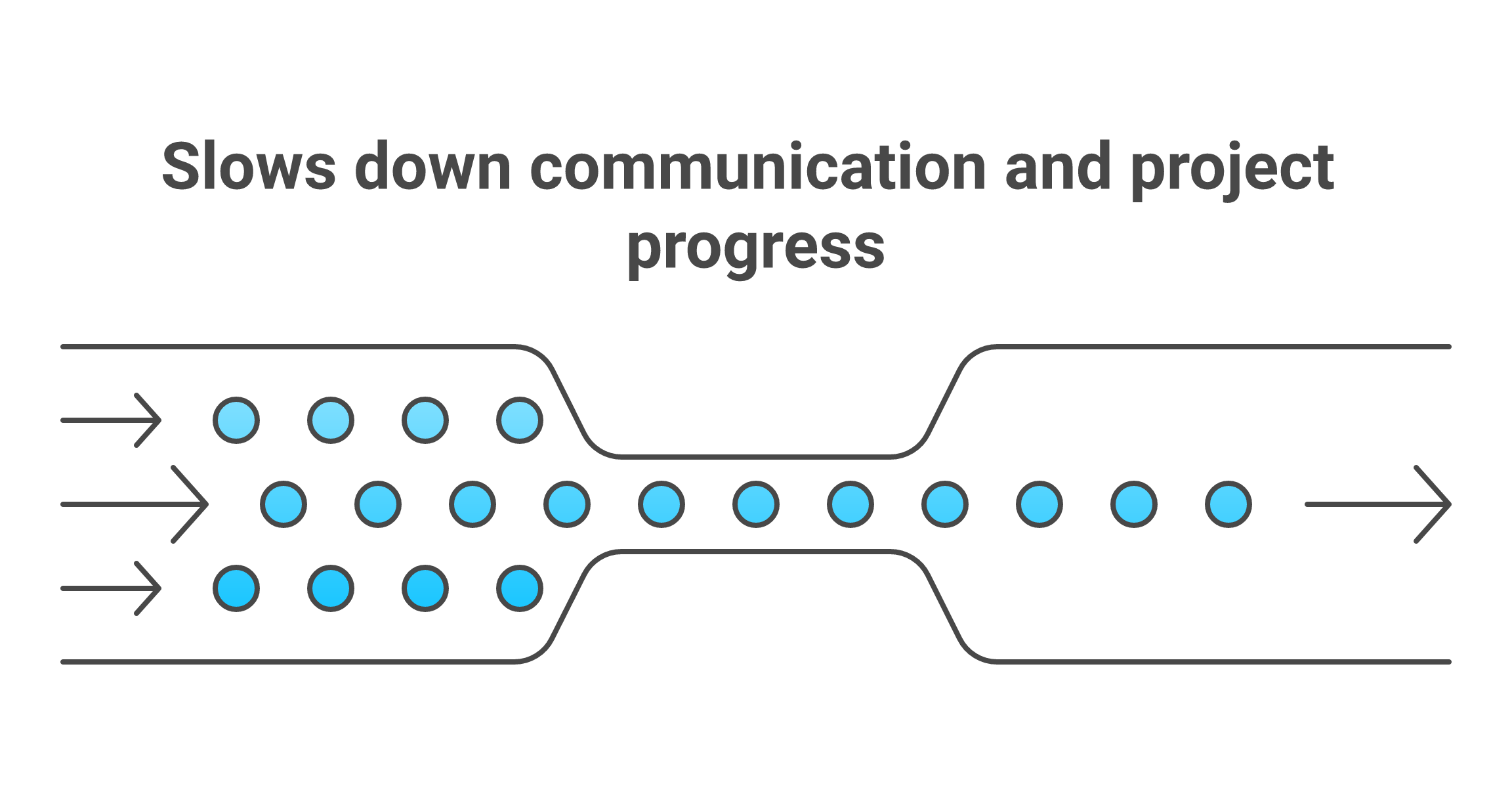
Expecting synchronous availability 24/7. Your offshore team works 8-hour days just like your onshore team. They are not on call at 2 AM India time because you forgot to send a task before leaving the office.
Using email as the primary channel. Email is too slow for operational communication and too disorganized for task management. It has a place (formal client communications, external correspondence) but not as the backbone of your offshore team relationship.
Skipping the daily standup during onboarding. The first 30 days set the communication patterns for the entire engagement. Firms that skip the daily standup during onboarding spend months correcting miscommunications that could have been prevented in week one.
Not recording Loom videos. Every time you explain something verbally that could have been a Loom, you lose the opportunity to create reusable training content. Record everything. Build the library. New team members onboard in days instead of weeks because the knowledge is captured.
Overloading the overlap window. Some firms try to cram every meeting, every question, and every review into the 3-hour overlap. The offshore team spends their entire overlap window in meetings and has no time for the real-time collaboration that the overlap is designed for. Limit scheduled meetings to no more than 1 hour of the overlap window and leave the rest for ad-hoc communication.
If you want to talk about how to set up communication protocols for an offshore engagement, reach out at madrasaccountancy.com. We will share the Slack channel structure, meeting templates, and escalation procedures we use with our CPA firm clients.
English. At Madras, all communication (written and verbal) is in English. Our team members are university-educated with English as a primary professional language. Accents vary, but comprehension and written communication are at a professional business level. After 1 to 2 weeks of working together, most CPA firm staff report that communication feels natural.
Loom works best for feedback. Screen share the deliverable, point at specific items, explain what needs to change and why. The video format conveys tone (which text cannot) and specificity (which a phone call without screen share cannot). Send the Loom, ask the team to confirm they understand, and verify the correction in the next deliverable.
Address it immediately with the team lead or account manager. Responsiveness during overlap hours is a core SLA metric. At Madras, we target 15-minute response times during overlap and track it. If responsiveness slips, it is usually a workload issue (the team is too busy with production work to monitor chat) rather than a motivation issue. The fix is typically workload rebalancing.
At Madras, our team follows the US holiday calendar for major holidays (Thanksgiving, Christmas, New Year's, July 4th) and the Indian holiday calendar for major Indian holidays (Diwali, Pongal). On days when your office is closed but the offshore team is working, they process routine tasks from the standing task list and hold questions for the next overlap window. Having a clear standing task list ensures productive work even without real-time supervision.
Section 4960's 21% excise tax now reaches far more nonprofit employees. See who is a covered employee in 2026 and what changed.
The Section 45S paid family leave credit is permanent for 2026 with new options. See who qualifies, the amounts, and how to claim it.
Opportunity zones become permanent in 2027 under the One Big Beautiful Bill. See the new deferral, rural bonus, and the 2026 handoff.