

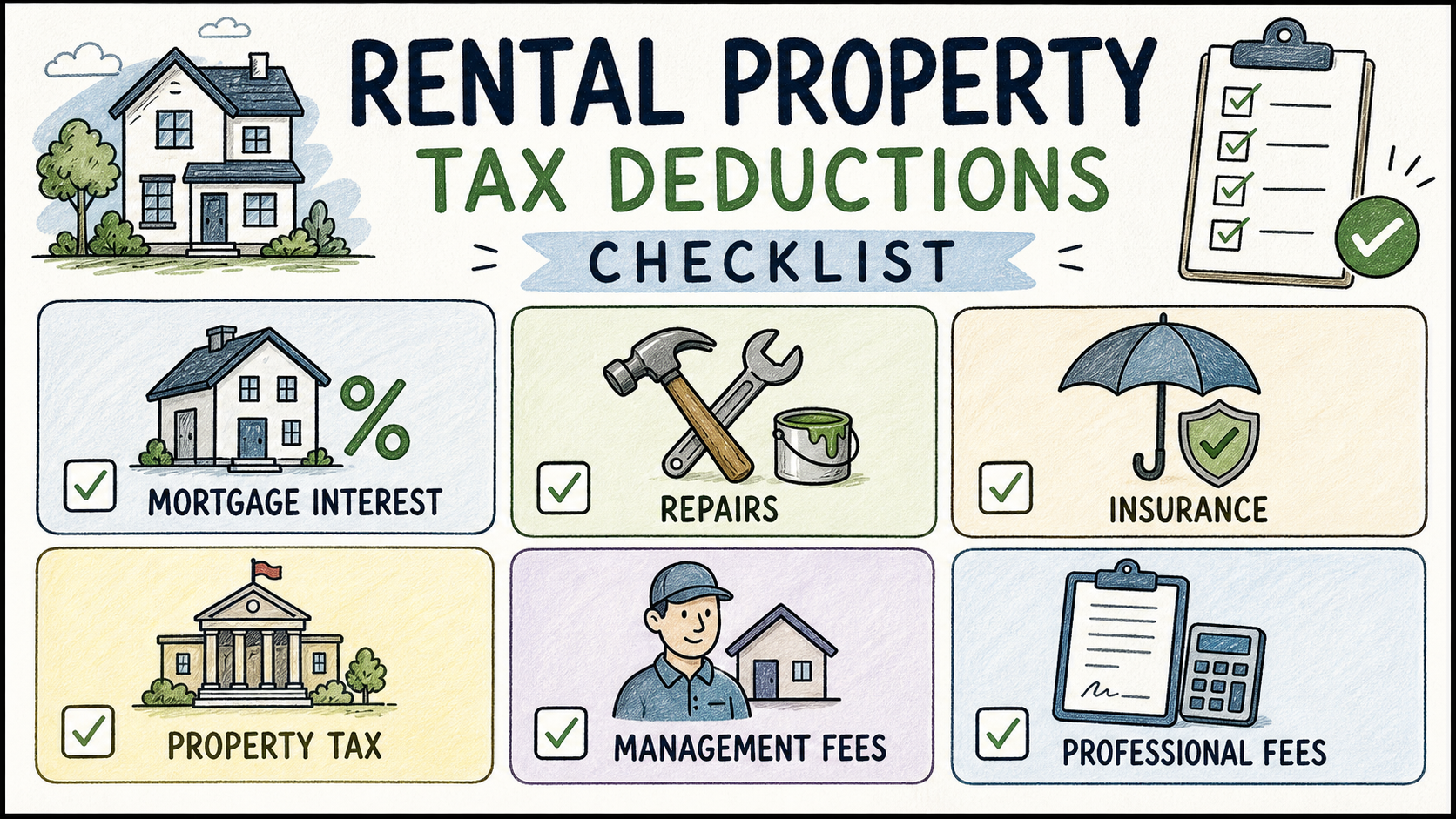

Rental property owners often miss deductions because records are incomplete. A simple checklist can help you stay organized during the year.
This article gives a practical starting point. Your exact treatment depends on your property, records, and tax situation.
Landlords commonly track mortgage interest, property tax, insurance, repairs, utilities, property management fees, advertising, legal fees, accounting fees, supplies, and bank charges.
If you pay for software, tenant screening, or listing services, keep those records too.
For a deeper guide, see our article on rental property tax deductions.
This is a key area. A repair may be deductible sooner. An improvement may need to be capitalized and depreciated.
Examples can be tricky. Replacing a broken part may be different from improving a full system. Keep invoices detailed so your tax preparer can review the work.
Our guide on repairs and capital improvements explains this in more detail.
If you own more than one rental, do not mix all expenses together. Separate records help you see performance by property and support the tax return.
Use separate categories or classes in your accounting system. Keep property addresses on invoices when possible.
Accounting, bookkeeping, legal, and property management fees may be part of your rental records. These costs are often easy to miss when paid from a personal account.
If you need help organizing records, review our accounting and bookkeeping services.
Deductions are only half the picture. Track rent received, late fees, reimbursements, and other property income.
Security deposits need care. Some deposits are not income when received if they are refundable, but facts matter.
Do not wait until filing season. Review income, expenses, major repairs, and depreciation before year end when there is still time to plan.
Our tax preparation and planning services can help landlords prepare early.
Each month, download statements, save receipts, reconcile rent deposits, and tag expenses by property. This routine does not take long when done often. It becomes much harder after a full year of mixed records.
A receipt that says "materials" may not be enough to explain the tax treatment. Add notes when needed. Was the expense for a repair, a unit turnover, a capital project, or general maintenance? Better notes make year-end review easier.
Clear descriptions help your preparer ask fewer questions and make better calls.
Use this guide as a monthly review tool, not just a tax-season article. Assign one person to gather records, check open questions, and flag anything that may affect filing, cash flow, or compliance. A simple habit like this keeps small issues from becoming year-end cleanup work.
Rental deductions work best when records are clear. Track income, expenses, repairs, improvements, and each property separately.
If your rental books are messy or you are unsure what to deduct, contact Madras Accountancy for help.

Section 4960's 21% excise tax now reaches far more nonprofit employees. See who is a covered employee in 2026 and what changed.

The Section 45S paid family leave credit is permanent for 2026 with new options. See who qualifies, the amounts, and how to claim it.

Opportunity zones become permanent in 2027 under the One Big Beautiful Bill. See the new deferral, rural bonus, and the 2026 handoff.



