


A virtual accountant for landlords is a remote accounting professional who manages your rental property finances using cloud-based software. They handle bookkeeping, track rental income and expenses by property, prepare Schedule E tax forms, and provide financial reporting, all without meeting in person. Virtual accountants typically cost $150-$500 monthly and save landlords an average of 150+ hours annually on financial tasks while ensuring IRS compliance and maximizing tax deductions.
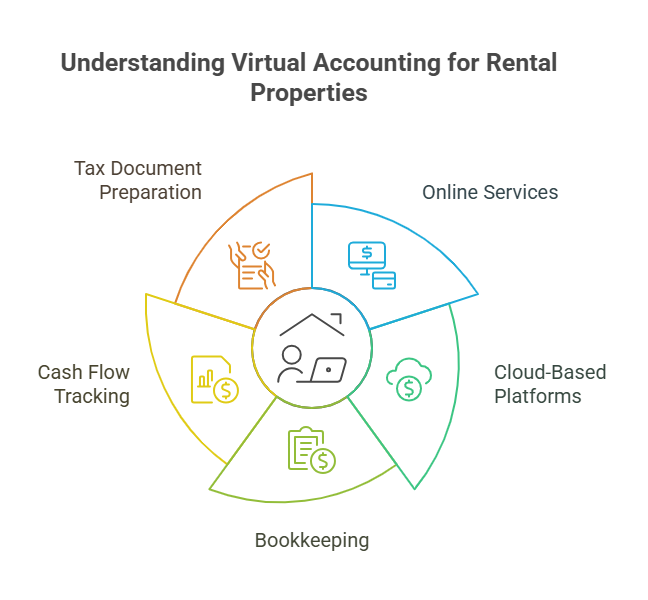
A virtual accountant provides professional accounting services for rental property owners entirely online. They work remotely using cloud-based platforms like QuickBooks Online or specialized landlord software to maintain your books, track cash flow, and prepare tax documents.
Unlike traditional accountants who require in-person meetings, virtual accountants communicate via email, video calls, and secure file sharing. They access your financial data through controlled, read-only connections to your bank accounts and property management systems. This remote setup costs 30-40% less than traditional in-office accounting while providing the same expertise and attention your rental business needs. For property investors seeking professional support without the overhead, understanding the true cost of outsourced accounting services helps you budget appropriately.
Rental property accounting differs significantly from standard business bookkeeping. Landlords must track income and expenses separately for each property, calculate depreciation correctly, manage security deposits, and file Schedule E forms with their tax returns.
Most landlords waste 10-15 hours monthly on manual bookkeeping tasks including categorizing transactions, reconciling bank statements, tracking receipts, and preparing financial reports. This time adds up to 120-180 hours yearly that could be spent finding new properties or improving existing ones. Virtual accountants eliminate this burden while ensuring you don't miss valuable deductions like mortgage interest, property taxes, repairs, and depreciation that can save thousands annually.
Virtual accountants handle the complete financial workflow for rental properties. Core services include tracking all rental income from tenants, categorizing property-specific expenses like repairs and utilities, reconciling bank and credit card statements monthly, and generating profit and loss statements for each property.
They also prepare Schedule E forms for your tax return, calculate annual depreciation deductions, manage 1099 forms for contractors, and provide tax planning advice to minimize your liability. Many virtual accountants offer additional support including cash flow forecasting, capital gains calculations for property sales, and audit representation if the IRS questions your returns. For landlords managing business finances alongside rental properties, exploring co-sourcing strategies that blend in-house and outsourced support can provide flexible solutions as your portfolio grows.
Virtual accountant fees vary based on your portfolio size and service needs. Landlords with 1-3 properties typically pay $150-$250 monthly for basic bookkeeping and Schedule E preparation. Those managing 4-9 properties usually pay $250-$400 monthly for comprehensive services including financial reporting and quarterly tax planning.
Landlords with 10+ properties or complex situations involving multiple LLCs may pay $400-$800 monthly for advanced support. Most virtual accountants offer tiered pricing packages, allowing you to start with basic services and scale up as your portfolio grows. Annual tax preparation typically costs an additional $200-$500 per Schedule E filed. While this seems expensive, the average landlord saves $2,000-$5,000 annually through proper deduction tracking and tax planning that pays for the service multiple times over.
Landlord accounting software like Baselane, TurboTenant, or Buildium costs $10-$50 monthly and provides tools to manage your books yourself. These platforms automatically categorize transactions, generate Schedule E reports, and track cash flow across multiple properties. They work well if you're comfortable with bookkeeping concepts and have 10+ hours monthly to maintain your records.
Virtual accountants cost significantly more at $150-$500 monthly but handle everything for you. They bring professional expertise in tax compliance, provide strategic advice on deductions and structuring, catch errors before they become IRS problems, and save you 10-15 hours monthly on financial tasks. The best approach for many landlords is using both, affordable software for day-to-day tracking combined with quarterly virtual accountant reviews to ensure accuracy and optimize taxes. Similar to how businesses approach in-house versus outsourced accounting decisions, choosing between software and professional support depends on your available time, expertise, and portfolio complexity.
Start by verifying their credentials and rental property experience. Look for accountants with CPA credentials or Enrolled Agent status who specialize in real estate taxation. Ask how many landlord clients they serve and whether they're familiar with Schedule E preparation, depreciation rules, and passive activity loss limitations.
Evaluate their technology setup. They should use reputable cloud accounting software, offer secure document sharing, and provide regular financial reports. Check their communication style and response times, you need someone accessible during tax season and when questions arise. Request client references from other landlords with similar portfolio sizes. Finally, ensure their pricing is transparent with no hidden fees for email questions or document reviews. The right virtual accountant becomes a long-term partner in growing your rental business profitably.
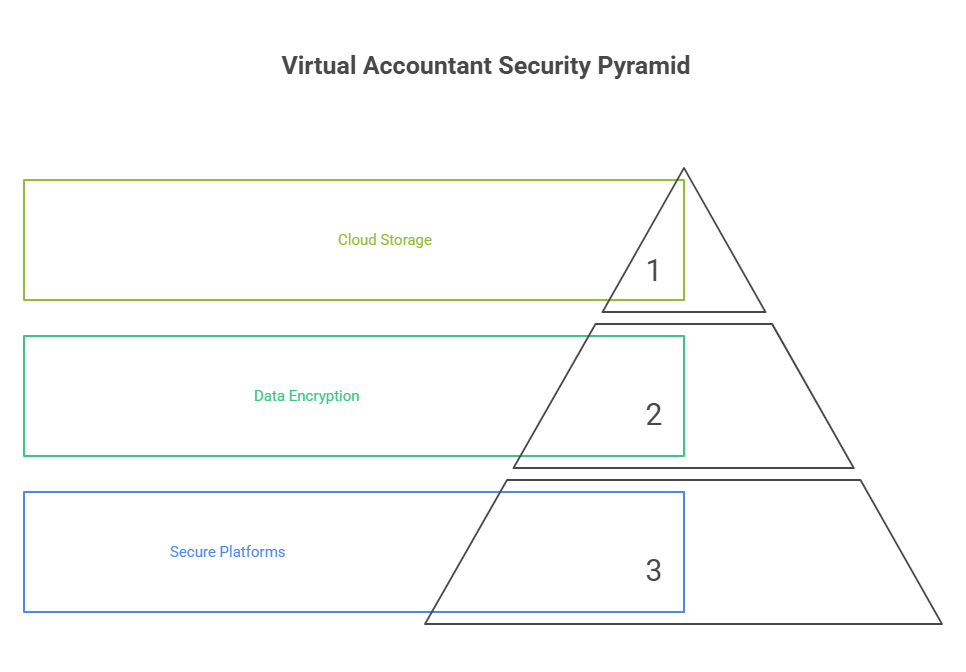
Reputable virtual accountants use bank-level security measures to protect your financial information. They access your accounts through encrypted, read-only connections using secure platforms like Plaid that never share your login credentials. All data transfers occur over SSL-encrypted connections, and files are stored on secure cloud servers with automatic backups.
Most virtual accounting firms require multi-factor authentication for all system access and conduct regular security audits. Your accountant should never ask for full banking passwords, only secure, permission-based access through accounting software integrations. Before hiring anyone, ask about their data security protocols, insurance coverage for data breaches, and compliance with accounting industry standards. For businesses requiring advanced security protocols, reviewing comprehensive data security controls for outsourced bookkeeping ensures your financial information remains protected.
Consider hiring professional help when you're spending more than 10 hours monthly on bookkeeping tasks. If you're constantly stressed about missed deductions, disorganized receipts, or Schedule E preparation, a virtual accountant provides peace of mind worth far more than their fee.
Other clear signals include expanding to multiple properties where tracking becomes complex, facing an IRS audit or tax notice, considering converting properties to LLC ownership, or simply wanting to focus your time on property acquisition rather than paperwork. Virtual accountants typically save landlords 150+ hours annually while ensuring compliance and maximizing after-tax returns. For most landlords managing 3+ properties, the time savings alone justifies the investment.
Virtual accountants for landlords typically charge $150-$500 per month for basic services including bookkeeping, expense tracking, and Schedule E preparation. Costs vary based on portfolio size and complexity. Landlords with 1-3 properties often pay $150-$250 monthly, while those managing 10+ properties may pay $400-$800 monthly for comprehensive services including financial reporting and tax planning.
Virtual accountants handle bookkeeping tasks including tracking rental income and expenses, categorizing transactions by property, reconciling bank statements, generating financial reports, preparing Schedule E forms for tax filing, calculating depreciation, and providing tax planning advice. They work remotely using cloud-based accounting software to maintain your books and ensure compliance with IRS regulations.
Even single-property landlords benefit from professional accounting help, especially during tax season. A virtual accountant ensures you maximize deductions like mortgage interest, property taxes, repairs, and depreciation on Schedule E. If you're comfortable with bookkeeping software and have simple finances, you might start with DIY tools. However, hiring a virtual accountant typically pays for itself through tax savings and time saved.
Virtual accountants use secure cloud-based platforms like QuickBooks Online, Xero, or specialized landlord software. You grant them controlled access to view transactions, categorize expenses, and generate reports. They connect to your bank accounts via secure read-only access through platforms like Plaid. All data is encrypted and protected with multi-factor authentication for security.
Accounting software provides tools to track income and expenses yourself, while a virtual accountant provides professional expertise and does the work for you. Software costs $10-$50 monthly but requires your time to categorize transactions and generate reports. Virtual accountants cost more ($150-$500 monthly) but handle all bookkeeping, ensure tax compliance, provide strategic advice, and save you 10-15 hours monthly on financial tasks.
Yes, virtual accountants excel at managing multi-property portfolios. They track income and expenses separately for each property, generate individual property performance reports, consolidate financial statements across your portfolio, and prepare comprehensive Schedule E forms covering all properties. This property-level tracking helps you identify which rentals are most profitable and where to focus improvements.
Consider hiring a virtual accountant when you're spending more than 10 hours monthly on bookkeeping, missing tax deductions, struggling with Schedule E preparation, expanding to multiple properties, or facing an IRS audit. Virtual accountants typically save landlords 150+ hours annually while ensuring compliance and maximizing deductions. The time savings alone often justifies the cost for landlords managing 3+ properties.
Yes, Madras Accountancy offers virtual bookkeeping and tax preparation services for rental property owners. Since 2015, we've helped property investors maintain accurate books, prepare Schedule E forms, and optimize tax strategies. Our offshore team provides cost-effective accounting support with same-day response times, helping landlords save 40% on accounting costs while maintaining US tax compliance.
Virtual accountants provide landlords with professional financial management at 30-40% lower costs than traditional accountants. They save 150+ hours annually on bookkeeping while ensuring tax compliance and maximizing deductions. For landlords managing 3+ properties or spending more than 10 hours monthly on financial tasks, hiring a virtual accountant typically pays for itself through time savings and tax optimization.
About Madras Accountancy: We've provided offshore accounting support to rental property owners and CPA firms since 2015. Our virtual bookkeeping services help landlords maintain accurate records, prepare Schedule E forms, and optimize tax strategies while reducing accounting costs by 40%. Learn how our team can simplify your rental property finances.
Related read: tax deductions.

Section 4960's 21% excise tax now reaches far more nonprofit employees. See who is a covered employee in 2026 and what changed.

The Section 45S paid family leave credit is permanent for 2026 with new options. See who qualifies, the amounts, and how to claim it.

Opportunity zones become permanent in 2027 under the One Big Beautiful Bill. See the new deferral, rural bonus, and the 2026 handoff.