


Illinois real estate tax filing requires property owners to pay taxes in two installments to their county treasurer, typically due June 1st and September 1st in most counties. Illinois has the second-highest property tax rate in the nation at 2.07%, with the average homeowner paying $6,285 annually, more than double the national average of $2,969. These taxes fund schools, local governments, and public services through nearly 7,000 taxing districts statewide.
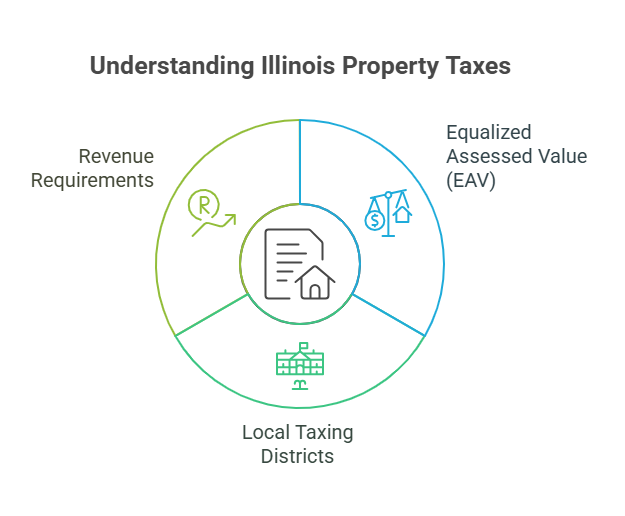
Illinois property taxes are local taxes imposed by school districts, municipalities, and counties. Your tax bill is calculated using two factors: your property's equalized assessed value (EAV) and the revenue requirements of local taxing districts for the coming year.
Schools receive nearly two-thirds of all property tax revenue in Illinois. The state has more local government units with taxing power than any other state, which directly contributes to Illinois ranking second-highest nationally for property tax rates. For property owners managing multiple assets, understanding these calculations becomes essential for financial planning and creating accurate business budgets.
Most Illinois counties mail property tax bills by May 1st. The standard payment schedule includes two installments due around June 1st and September 1st. However, Cook County and some other counties use an accelerated billing method.
Under Cook County's accelerated system, the first installment equals 55% of the previous year's tax bill and must be mailed by January 31st with payment due March 1st. The second installment covers the remaining balance and is typically mailed by June 30th. In 2025, Cook County's second installment bills for Tax Year 2024 are expected to be mailed November 14th with a December 15th due date.
If tax bills are mailed after May 1st, the first installment is due 30 days after the date on your bill. Contact your county treasurer for specific deadlines, as county boards can set different payment schedules by resolution.
Payment methods vary by county, but most treasurers accept:
Many counties now offer online portals where you can view and download your tax bill. If you have a mortgage, check whether your lender pays taxes from your escrow account, it's your responsibility to ensure they receive the bill.
Illinois law requires immediate penalties on late payments. A 1.5% penalty applies starting the day after the due date, with an additional 1.5% added each month through September.
If taxes remain unpaid after the final deadline, they're sold to registered tax buyers at a tax sale for an interest rate. This doesn't mean your property is sold, only the unpaid taxes. However, you must then contact the County Clerk to redeem the taxes, plus interest and additional fees. Some counties have extended penalty deadlines for properties with significant tax increases exceeding 50% from the prior year. For businesses facing cash flow challenges, reviewing cash flow forecasting strategies can help you plan for these major expenses.
Illinois offers several exemptions for qualifying property owners. The senior citizen's homestead exemption reduces a home's equalized assessed value by $8,000 for residents 65 and older in Cook, Lake, Kane, Will, McHenry, and DuPage counties. Other counties provide a $5,000 reduction.
Seniors with household income of $65,000 or less can apply to freeze their property's equalized assessed value for one year. The state also offers a deferral program allowing qualifying residents to postpone property tax payments. Contact your township assessor or county supervisor of assessments to learn about additional exemptions you might qualify for.
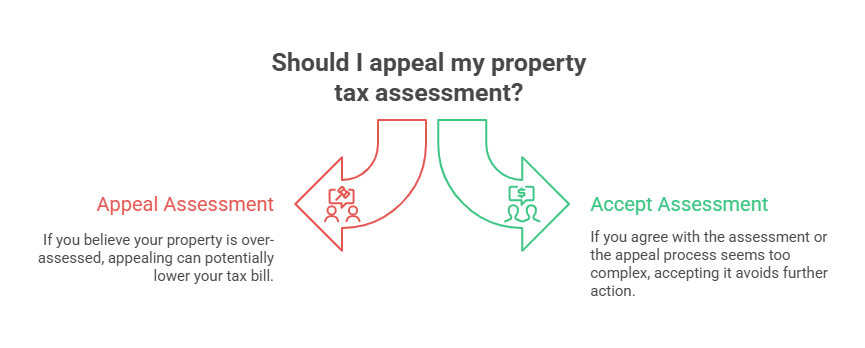
Yes. If you believe your property is over-assessed, you can file a complaint with your local Board of Review. The board can provide information about the appeals process and deadlines.
Your township assessor (in counties with township government) or county supervisor of assessments can help you understand your assessment and whether an appeal is warranted. Consider comparing your assessment to similar properties in your area to identify potential over-assessments.
You're responsible for paying property taxes even if you don't receive a bill. Contact your county treasurer immediately to request a duplicate bill, typically available for a $2 fee. Most counties now provide online portals where you can download your bill as a PDF.
If you're a new homeowner and the bill was issued in the previous owner's name, use your county's online portal or contact the treasurer's office directly. Never assume your taxes are paid, verify with your mortgage company if they handle payments from your escrow account. For business owners managing properties alongside other financial obligations, professional tax planning strategies can help you stay organized and compliant.
Most Illinois counties mail property tax bills by May 1st with two installments due around June 1st and September 1st. Cook County uses an accelerated system with the first installment (55% of prior year's tax) due March 1st and the second installment due in late summer or fall. If bills are mailed after May 1st, the first payment is due 30 days after the bill date.
Illinois has the second-highest property tax rate in the nation at 2.07% of home value. The average Illinois homeowner pays $6,285 annually compared to the national average of $2,969. This means Illinois residents pay more than double what most Americans pay in property taxes.
Late payments immediately incur a 1.5% penalty starting the day after the due date, with an additional 1.5% added each month through September. If taxes remain unpaid, they're sold to registered tax buyers at a tax sale. You'll then need to contact the County Clerk to redeem the taxes plus interest and additional fees.
Yes. Illinois residents 65+ qualify for a senior homestead exemption reducing assessed value by $8,000 in Cook, Lake, Kane, Will, McHenry, and DuPage counties ($5,000 elsewhere). Seniors with household income under $65,000 can freeze their assessed value for one year. The state also offers a deferral program for qualifying residents.
Your tax bill is based on two factors: your property's equalized assessed value (EAV) and the revenue needed by local taxing districts. Schools receive nearly two-thirds of property taxes. Illinois has nearly 7,000 local government units with taxing power, contributing to the state's high rates.
Contact your county treasurer's office for payment options. Most counties accept payments online, by mail, in-person, or at participating banks. Many counties accept e-checks and credit/debit cards online (processing fees apply). Always verify your county's specific deadlines and accepted payment methods.
You're still responsible for payment even if you didn't receive a bill. Contact your county treasurer immediately to request a duplicate bill (usually $2 fee). Most counties now offer online portals where you can download your bill as a PDF.
Yes. If you believe your property is over-assessed, file a complaint with your local Board of Review. The township assessor or county supervisor of assessments can provide assessment information and guidance on the appeals process.
Illinois property taxes require careful attention to deadlines and payment methods to avoid penalties. With the second-highest rates nationally, understanding exemptions and appeals can significantly reduce your tax burden. Mark your calendar for your county's specific due dates, explore available exemptions, and consider setting up automatic payments to ensure you never miss a deadline.
About Madras Accountancy: Since 2015, we've helped CPA firms and businesses navigate complex tax compliance requirements. Our offshore accounting partnerships enable firms to maintain quality while reducing overhead by 40%. Learn more about our tax compliance services.
Section 4960's 21% excise tax now reaches far more nonprofit employees. See who is a covered employee in 2026 and what changed.

The Section 45S paid family leave credit is permanent for 2026 with new options. See who qualifies, the amounts, and how to claim it.

Opportunity zones become permanent in 2027 under the One Big Beautiful Bill. See the new deferral, rural bonus, and the 2026 handoff.