



Starting January 1, 2025, Arizona landlords cannot charge transaction privilege tax (TPT) on residential rentals lasting 30 days or more.
This statewide rental tax ban eliminates the city sales tax on rent that previously ranged from 1% to 4% across 80% of Arizona cities. Landlords must reduce tenant rent by the exact tax amount they previously collected, or tenants can sue for non-compliance under A.R.S. § 42-6004(H).
You're a Phoenix landlord charging $1,500 monthly rent plus 2.5% TPT ($37.50). On January 1, 2025, you must drop the total to $1,500, no tax line item, no gradual phase-out. Miss this deadline and your tenant has legal grounds to sue, the Arizona Attorney General can get involved, and you'll likely end up in the local news as a test case for the most scrutinized landlord law change in Arizona history.
The 2023 law eliminating residential rental tax was designed with a delayed implementation to give Arizona's 80+ cities time to adjust to losing $230 million in annual revenue. That grace period ends in weeks. Tenant advocacy groups and media outlets are already preparing lists of non-compliant landlords, and the law explicitly creates a private right of action for tenants to recover illegally collected taxes.
Here's what you need to know: which rentals are affected, how to update existing lease agreements, what happens to your TPT license, the penalties for non-compliance, and how to properly document the rent reduction for both tenant communications and tax accounting purposes.
Arizona's rental tax ban prohibits cities, towns, and other taxing jurisdictions from levying transaction privilege tax (TPT) on long-term residential rentals. The change comes from the 2023 amendment to A.R.S. § 42-6004(H), which states that "from and after December 31, 2024, a city, town, or other taxing jurisdiction may not levy a transaction privilege, sales, gross receipts, use, franchise or other similar tax or fee on the business of renting or leasing real property for residential purposes."
Before this law, most Arizona cities imposed TPT on residential rentals, essentially a sales tax that landlords collected from tenants and remitted to the Arizona Department of Revenue (ADOR). Tax rates varied by location: Phoenix charged 2.3%, Scottsdale 1.75%, Tucson 2%, and Mesa 2%. The average rate across Arizona was 2.5%, which translated to $420 annually on a $1,400 monthly rent.
The ban applies exclusively to residential leases of 30 consecutive days or more. Short-term rentals under 30 days still must collect and remit TPT under the transient lodging classification. Commercial properties, healthcare facilities, long-term care facilities, and hotels remain fully taxable with no changes to existing TPT requirements.
The Arizona Department of Housing clarified that "residential purposes" means long-term residential dwellings where tenants establish primary residence, not vacation rentals or temporary lodging. If you rent a property for 29 days, you're still collecting transient lodging tax. At 30 days, the rental tax ban applies and TPT collection becomes illegal.
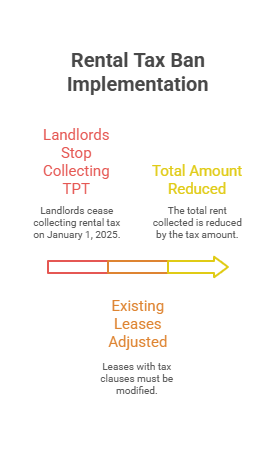
Landlords must stop collecting residential rental TPT immediately on January 1, 2025. This isn't optional or gradual, the law prohibits charging the tax starting with January 2025 rent payments. For existing leases that include language like "plus applicable rental tax" or itemize TPT as a separate charge, you must reduce the total amount collected by exactly that tax percentage.
Your TPT license changes automatically. ADOR canceled all TPT licenses that exclusively used business code 045 (Residential Rental) effective December 31, 2024. If you only rent residential properties, your license is gone and you don't need to take any action to close it. However, if you also operate commercial rentals or short-term lodging, ADOR removed only the residential rental code while keeping your license active for other business activities.
Lease agreements need immediate updates. New leases signed on or after January 1, 2025 cannot reference residential rental tax at all, remove any language about TPT, tax pass-throughs, or adjustable tax rates. For existing leases, you have two options: formally amend the lease with a signed addendum that both you and the tenant agree to, or simply stop collecting the tax portion without amending (the law requires you to stop collection regardless of what your lease says).
Your accounting and property management software requires configuration changes. Landlords using outsourced bookkeeping services should coordinate with their accounting team to update billing templates, remove TPT line items from invoices, and adjust chart of accounts to stop tracking residential rental tax as a separate liability. These changes must be in place before you process any January 2025 rent payments.
One critical requirement: you must still register your rental properties with your county assessor. The elimination of TPT doesn't change local registration requirements. Maricopa County, Pima County, and all other Arizona counties still require landlords to register residential rental properties, and failing to do so results in penalties and fines separate from any tax issues.
The rental tax ban has clear boundaries. Short-term rentals remain fully taxable under Arizona's transient lodging classification. If you operate an Airbnb, VRBO, or any rental that typically books stays under 30 days, nothing changes, you still collect and remit TPT on every booking. The 30-day threshold is consecutive days with the same tenant.
Commercial properties are completely exempt from the ban. Office space, retail locations, warehouse rentals, and any other commercial real estate continue operating under existing TPT rules. If you own mixed-use property with residential units above and commercial space below, the ban applies only to the residential leases while commercial leases remain taxable.
Healthcare facilities, long-term care facilities, and hotels explicitly remain taxable regardless of stay length. The law specifically carves out these categories. If you operate assisted living, nursing homes, or medical facilities where patients or residents pay for lodging, TPT collection continues unchanged. This ensures that healthcare-related housing doesn't receive unintended tax benefits.
Hotels and motels remain under the transient lodging classification. Even if someone stays 31 days at a hotel, the property still collects TPT because the facility operates as transient lodging business. The key distinction is the property type and business classification, not just the length of stay.
Existing leases signed before 2025 need immediate attention. Most rental agreements include language about rental tax being "subject to change" or "plus applicable tax." Starting January 1, 2025, the "applicable tax" becomes zero, and you must reduce the total rent collected accordingly. Arizona Revised Statute 33-1314 typically requires landlords to serve formal 30-day notice to change tax rates, but there's legal ambiguity about whether this applies when eliminating a tax pursuant to state law.
The safest approach: notify all tenants in writing about the rent reduction, even if formal 30-day notice isn't technically required. Send individual notices via certified mail or email (if your lease allows electronic notices) explaining that effective January 1, 2025, you're removing the rental tax portion from their monthly payment. Include the specific dollar amount of the reduction so there's no confusion.
If you itemize charges on monthly statements, showing base rent, rental tax, and total separately, simply remove the tax line starting with January statements. If you don't itemize and charge one lump sum, you need to communicate the breakdown. Many landlords are now switching to itemized statements specifically to demonstrate compliance with the tax elimination.
For late fees and other charges that previously included tax, remove the tax component. If your lease charges $50 late fees plus 2.5% tax ($1.25), the late fee drops to $50 flat starting in 2025. This applies to any ancillary charges that included TPT, pet fees, parking fees, amenity charges. All taxes previously collected on these items must stop.
Consider publicizing the rent reduction as positive news. The Arizona Multihousing Association and Arizona Association of REALTORS both recommend landlords actively promote the savings to tenants through community communications, newsletters, or property website notices. This demonstrates good faith compliance and reduces the likelihood of tenant complaints or legal challenges.
Your final TPT filing covers December 2024 activity. Landlords who collected residential rental tax through December must file their last return showing that month's collections and remit any amounts owed to ADOR. After that filing, residential rental is no longer a selectable business classification when filing returns for January 2025 and beyond.
Outstanding liabilities from prior periods remain your responsibility. License cancellation doesn't erase unpaid taxes, missing returns, or unreported income from before January 1, 2025. ADOR explicitly warns that enforcement actions continue for pre-2025 tax periods. If you failed to collect and remit TPT properly in 2023 or 2024, you're still liable and the statute of limitations for audits still applies.
Landlords who didn't have TPT licenses but should have been collecting tax in previous years face particular risk. If you operated rental properties in cities that imposed residential rental tax but never registered or filed returns, the law change doesn't provide amnesty. ADOR recommends contacting their Residential Rental team at (602) 716-RENT to resolve prior period compliance issues before they escalate to audits or penalties.
Federal income tax treatment doesn't change. Your rental income still appears on Schedule E of your federal tax return. The elimination of Arizona's TPT on rentals doesn't affect how you report rental income to the IRS. Landlords should maintain documentation of the rent reduction in case the IRS questions why gross rental income appears lower in 2025 compared to 2024, having copies of tenant notices and updated lease terms protects you during any audit.
Property management companies need separate tracking. If you manage properties for multiple owners, you need clear records showing which properties stopped collecting TPT and when. Your filings on behalf of property owners must accurately reflect the elimination of residential rental tax while continuing to report any commercial or short-term rental activity that remains taxable.
The law creates a private right of action for tenants. If landlords continue collecting rental tax after January 1, 2025, tenants can sue to recover the amounts illegally charged. Class action lawsuits are possible when multiple tenants in the same property or portfolio are overcharged. The law was specifically written to give tenants enforcement power because legislators knew some landlords would try to pocket the tax savings.
The Arizona Attorney General has enforcement authority. Non-compliant landlords face potential action from the state's top law enforcement office. During the legislative debate, tenant advocates negotiated this provision specifically because they anticipated widespread non-compliance. The Attorney General's office has indicated willingness to pursue test cases against landlords who blatantly ignore the law.
Media and advocacy groups are monitoring compliance. Multiple Arizona news outlets and tenant rights organizations have stated they're actively searching for landlords who continue charging rental tax. Being caught in non-compliance doesn't just mean legal liability, it means negative publicity at a time when landlord-tenant relations in Arizona are already strained due to the 72% rent increases over recent years.
ADOR enforcement continues for improper collections. If you collect TPT that you're prohibited from collecting, you're still required to remit those amounts to ADOR, but you face penalties for illegal collection. This creates a lose-lose situation: you must pay the state money you weren't supposed to collect in the first place, plus face tenant lawsuits for overcharging.
Audit risk extends back three years for most taxpayers. If ADOR discovers you failed to collect and remit TPT properly in 2022, 2023, or 2024, they can assess back taxes plus penalties and interest. The statute of limitations for tax audits doesn't change just because the tax itself was eliminated going forward. Maintaining a comprehensive tax compliance calendar helps landlords with multiple properties track filing deadlines and avoid penalties across different tax years.
Chart of accounts modifications are essential. Most landlords track TPT collections as a liability account, money collected from tenants but owed to the state. In January 2025, that account should show zero activity for residential rentals. Your bookkeeping system needs updates to ensure TPT doesn't accidentally appear on residential property financials while still tracking it properly for any commercial or short-term rental properties.
Revenue recognition changes slightly. Previously, if a tenant paid $1,500 total rent including $37.50 TPT, you recorded $1,462.50 as rental revenue and $37.50 as TPT liability. Starting in 2025, the entire $1,500 becomes rental revenue (assuming you reduced the total by the previous tax amount). Your gross rental income appears higher in 2025, but your net income should be unchanged because you're no longer paying TPT to the state.
Bank reconciliation requires attention. If tenants paid rent on December 31, 2024 for January 2025, you might have collected rental tax on that payment (because it was collected in 2024). However, the rental period is January 2025 when the tax is illegal. This timing difference creates confusion, consult with your tax accountant about whether to refund the tax portion or how to properly account for these cross-year payments.
Multi-property portfolios need property-by-property tracking. If you own both residential and commercial properties, or a mix of long-term and short-term rentals, your bookkeeping must clearly distinguish which properties stopped collecting TPT and which continue. Generic accounting entries that lump everything together will create problems during audits or when preparing financial statements.
Quarterly and annual financial statements show the impact. For landlords who prepare formal financial statements (especially those with investors or lenders), the 2025 statements will show increased gross revenue compared to 2024 due to the former TPT amounts now being classified as rental income. Include footnotes in your financial statements explaining this change so readers don't misinterpret the revenue increase as growth in your rental rates or occupancy.
Yes, but you must handle these separately. First, eliminate the rental tax effective January 1, 2025, this is non-negotiable and required by law. Second, if you want to increase base rent, follow your standard lease terms and Arizona law for rent increases (typically 30-day written notice for month-to-month leases). However, doing both simultaneously looks suspicious. Most landlords are waiting 60-90 days after eliminating the tax before implementing any rent increases to avoid accusations of simply recapturing the tax savings.
Contact your software vendor immediately, most major property management platforms released updates in Q4 2024 specifically for Arizona's rental tax elimination. If your software genuinely can't be updated, you can manually adjust invoices before sending to tenants, but this creates audit trail issues. As a last resort, switch to a different software platform. The inability to comply with state law isn't an acceptable excuse, and judges won't be sympathetic to technical difficulties when tenants sue for illegal tax collection.
This is a gray area. Some attorneys advise refunding the tax portion because the rental period (January 2025) falls after the ban took effect, even though you collected payment in December 2024. Others argue the collection date controls. The safest approach: refund the tax portion and clearly communicate the adjustment to tenants. This costs you one month's tax but eliminates dispute risk. Consult your tax accountant about whether you need to remit amounts collected in December for January occupancy to ADOR or refund them to tenants.
Documentation is critical. Keep copies of notices you sent to tenants announcing the rent reduction, revised lease agreements or addendums, rent payment records showing the before and after amounts, and bank deposits proving you're collecting less total rent.
If you previously itemized rental tax on monthly statements, continue providing itemized statements in 2025 showing the rental tax line at zero. This creates clear evidence that you eliminated the tax rather than hiding it in the base rent amount.
Yes, if the lease is for 30+ consecutive days for residential purposes. It doesn't matter whether the tenant is an individual or a corporation paying for an employee's housing, the length of stay and residential purpose determine tax treatment. However, if the property functions as transient lodging (employees rotating through every few weeks), it might still qualify as short-term rental requiring TPT. The tenant's identity matters less than the occupancy pattern and lease structure.
The law specifically prohibits levying "transaction privilege, sales, gross receipts, use, franchise or other similar tax or fee" on residential rentals. Cities can't simply rename the tax and keep collecting it. However, cities could potentially increase other revenue sources like property taxes, business license fees, or sales taxes on other goods and services. The League of Arizona Cities and Towns is actively discussing revenue alternatives with state legislators, but as of January 2025, no new residential rental-specific taxes are allowed.
The rental tax ban applies only to Arizona properties. Other states have their own tax rules for residential rentals. You need separate tracking systems and compliance protocols for each state. Your Arizona properties stop collecting city TPT on January 1, 2025, while properties in California, Nevada, Texas, or other states continue following their respective tax laws. Multi-state landlords should work with accountants experienced in handling properties across multiple jurisdictions to ensure proper compliance in each location.
Madras Accountancy provides specialized support for real estate investors navigating the 2025 rental tax changes. We handle final TPT filings for December 2024, update your chart of accounts and bookkeeping systems to remove residential rental tax tracking, prepare documentation of rent reductions for tenant communications, and ensure your 2025 tax returns properly reflect the elimination of TPT collections.
Our team has processed tax returns for landlords in all 50 states since 2015 and understands the complexities of multi-property compliance and financial reporting during major tax law changes.
The rental tax elimination represents Arizona's largest change to residential rental taxation in decades. Landlords who treat January 1, 2025 as a hard deadline, updating systems, notifying tenants, and adjusting accounting practices, will avoid legal problems and negative publicity. Those who ignore the change or try to quietly keep collecting the tax face tenant lawsuits, Attorney General action, and lasting damage to their reputation.
The immediate action items: stop collecting rental tax on January 1, send written notice to all tenants documenting the rent reduction, update lease templates to remove tax language, file your final December 2024 TPT return, and adjust your bookkeeping to reflect zero TPT collections on residential properties.
If you manage properties across multiple Arizona cities or own both residential and commercial rentals, property-by-property compliance tracking becomes essential.
For landlords with complex portfolios or those operating in multiple states, professional accounting support prevents costly mistakes during this transition. Madras Accountancy has helped real estate investors navigate major tax law changes since 2015, providing comprehensive bookkeeping, tax preparation, and compliance support specifically tailored to rental property owners managing portfolios across different jurisdictions.
Related read: sales tax.

Section 4960's 21% excise tax now reaches far more nonprofit employees. See who is a covered employee in 2026 and what changed.

The Section 45S paid family leave credit is permanent for 2026 with new options. See who qualifies, the amounts, and how to claim it.

Opportunity zones become permanent in 2027 under the One Big Beautiful Bill. See the new deferral, rural bonus, and the 2026 handoff.