



That is the core tension in portfolio company finance. A PE firm acquires a $15M revenue company that was using QuickBooks and a part-time bookkeeper. Within 30 days, the PE firm expects monthly reporting packages, KPI dashboards, 13-week cash flow forecasts, and board-ready financials. The company's existing finance team (if they even have one) is not equipped to deliver this.
We see this constantly at Madras Accountancy. CPA firms that serve PE portfolio companies come to us because the reporting requirements exceed what their current team can produce, but the portco does not have the budget to hire a full finance department. Our outsourced accounting services are built to fill exactly this gap.
The reporting requirements vary by firm, but most PE sponsors want the same core package delivered within 15 to 20 business days of month-end. Some push for a 10-day close.
Monthly financial statements including income statement, balance sheet, and cash flow statement. These need to be accrual-basis, GAAP-compliant, and consistent month over month. Presentation format usually follows the PE firm's template, not the portco's historical format. The PE firm wants to compare performance across portfolio companies, which means standardized line items and chart of accounts.
Budget vs actual variance analysis breaks down every line item by actual result, budgeted amount, dollar variance, and percentage variance. Material variances (typically defined as greater than 10 percent or greater than $25,000) need written explanations. This is where most portco finance teams fall apart. Producing the numbers is one thing. Explaining why revenue was $200K below plan in a way that satisfies a PE partner requires someone who understands the business.
KPI dashboards track the operating metrics that drive value creation. The specific KPIs depend on the industry, but common ones include revenue growth rate, gross margin, EBITDA margin, customer acquisition cost, customer churn, employee headcount and productivity, and working capital metrics (DSO, DIO, DPO). These should be trended over 12 months minimum with visual charts, not just tables of numbers.
13-week cash flow forecast is a rolling short-term cash projection that PE firms use to monitor liquidity and anticipate capital needs. This gets updated weekly and tracks actual versus projected cash position. For portcos with seasonal revenue or lumpy customer payments, this is a critical early warning system.
LP reporting packages are prepared quarterly by the PE fund but rely on portco data. The portco finance team needs to provide audited or reviewed financials, supporting schedules, and narrative commentary that the PE firm's fund accounting team uses to prepare their LP reports.
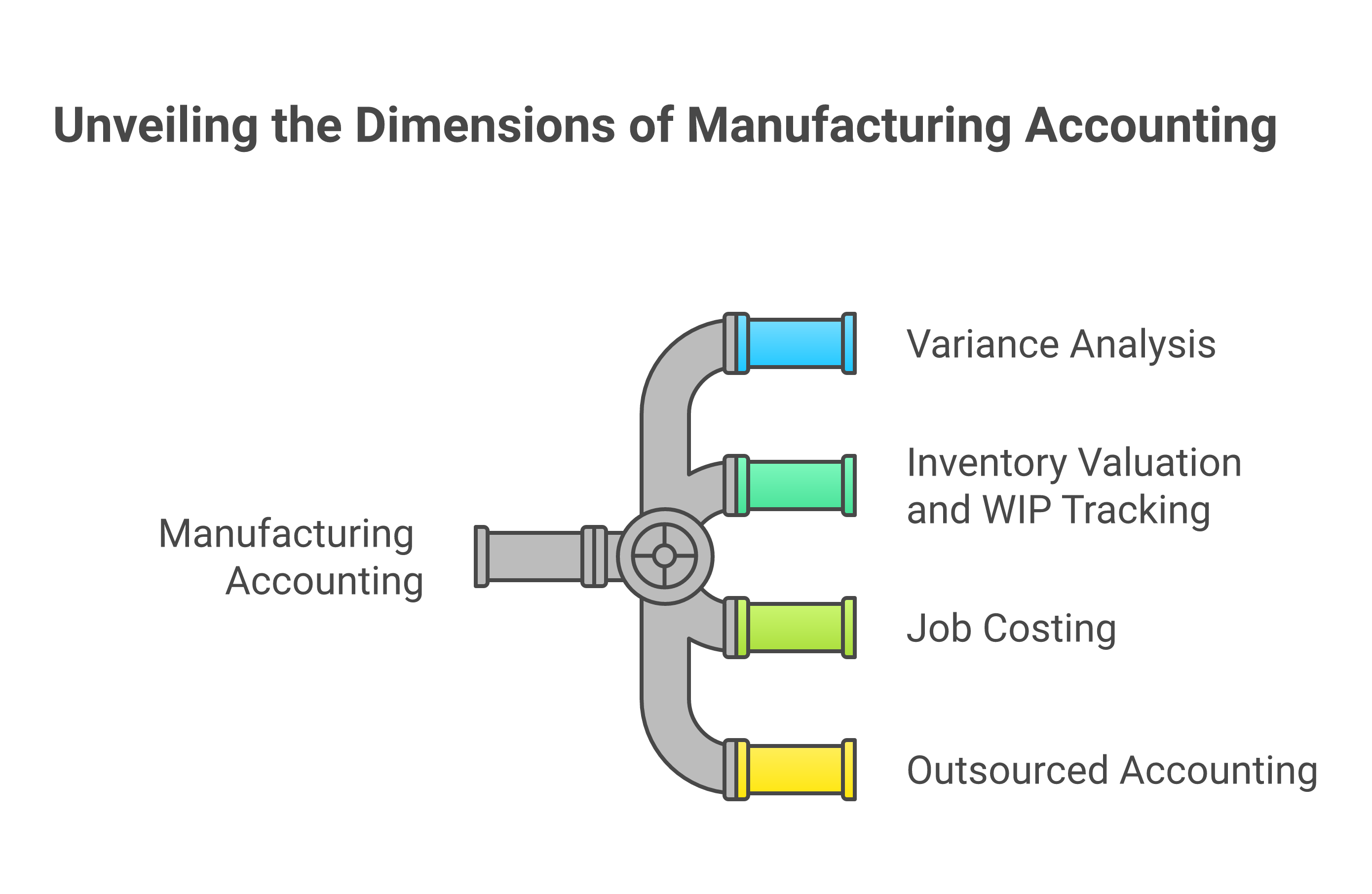
We want to spend more time on variance analysis because it is where the value of a good outsourced finance team becomes most visible.
A PE partner does not want to see "Revenue was $200K below budget." They want to know why. Was it a pricing issue, a volume issue, a timing issue, or a structural problem? Did a large customer delay a purchase order, and if so, will it close next month? Did a new competitor enter the market? Did the sales team miss targets, and if so, which territories and which reps?
Good variance explanations require the finance team to talk to the operations team. At Madras, our team contacts the portco's department heads each month to gather context for material variances. The finance team should not be guessing at explanations. They should be reporting what the business leaders tell them, supported by the data.
In our experience, the quality of variance explanations improves dramatically between months 1 and 4 of an engagement. The first month, the team is learning the business and the explanations are generic. By month 4, the team understands the revenue drivers, the cost structure, and the operational rhythms well enough to provide insightful commentary that helps the PE firm understand what is really happening in the business.
Hiring an in-house finance team for a PE portco is expensive and slow. A controller costs $120,000 to $160,000. A financial analyst costs $75,000 to $100,000. A staff accountant costs $55,000 to $75,000. For a newly acquired portco that needs all three, that is $250,000 to $335,000 in fully loaded annual cost, plus 2 to 4 months to recruit and onboard.
An outsourced team delivers the same reporting capability at 40 to 60 percent of that cost and can be operational within 4 to 6 weeks. At Madras, a typical PE portco engagement includes a US-based fractional controller or CFO (10 to 15 hours per month) supported by an offshore production team of 2 to 3 people who handle the monthly close, variance analysis, KPI dashboard updates, and cash flow forecasting.
The total cost: $8,000 to $15,000 per month depending on complexity, versus $20,000 to $28,000 per month for an equivalent in-house team. The cost comparison is even more favorable when you factor in recruiting costs and the time-to-productivity advantage.
The other advantage is speed. PE firms do not want to wait 3 months for the portco to hire a finance team. They want reporting next month. An outsourced team that has done this for other PE portcos can hit the ground running because the reporting requirements are similar across portfolio companies, even when the underlying businesses are different.
Here is the timeline we follow at Madras when a CPA firm brings us a newly acquired PE portco.
Days 1 through 14: Assessment and setup. We review the existing books, identify gaps, and set up the chart of accounts to match the PE firm's reporting template. If the portco was on cash basis, we convert to accrual. If the chart of accounts is a mess, we restructure it. We also configure the KPI dashboard framework and establish the reporting calendar.
Days 15 through 30: First close. We produce the first monthly reporting package under the new structure. This close takes longer than normal because we are cleaning up historical data and establishing opening balances. The PE firm expects this first package to be rough. The goal is completeness, not perfection.
Days 31 through 60: Refinement. The second and third monthly closes get faster. Variance explanations improve as the team learns the business. The KPI dashboard is refined based on PE firm feedback. The 13-week cash flow forecast is built and calibrated against actual results.
Days 61 through 100: Steady state. By the fourth close, the process should be running smoothly. Close timeline hits 15 business days. Variance explanations are insightful, not just mechanical. The fractional controller or CFO is attending board calls with the PE firm and providing strategic commentary, not just reading numbers off a page.
Our fractional CFO services pair well with this model. The fractional CFO provides the strategic layer, while the offshore team handles production.
PE firms rarely acquire just one company. The platform acquisition is followed by add-on acquisitions that need to be integrated into the reporting structure. Each add-on introduces a new entity with its own chart of accounts, its own accounting software, and its own historical practices.
Our offshore team handles the integration work for each add-on: mapping the new entity's chart of accounts to the platform's standard structure, building inter-company elimination entries, and producing consolidated financials that combine all entities. For a portco that grows from one entity to four over 18 months, this ongoing integration work is substantial and is exactly the kind of detailed, process-driven work that an offshore team handles efficiently.
The consolidation also requires careful handling of purchase accounting adjustments. Goodwill, intangible assets, and fair value adjustments from each acquisition need to be recorded and tracked. The amortization of these adjustments flows through the consolidated financials and affects EBITDA, which is the number the PE firm cares most about. Getting the purchase accounting wrong distorts the performance picture, so our team maintains a detailed schedule for each acquisition's adjustments.
If you are a CPA firm supporting PE portfolio companies, the PE firm holds you to a higher standard than a typical small business client expects. Close deadlines are firm. Reporting packages must match their template exactly. Quality needs to be consistent month over month.
This is where outsourcing becomes not just a cost play but a quality play. A dedicated offshore team that closes the same portco's books every month builds institutional knowledge that improves over time. They learn the recurring journal entries, the accrual patterns, the revenue recognition quirks, and the specific KPIs the PE firm cares about. That consistency is hard to maintain with a single in-house bookkeeper who gets sick, takes vacation, or quits.
At Madras, we build redundancy into every PE portco engagement. At least two offshore team members know every client, so there is always backup. Our quality control process includes internal review before anything reaches the CPA firm, which means fewer review notes and faster turnaround.
Beyond the monthly reporting package, PE portcos need periodic presentation materials for board meetings (typically quarterly) and annual investor meetings. These presentations go beyond the numbers. They tell the story of the business: what happened this quarter, what is working, what is not, and what the plan is for next quarter.
Our team prepares the data-driven sections of these presentations: financial summary slides, KPI trend charts, budget variance highlights, and cash flow projections. The fractional CFO or the portco's management team adds the narrative and strategic commentary. Having the data work done in advance means the management team can focus on the story rather than scrambling to pull numbers the night before the board meeting.
In our experience, PE firms notice the difference between a well-prepared board package and a last-minute effort. The portcos that consistently deliver clean, timely board materials build credibility with the PE sponsor, which translates into more favorable treatment when it comes to follow-on capital, management support, and eventual exit planning.
If you are a CPA firm looking to support PE portfolio companies with institutional-quality reporting at a price point that works, reach out at madrasaccountancy.com.
Yes, with proper process design. A 10-day close requires pre-close activities (accrual estimates, preliminary reconciliations) happening before month-end, not after. Our team starts close preparation on the 25th of each month, which means when the month ends, 60 to 70 percent of the work is already done. The remaining 30 percent (final reconciliations, true-up adjustments, reporting package assembly) fits within 10 business days.
For portcos under $50M revenue, QBO Advanced or Xero with a reporting layer like Fathom or Jirav works well. For portcos above $50M or with complex multi-entity structures, Sage Intacct or NetSuite provides the dimensional reporting PE firms expect. Our team works in all of these platforms.
Carefully. We run a 30-day parallel period where both teams are working simultaneously. The existing bookkeeper continues their normal process while our team shadows and builds the new structure. At the end of 30 days, we take over and the old process is retired. This eliminates the gap in financial reporting that PE firms cannot tolerate.
This happens regularly. PE firms refine their reporting templates, add new KPIs, or change the close timeline. Our team adapts within the next monthly cycle. Because the offshore team is dedicated to the engagement (not shared across 50 clients), they have the bandwidth to absorb changes without disrupting the core reporting process.
Many PE firms require annual audits of their portfolio companies. Our team prepares the audit workpapers, schedules, and supporting documentation that the external auditor needs. We also handle auditor requests during fieldwork, pulling documentation and answering questions through the CPA firm. Having clean monthly books throughout the year makes the year-end audit significantly less painful and less expensive than it would be if the books needed cleanup before the auditors arrive.
Related read: private equity firms buy accounting.
Related read: intelligence dashboards accounting metrics.

Section 4960's 21% excise tax now reaches far more nonprofit employees. See who is a covered employee in 2026 and what changed.

The Section 45S paid family leave credit is permanent for 2026 with new options. See who qualifies, the amounts, and how to claim it.

Opportunity zones become permanent in 2027 under the One Big Beautiful Bill. See the new deferral, rural bonus, and the 2026 handoff.