



Quick Answer: Utah rental property bookkeeping firms charge $150-$400 monthly per property and handle rent tracking, expense categorization, tax compliance, and financial reporting. Specialized firms understand Utah's trust account requirements, transient room tax rules for short-term rentals, and multi-property portfolio management for Salt Lake City area landlords.
Finding competent rental property bookkeeping in Utah determines your tax liability, protects you during IRS audits, and informs investment decisions. Most Salt Lake City landlords lose 12-18 hours monthly on financial tasks while missing deductions worth $2,000-$5,000 annually.
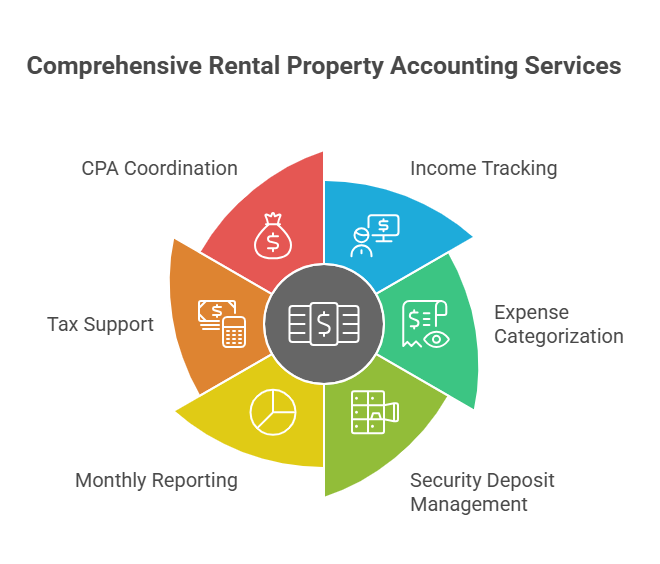
Specialized firms track rental income from traditional leases, Airbnb, and VRBO, reconciling platform payouts against bank deposits. They categorize expenses by property, mortgage interest, taxes, repairs, HOA fees, and maintain separate ledgers for security deposits in Utah's required non-interest bearing trust accounts.
Monthly reports show property-by-property profit and loss, cash flow analysis, and rent collection summaries. Tax support includes organizing receipts, calculating depreciation, and ensuring you're prepared for potential tax audits. Many firms coordinate with your CPA for streamlined year-end filing.
Short-term rentals under 30 days trigger Utah's transient room tax, 4.7% state-wide plus local rates (Salt Lake City adds 4.05%, Park City 5.5%). The Utah State Tax Commission requires quarterly or monthly filings. Miss a deadline and penalties start at $20 plus interest.
Long-term rentals allow late fees up to $75 or 10% of monthly rent. Multi-property portfolios need separate tracking to evaluate performance and understand financial statements when acquiring or divesting properties.
Single-property owners pay $150-$250 monthly for basic services. Add $50-$100 per additional property, with volume discounts after five units. Short-term rental bookkeeping costs $250-$400 monthly due to higher transaction volumes.
Specialized services, cost segregation, 1031 exchange tracking, multi-state compliance, add $100-$300 monthly but often pay for themselves through tax savings. Consider the cost-benefit of outsourced bookkeeping carefully. Firms using offshore teams reduce costs by 40% while maintaining quality.
QuickBooks expertise matters, 70% of Utah property managers use QuickBooks Online. Look for firms that set up proper chart of accounts, automate bank feeds, and generate property-level profitability reports.
Real estate experience separates good from excellent. Firms handling 50+ rental properties understand depreciation schedules, capital improvements versus repairs, and passive activity loss limitations. Tax knowledge protects your bottom line through proper expense classification and audit documentation.
Technology integration streamlines operations. Seek firms connecting directly with property management software, reconciling Airbnb and VRBO automatically, and providing secure document portals for receipts and lease agreements.
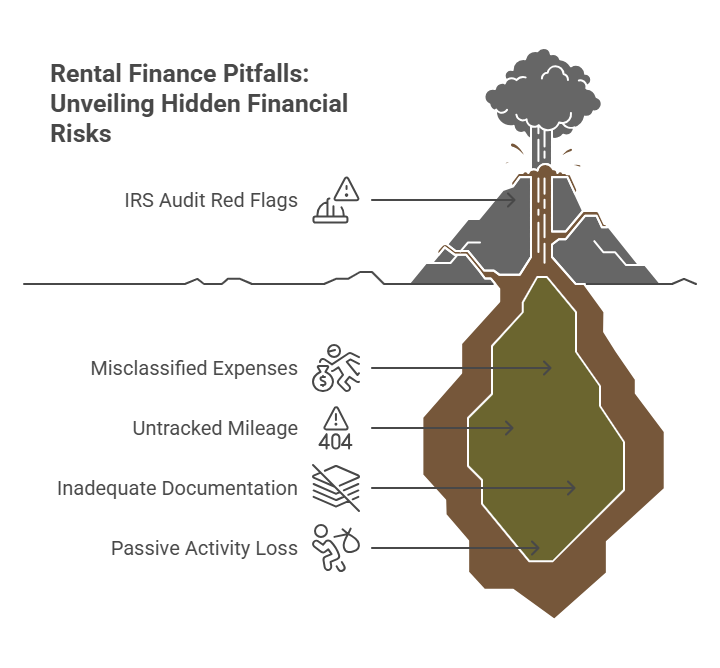
Mixing personal and rental finances raises IRS audit red flags. Open dedicated accounts for rental activities. Misclassifying repairs versus improvements costs thousands, repairs deduct immediately while improvements depreciate over 27.5 years.
Forgetting mileage tracking leaves money on the table at 67 cents per mile. Inadequate documentation undermines legitimate deductions. Proper financial controls require receipts, invoices, and business purpose notes for every expense.
Ignoring passive activity loss rules surprises high-income landlords. Above $150,000 adjusted gross income, you can't deduct rental losses without qualifying as a real estate professional, working 750+ hours annually in real estate.
Since 2015, Madras Accountancy has processed financial records for hundreds of rental properties across all 50 states. Our offshore teams deliver consistent quality at 40% lower costs than traditional Salt Lake City firms, with dedicated bookkeepers understanding Utah's trust account requirements and compliance needs.
We handle monthly bookkeeping and reconciliation, QuickBooks Online setup, Airbnb and VRBO integration, and year-end tax preparation support. Property owners receive detailed financial statements by the 10th of each month through secure client portals with 24/7 access.
Most Utah rental property bookkeeping firms charge $150-$400 monthly per property, depending on transaction volume and complexity. Firms handling multiple properties (5+ units) typically offer volume discounts of 15-25%. Expect to pay more for services including 1031 exchange tracking, cost segregation analysis, or multi-state tax compliance.
QuickBooks Online dominates Utah's rental property market, used by 70% of property managers and bookkeeping firms. AppFolio and Buildium are popular for larger portfolios. Most Utah firms integrate these platforms with Airbnb, VRBO, and property management systems for automated rent collection and expense tracking.
Yes. Short-term rentals (under 30 days) require specialized tracking for Utah's transient room tax and state sales tax. You'll need to reconcile platform payouts from Airbnb and VRBO, track occupancy rates, and file returns with the Utah State Tax Commission quarterly or monthly.
Utah landlords frequently overlook property management software subscriptions, HOA fees, travel expenses to properties, and depreciation on appliances and improvements. Professional bookkeeping firms catch these deductions, typically saving property owners $2,000-$5,000 annually in missed write-offs.
Utah requires security deposits in non-interest bearing trust accounts, separate from operating funds. Professional bookkeepers maintain distinct ledgers for each tenant's deposit, track move-in condition reports, and ensure proper documentation for the 30-day return window required by Utah Code Title 57.
Local Salt Lake City firms understand Utah-specific requirements like transient room tax zones and county filing deadlines. However, national firms often offer better pricing through offshore partnerships. The best choice depends on your portfolio size, under 5 properties typically benefits from local expertise, while larger portfolios gain from scalable national services.
Utah landlords must retain rental agreements, payment receipts, maintenance invoices, property tax statements, and depreciation schedules for at least seven years. Professional bookkeeping firms digitize these records and organize them by property, making IRS audits or tenant disputes much easier to handle.
Yes. Madras Accountancy provides specialized real estate accounting services for Utah property owners and CPA firms. We handle multi-property bookkeeping, tax preparation, and monthly financial reporting with dedicated offshore teams that deliver consistent quality at 40% lower costs than traditional local firms.
Quality bookkeeping transforms rental property management from overwhelming to manageable. Gather your bank statements, property tax bills, insurance policies, mortgage statements, and lease agreements organized by property.
Schedule consultations with 2-3 firms. Ask about real estate experience, technology platforms, and pricing. Madras Accountancy offers complimentary consultations for Utah property owners and CPA firms, reviewing your setup and proposing solutions that reduce costs while improving accuracy.
Section 4960's 21% excise tax now reaches far more nonprofit employees. See who is a covered employee in 2026 and what changed.

The Section 45S paid family leave credit is permanent for 2026 with new options. See who qualifies, the amounts, and how to claim it.

Opportunity zones become permanent in 2027 under the One Big Beautiful Bill. See the new deferral, rural bonus, and the 2026 handoff.



